Deep Learning Applications in Neuroinformatics: Advances, Methods, and Perspectives explores how deep learning revolutionizes neuroinformatics, covering the latest methods and applications of deep learning in analyzing neuroimaging data from EEG, MRI, PET, and more.
Deep Learning Applications in Neuroinformatics: Advances, Methods, and Perspectives explores how deep learning revolutionizes neuroinformatics, covering the latest methods and applications of deep learning in analyzing neuroimaging data from EEG, MRI, PET, and more.
This edited book focuses on the application of AI and data analytics within medical imaging with contributions focussing on general radiography, cross-sectional imaging, and breast imaging.
This edited book focuses on the application of AI and data analytics within medical imaging with contributions focussing on general radiography, cross-sectional imaging, and breast imaging.
Cybersecurity for Healthcare Systems in the Internet of Medical Things Era is driven by the imperative to address the intricate convergence of healthcare, technology, and security.
Time-frequency analysis is critical in biomedical signal analysis, which helps diagnose and monitor physiological conditions such as heart rate variability, seizure detection, and brain-computer interfacing.
"e;This book offers a comprehensive overview of microwave energy in the processing of biomaterials, highlighting its advantages over conventional methods such as rapid and uniform heating, energy efficiency, enhanced material properties, and sustainability.
"e;This book offers a comprehensive overview of microwave energy in the processing of biomaterials, highlighting its advantages over conventional methods such as rapid and uniform heating, energy efficiency, enhanced material properties, and sustainability.
The second edition of the book published by Springer in 2006, Optical Polarization in Biomedical Applications concerns the optical methods exploring a unique feature of light —its polarization—for quantitative tissue characterization.
The second edition of the book published by Springer in 2006, Optical Polarization in Biomedical Applications concerns the optical methods exploring a unique feature of light —its polarization—for quantitative tissue characterization.
This book serves as a comprehensive guide to the development and application of cost-effective photoacoustic imaging systems, with a particular emphasis on their potential for clinical translation.
This book serves as a comprehensive guide to the development and application of cost-effective photoacoustic imaging systems, with a particular emphasis on their potential for clinical translation.
This book provides medical technology entrepreneurs and their investors with a decision-making methodology based on the scientific approach that maximizes their chances of success.
This book provides medical technology entrepreneurs and their investors with a decision-making methodology based on the scientific approach that maximizes their chances of success.
This Book offers a scholarly and in-depth exploration of the emerging field that brings together nanotechnology, biosensing, and electronic systems to support the growing vision of personalized and precision healthcare.
This Book offers a scholarly and in-depth exploration of the emerging field that brings together nanotechnology, biosensing, and electronic systems to support the growing vision of personalized and precision healthcare.
Time-frequency analysis is critical in biomedical signal analysis, which helps diagnose and monitor physiological conditions such as heart rate variability, seizure detection, and brain-computer interfacing.
Traditional biological sensors, based on enzymatic receptors and potentiometric or amperometric transducers are well reviewed and are nowadays even included extensively in many textbooks.
Wearable Sensing and Assistive Devices for Robotic Rehabilitation provides an overview of current research and developments in the field of innovative technologies for advanced wearable sensing and assistive devices in medical rehabilitation.
Computational Biomechanics of Human Joints delves into the intricate details of each joint, exploring anatomical, mechanical, pathological, and therapeutic aspects.
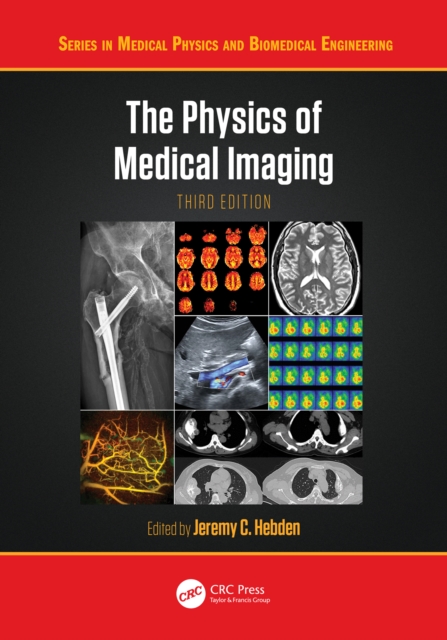
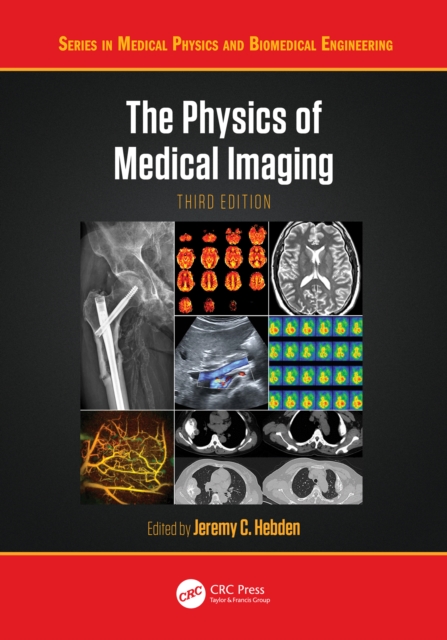
This third edition of The Physics of Medical Imaging provides completely new and comprehensive descriptions of the physical principles and concepts which underpin all the medical imaging technologies found in modern hospitals, including x-ray imaging, magnetic resonance imaging, nuclear medicine imaging, and ultrasound.
Despite achievements in the application of enzymes, antibodies and biological receptors to diagnostics and sensing, the last two decades have also witnessed the emergence of a number of alternative technologies based on synthetic chemistry.
Computational Biomechanics of Human Joints delves into the intricate details of each joint, exploring anatomical, mechanical, pathological, and therapeutic aspects.
This third edition of The Physics of Medical Imaging provides completely new and comprehensive descriptions of the physical principles and concepts which underpin all the medical imaging technologies found in modern hospitals, including x-ray imaging, magnetic resonance imaging, nuclear medicine imaging, and ultrasound.
This book summarizes the research carried out in the context of the European project ARS (Autonomous Robotic Surgery) addressing the development of methods to add autonomous features to robotic surgery and exploring the challenges of embodied AI.
This book summarizes the research carried out in the context of the European project ARS (Autonomous Robotic Surgery) addressing the development of methods to add autonomous features to robotic surgery and exploring the challenges of embodied AI.
This book focuses on the application of micro and nano biosensors in microsystems, where an introduction to the fundamentals of various types of biosensors should be considered an integral element.
This book focuses on the application of micro and nano biosensors in microsystems, where an introduction to the fundamentals of various types of biosensors should be considered an integral element.
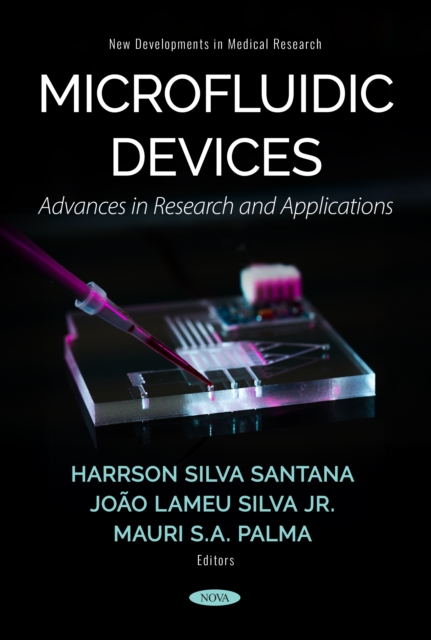
Microfluidics has revolutionized multiple fields, including biotechnology, pharmaceuticals, and biomedical engineering, by enabling precise fluid manipulation at the microscale.
This book delves into the critical role of authentication in safeguarding e-health systems, advocating for stronger authentication schemes and the development of robust security protocols to protect sensitive healthcare information.
This book provides professionals in microelectronic implantable bio-medical systems an overview of recent techniques in wireless power and data telemetry.
This volume examines recent progress in the development of rational strategies for tissue regeneration, including approaches for wound healing and the management of chronic wounds.
This volume examines recent progress in the development of rational strategies for tissue regeneration, including approaches for wound healing and the management of chronic wounds.
This book offers comprehensive, easy to understand guidance for medical device technology innovators on how to work through the United States Food and Drug Administration (US FDA) regulatory review and approval/grant/clearance process, while also providing insight on the various intellectual property concerns that many medical device innovators face.
Applied Mathematical Modelling for Biomedical Robotics and Wearable Devices delves into the innovative convergence of mathematical frameworks and biomedical engineering.
Applied Mathematical Modelling for Biomedical Robotics and Wearable Devices delves into the innovative convergence of mathematical frameworks and biomedical engineering.
This book offers comprehensive, easy to understand guidance for medical device technology innovators on how to work through the United States Food and Drug Administration (US FDA) regulatory review and approval/grant/clearance process, while also providing insight on the various intellectual property concerns that many medical device innovators face.
Recent Advances in Computational Intelligence Applications for Biometrics and Biomedical Devices focuses on the intersection of biometric-driven computational approaches and techniques within a connected multi-modal environment, particularly emphasizing their applications in healthcare.
Investigations on anatomical specimens have demonstrated that the subchondral mineralization does indeed show regular distribution patterns from which conclusions about the mechanical situation within an individual joint may be drawn.