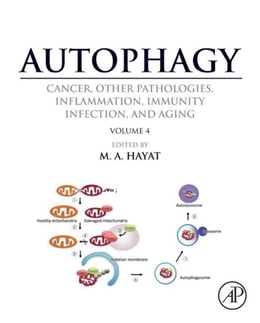
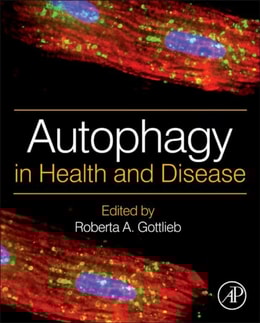
Autophagy: Cancer, Other Pathologies, Inflammation, Immunity, Infection and Aging, Volume 4 - Mitophagy presents detailed information on the role of mitophagy, the selective autophagy of mitochondria, in health and disease, by delivering an in-depth treatment of the molecular mechanisms involved in mitophagy initiation and execution, as well as the role of mitophagy in Parkinson's Disease, cardiac aging, and skeletal muscle atrophy.
This volume provides descriptions of the occurrence of the UPR, methods used to assess it, pharmacological tools and other methodological approaches to analyze its impact on cellular regulation.
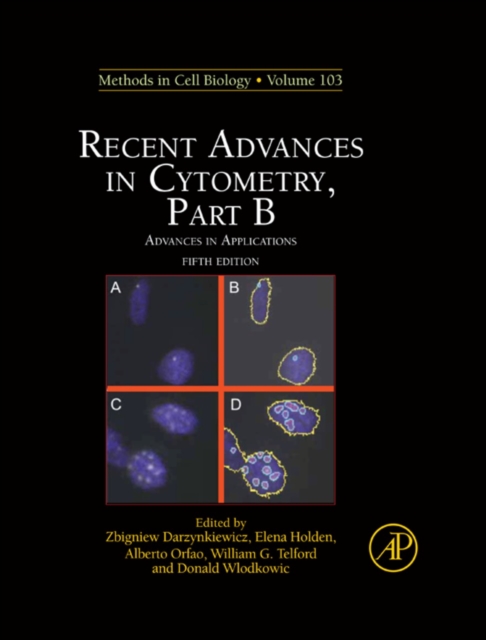
Cytometry is one of the most rapidly growing methodologies available for basic cell and molecular biology, cytogenetics, immunology, oncology, environmental sciences and also various fields of clinical medicine.
This volume provides descriptions of the occurrence of the UPR, methods used to assess it, pharmacological tools and other methodological approaches to analyze its impact on cellular regulation.
This volume provides descriptions of the occurrence of the UPR, methods used to assess it, pharmacological tools and other methodological approaches to analyze its impact on cellular regulation.
A groundbreaking book that examines all aspects of male aging through an evolutionary lensWhile the health of aging men has been a focus of biomedical research for years, evolutionary biology has not been part of the conversation-until now.
The authors of the most cited neuroscience publication, The Rat Brain in Stereotaxic Coordinates, have written this introductory textbook for neuroscience students.
Medical Cell Biology, Third Edition, focuses on the scientific aspects of cell biology important to medical students, dental students, veterinary students, and prehealth undergraduates.
Regulatory Mechanisms in Transcriptional Signaling, volume of Progress in Molecular Biology and Translational Science, includes in-depth discussion on roles of Chromatin remodeling proteins in nuclear receptor signaling, and the ANCCA regulator in cancer.
Explosion and Blast-Related Injuries is an authoritative text that brings together diverse knowledge gained from both the experience of clinicians treating blast casualties and the insights of scientists obtained from research and modeling of blast exposures.
Volume 71 of Advances in Cancer Research begins with Morgan and Kastan presenting data on the roles of p53 and ATM in cell cycle progression and cell death in response to DNA damage and how this information may lead to targets for improved cancer therapies.
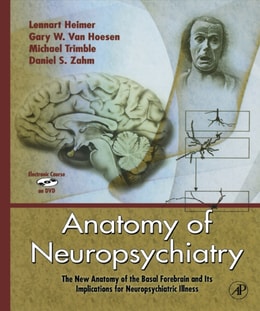
Anatomy of Neuropsychiatry presents the anatomical systems that take part in the scientific and clinical study of emotional functions and neuropsychiatric disorders.
One of the only books discussing new advances in venous ulcer therapy, Venous Ulcers provides a comprehensive look at the molecular biology and pathophysiology of venous ulcers.
The Aging Skeleton is a comprehensive and timely book on all aspects of the skeleton as it ages, including basic mechanisms and pathways as well as pathobiology.
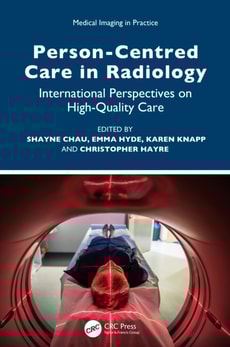
This edited book focuses on the application of patient care within the three specialisms: diagnostic radiography (including fluoroscopy, computed tomography, breast imaging, ultrasound, and magnetic resonance imaging), radiotherapy and oncology, and nuclear medicine and molecular imaging.
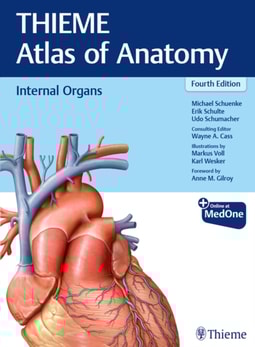
Extraordinarily detailed, step-by-step anatomic atlas informs learning and medical practiceThieme Atlas of Anatomy: Internal Organs, Fourth Edition, by renowned educators Michael Schuenke, Erik Schulte, and Udo Schumacher, along with consulting editor Wayne Cass, expands on prior editions.
Sensory Systems: Anatomy, Physiology and Pathophysiology provides a comprehensive description of how human sensory systems function, with comparisons of the five senses and detailed descriptions of the functions of each of them.
When studying medicine, healthcare, and medical sciences disciplines, learners are frequently required to visualise and understand complex three-dimensional concepts.
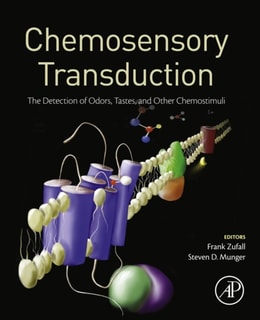
Written by leaders in the field of chemosensation, Chemosensory Transduction provides a comprehensive resource for understanding the molecular mechanisms that allow animals to detect their chemical world.
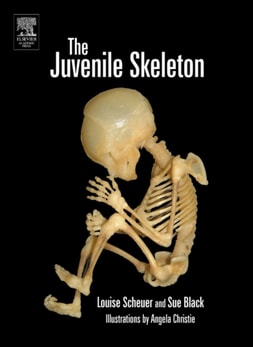
The identification of even the smallest human fetal bone can be vital to the success of a criminal investigation or to the identification of the deceased.
One-of-kind textbook provides comprehensive tutorial on cranial anatomy with step-by-step text and visualsDissection in the anatomical laboratory is a mandatory component of training for neurosurgeons.
An in-depth guide to upper and lower extremity anatomy based on the latest imaging techniquesWhile the study of anatomy plays a fundamental role in the practice of medicine, most textbooks do not rely on modern imaging and post-processing methods to depict and increase its understanding.
This book explores how daily and seasonal rhythmicity is generated, how these rhythms are synchronised by our environment, and how they regulate the neuroendocrine systems that impact our physiology and behaviour.
As new techniques of transferring from liquid to gas phase and measuring masses of drug molecules and metabolites become more prevalent, so do the technical challenges of putting these techniques into proper use, as well as the task of consolidating emerging applications.
A concise, highly visual overview of neuroanatomy and its functional underpinningsClinical Neuroanatomy, Twenty-Eighth Edition offers an accessible, easy-to-remember synopsis of neuroanatomy and its functional and clinical implications.
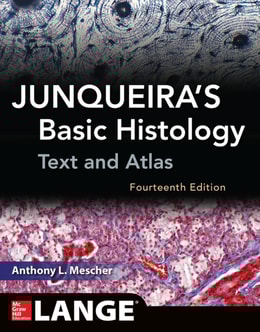
The most authoritative, current, and beautifully illustrated histology text availableNEW clinical vignettes have been added to each chapterFull-color, easy-to-understand drawings provide just the right level of detail necessary to reinforce key concepts and facilitate comprehension and retention of text materialNEW chapter-ending multiple-choice questions review must-know materialFor more than three decades, Junqueira's Basic Histology has been unmatched in its ability to explain the function of cell and tissue structure in the human body.
This exciting new text looks at what an AI program can do for an aesthetic practice by way of analysing a patient's face and predicting what the results of injection treatments will be; it also looks at other innovations that could improve aesthetic practice with dermal fillers, such as injection technique, No practitioner of minimally invasive cosmetic treatments will want to be without access to this glimpse into what the future can hold.
This exciting new text looks at what an AI program can do for an aesthetic practice by way of analysing a patient's face and predicting what the results of injection treatments will be; it also looks at other innovations that could improve aesthetic practice with dermal fillers, such as injection technique, No practitioner of minimally invasive cosmetic treatments will want to be without access to this glimpse into what the future can hold.