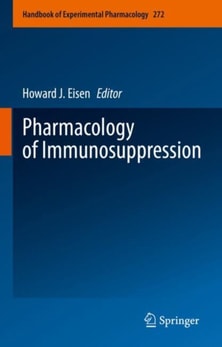
The goal of this book is to provide a guide and detailed review of immunosuppression in terms of molecular mechanisms of action, side effects and clinical trials that validated their utility.
This book brings together in-depth information on a wide array of bio-engineering topics and their application to enhance human health, performance, comfort, and survival in extreme environments.
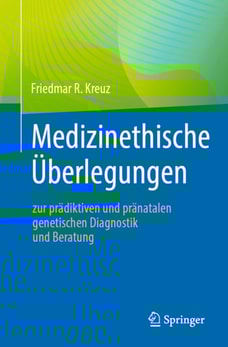
Dieses Buches setzt sich, hauptsächlich aus medizinethischer Sicht, mit der Wortwahl innerhalb eines Patienten-Arzt-Gespräches an einem Beispiel der nicht-invasiven pränatalen Diagnostik (NIPD) auseinander.
This book is immensely useful for graduate students as well as researchers to understand the basics of molecular biology and Recombinant DNA Technology.
This volume comprises select proceedings of the International Conference on Humanizing Work and Work Environment organized by the Indian Society of Ergonomics (HWWE2019).
Viral Vectors for Gene Therapy: Methods and Protocols consists of 30 ch- ters detailing the use of herpes viruses, adenoviruses, adeno-associated viruses, simple and complex retroviruses, including lentiviruses, and other virus systems for vector development and gene transfer.
This volume provides a comprehensive collection of DNA assembly protocols that will prove useful for any researcher interested in molecular cloning, synthetic biology, or DNA manipulation.
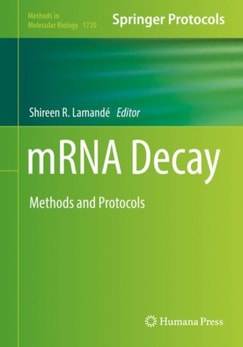
This detailed volume explores the latest methods that can be used to probe mRNA decay pathways and identify mRNA-binding protein targets as well as miRNA targets.
Cancer Genomics and Proteomics: Methods and Protocols, Second Edition includes methods for the analyses of cancer genome and proteome that have illuminated us about the changes in cancer cells.
As experimentation and clinical trials with first generation anti-angiogenic agents have yielded results and our understanding of the biology and physiology of blood and lymphatic vessels has increased, a new angiogenesis volume swiftly became a necessity.
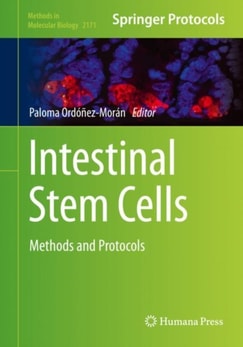
This detailed book encapsulates the most up-to-date methods of the intestinal stem cell field and provides guidance on a variety of techniques for studying intestinal stem cells properties.
In Situ Hybridization Protocols, Fourth Edition contains 21 protocols that utilize the in situ hybridization technology to document or take advantage of the visualization of specific RNA molecules.
This detailed volume focuses on population epigenetics, which is of increasing interest to policy makers searching for explanations for complex epidemiological observations and conceptual models on which to base interventions.
Continuing the research of the best-selling first edition, Patch-Clamp Analysis: Advanced Techniques, Second Edition collects three more years of research in the ever-expanding study of the cell membrane.
Gene therapy offers many conceptual advantages to treat muscle diseases, especially various forms of muscular dystrophies; however, it faces a number of unique challenges, including the need to deliver a therapeutic vector to all muscles throughout the body.
The purpose of this book is to highlight some of latest developments and applications of CRISPR, RNA, and DNA to treat diseases ranging from cancers to cardiovascular and degenerative disorders.
Since the publication of the first edition, the techniques and experimental approaches employed in the study of adipose tissue have undergone radical expansion and revision.
In Gene Therapy Protocols, Volumes 1 & 2, internationally recognized investigators describe cutting-edge laboratory techniques for the study of Production and In Vivo Applications of Gene Transfer Vectors (Volume 1) and Design and Characterization of Gene Transfer Vectors (Volume 2).
Gene expression can mean the difference between a functional and non-functional genome, between health and disease, and with the development of transgenic crops, the difference between survival and starvation.
Providing a spectrum of models that is reflective of the various species that can be utilized in experimentation on disorders across a broad range of developmental disabilities, this volume collects expert contributions involved in investigation of the causes, outcomes, treatment, and prevention.
This book, built on the latest internationally recognized classification system to which the volume editor contributed, offers a unique and comprehensive reference guide to the clinical presentation, characteristics and proper treatment of the wide spectrum of congenital malformations of the inner ear (IEM).
This book provides a collection of comprehensive, up-to-date, and broadly applicable guides to the research and development fields of oligonucleotide (ON) therapeutics.
This volume provides readers with a historical foundation in standard techniques and a comprehensive update on the latest methods used in making gene-modified mice.
This new edition explores current and emerging mutagenesis methods focusing specifically on mammalian systems and commonly used model organisms through comprehensive coverage and detailed protocols.
Featuring current resources used to discover new legume family genes and to understand genes and their interactions, Legume Genomics: Methods and Protocols provides techniques from expert researchers to study these plants that are so vitally important for food, feed, human nutrition, bioenergy, and industrial purposes.
This contributed volume discusses the most important physiological aspects of phosphate metabolism, and how its pathological dysregulation can induce organ damage, which includes but is not limited to blood vessels, kidney, bone and tumor.
Forensic DNA profiling procedures are mainly based on high resolution and high throughput capillary electrophoresis separation and detection systems of PCR amplicons obtained from DNA genomic markers with different inheritance patterns.
Neuroproteomics: Methods and Protocols presents experimental details for applying proteomics to the study of the central nervous system (CNS) and its dysfunction through trauma and disease.
The huge potential for gene therapy to cure a wide range of diseases has led to high expectations and a great increase in research efforts in this area, particularly in the study of delivery via viral vectors, widely considered to be more efficient than DNA transfection.