
Pre-clinical medicine: basic sciences
Sorting
Bestseller Sorting collapsed
Bestseller
Name: A-Z
Name: Z-A
Price ascending
Price descending
Publication Date ascending
Publication Date descending

E-book
 Unknown author
Price
0
89.50 £




E-book
Unknown author0
0
Price
89.50 £
Hox Genes: Methods and Protocols explores techniques and methodologies which arose from or were successfully applied to the study of Hox genes and Hox proteins, at the intersection of experimental embryology, genetics, biochemistry, physiology, evolutionary biology and other life sciences.
Read more
E-book
Unknown authorPrice
0
89.50 £
E-book
Unknown author0
0
Price
89.50 £
In the post-genomic era, in vitro mutagenesis has emerged as a critically important tool for establishing the functions of components of the proteome.
Read moreE-book
Unknown authorPrice
0
99.50 £
E-book
Unknown author0
0
Price
99.50 £
Recent work has revealed that stabilizing G-quadruplexes in telomeric DNA inhibits telomerase activity, providing impetus for the development of G-quartet-interacting drugs, while G-quartet-containing oligonucleotides have been recognized as a potent class of aptamers effective against STAT3 and other transcription factors implicated in oncogenesis, proving these guanine-quartets to be a vital and rich area for future study.
Read more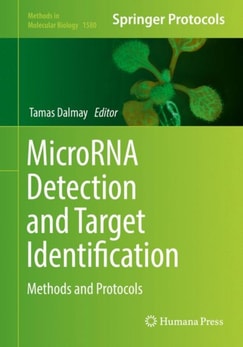
E-book
Unknown authorPrice
0
129.50 £
E-book
Unknown author0
0
Price
129.50 £
This volume is a collection of miRNA detection and target identification protocols, detailing new developments in the traditional detection approaches such as northern blot, quantitative real-time PCR, array, next generation sequencing, and in situ hybridization.
Read moreE-book
Unknown authorPrice
0
99.50 £
E-book
Unknown author0
0
Price
99.50 £
The aim of this volume is to provide a step-by-step guide for implementing a selection of novel techniques in the lab.
Read moreE-book
Unknown authorPrice
0
129.50 £
E-book
Unknown author0
0
Price
129.50 £
Stem cells and regenerative medicine is a fast emerging field with rapid strides of progress and focus on human health.
Read moreE-book
Unknown authorPrice
0
129.50 £
E-book
Unknown author0
0
Price
129.50 £
Chromosomes, as the genetic vehicles, provide the basic material for a large proportion of genetic investigations, from the construction of gene maps and models of chromosome organization, to the inves- tigation of gene function and dysfunction.
Read moreE-book
Unknown authorPrice
0
99.50 £
E-book
Unknown author0
0
Price
99.50 £
Understanding an individual's genetic makeup is the key to creating personalized drugs with greater efficacy and safety, and pharmacogenomics aims to study the complex genetic basis of inter-patient variability in response to drug therapy.
Read moreE-book
Unknown authorPrice
0
99.50 £
E-book
Unknown author0
0
Price
99.50 £
Once a tedious, highly skilled operation, reverse-transcription polymerase chain reaction (RT-PCR) has become a routine and invaluable technique used in most laboratories.
Read more
E-book
Unknown authorPrice
0
69.99 £
E-book
Unknown author0
0
Price
69.99 £
This volume thoroughly describes the fundamentals of a new multidisciplinary field of study that aims to deepen our understanding of the human body by combining medical image processing, mathematical analysis, and artificial intelligence.
Read moreE-book
Unknown authorPrice
0
99.50 £
E-book
Unknown author0
0
Price
99.50 £
Providing a list of methods useful both to those who wish to study pseudogenes and to those who actually want to avoid their inadvertent detection, Pseudogenes: Functions and Protocols explores techniques involving pseudogenic DNA, RNA, and peptides/proteins, once believed to lack any functionality, but now known to be involved in complex regulatory circuits.
Read more
E-book
Unknown authorPrice
0
99.50 £
E-book
Unknown author0
0
Price
99.50 £
The book focuses on describing the importance of genetics in eye diseases in a comprehensive and concise manner.
Read moreE-book
Unknown authorPrice
0
99.50 £
E-book
Unknown author0
0
Price
99.50 £
In RNA Mapping- Methods and Protocols expert researchers in the field detail many of the methods which are now commonly used to study RNA.
Read more
E-book
Unknown authorPrice
0
159.99 £
E-book
Unknown author0
0
Price
159.99 £
This detailed volume guides readers through strategic planning and user-friendly guidelines in order to select the most suitable CRISPR-Cas system and target sites with high activity and specificity.
Read moreE-book
Unknown authorPrice
0
89.50 £
E-book
Unknown author0
0
Price
89.50 £
Recent developments in microarray technology have changed the landscape of biology and biomedical research, and they have revolutionized RNA and DNA research.
Read moreE-book
Unknown authorPrice
0
89.50 £
E-book
Unknown author0
0
Price
89.50 £
The current demand for the development of techniques for controlled genetic manipulations is driven by the anatomical and physiological complexity of the brain and by the need for experimental models that can address this complexity through selective manipulation of defined components of the system: specific neuronal populations or selected synapses.
Read more
E-book
Unknown authorPrice
0
109.50 £
E-book
Unknown author0
0
Price
109.50 £
This detailed volume explores techniques for researching brown adipose tissue (BAT) and the fascinating biology and therapeutic potential of thermogenic adipocytes.
Read moreE-book
Unknown authorPrice
0
89.50 £
E-book
Unknown author0
0
Price
89.50 £
The emerging field of prenatal gene therapy is founded on scientific and technical advances in fetal medicine, molecular biology and gene therapy.
Read more
E-book
Unknown authorPrice
0
119.50 £
E-book
Unknown author0
0
Price
119.50 £
This volume explores databases containing genome-based data and genome-wide analyses.
Read more
E-book
Unknown authorPrice
0
92.34 £
E-book
Unknown author0
0
Price
92.34 £
**Selected for Doody's Core Titles(R) 2024 in Obstetrics & Gynecologyn**Handbook of Obesity in Obstetrics and Gynecology addresses all aspects of general obstetrics and gynecology in obese patients, providing evidence-based guidance for the treatment and management of gynecological problems and pregnancy-related care in obese women.
Read moreE-book
Unknown authorPrice
0
89.50 £
E-book
Unknown author0
0
Price
89.50 £
This volume provides insight into recent developments on experimental and clinical strategies for cancer gene therapy.
Read moreE-book
Unknown authorPrice
0
99.50 £
E-book
Unknown author0
0
Price
99.50 £
Quantitative Real-Time PCR: Methods and Protocols focuses on different applications of qPCR ranging from microbiological detections (both viral and bacterial) to pathological applications.
Read more
E-book
Unknown authorPrice
0
139.50 £
E-book
Unknown author0
0
Price
139.50 £
Brain tumors comprise about 5-9% of all human neoplasms; and interestingly the central nervous system (CNS) neoplasms are ranked among the most prevalent neoplasms of childhood as well.
Read moreE-book
Unknown authorPrice
0
89.50 £
E-book
Unknown author0
0
Price
89.50 £
Chemical genomics technology has been steadily improving, delivering new biological probes and drugs, and the explicit use of the term 'chemical proteomics' has increased with it, as proteins have always been at the heart of this technology.
Read moreE-book
Unknown authorPrice
0
89.50 £
E-book
Unknown author0
0
Price
89.50 £
This volume provides a collection of cutting-edge strategies in siRNA delivery that were developed and refined over the years with tried-and-true methods.
Read more
E-book
Price
0
89.99 £
E-book
0
0
Price
89.99 £
This book provides a detailed overview of the latest developments in the rapidly evolving specialty of Neuro-Oncology arranged in approximately 500 questions arranged in multiple-choice and matching formats.
Read more
E-book
Unknown authorPrice
0
99.50 £
E-book
Unknown author0
0
Price
99.50 £
This detailed book explores the concepts and applications of epigenome editing, as presented by leading scientists in the field.
Read moreE-book
Unknown authorPrice
0
85.50 £
E-book
Unknown author0
0
Price
85.50 £
This volume presents the most recent studies on mRNA polyadenylation in plants.
Read moreE-book
Unknown authorPrice
0
89.50 £
E-book
Unknown author0
0
Price
89.50 £
This volume aims to explore the latest developments in adeno-associated viral and lentiviral vectors as well as the gene therapy strategies for the most common neurological disorders, followed by chapters that include step-by-step guides to viral vector-based gene delivery in animal models used in the authors' laboratories.
Read moreE-book
Unknown authorPrice
0
129.50 £
E-book
Unknown author0
0
Price
129.50 £
As researchers continue to make enormous progress in mapping disease genes, exciting, novel, and complex analyses have emerged.
Read more
E-book
Unknown authorPrice
0
99.50 £
E-book
Unknown author0
0
Price
99.50 £
This volume is a compilation of sixteen chapters that detail reverse genetics protocols.
Read moreE-book
Unknown authorPrice
0
89.50 £
E-book
Unknown author0
0
Price
89.50 £
The discovery of RNA interference (RNAi) as a methodology for gene silencing has revolutionized biological research, providing an invaluable avenue for therapeutics, and small interfering RNA (siRNA) is the most common strategy utilized for enacting RNAi.
Read more
E-book
Unknown authorPrice
0
109.50 £
E-book
Unknown author0
0
Price
109.50 £
This volume details fast-moving research while providing in-depth descriptions of methods and analytical approaches that are helping to understand the genome and how it is related to complex diseases.
Read moreE-book
Unknown authorPrice
0
89.50 £
E-book
Unknown author0
0
Price
89.50 £
In 1996, we organized a workshop, inter alia, at the National Research Co- cil in Milan under the generous sponsorship of the European Science Foun- tion.
Read moreE-book
Unknown authorPrice
0
89.50 £
E-book
Unknown author0
0
Price
89.50 £
Detection and analysis of DNA damage is of critical importance in a variety of biological disciplines studying apoptosis, cell cycle and cell di- sion, carcinogenesis, tumor growth, embryogenesis and aging, neu- degenerative and heart diseases, anticancer drug development, environmental and radiobiological research, and others.
Read moreE-book
Unknown authorPrice
0
99.50 £
E-book
Unknown author0
0
Price
99.50 £
Arthritis Research: Methods and Protocols is a compendium of data pertinent to the methods and protocols that have contributed to recent advances in molecular medicine in general, but to the molecular basis of rheumatic disease in particular.
Read more
E-book
Unknown authorPrice
0
186.00 £
E-book
Unknown author0
0
Price
186.00 £
Inorganic Nanosystems: Theranostic Nanosystems, Volume Two examines the applications of nanotherapeutic systems and nanodiagnostics in relation to polymeric nanosystems.
Read more
E-book
Unknown authorPrice
0
199.50 £
E-book
Unknown author0
0
Price
199.50 £
This volume provides a complete and timely guide to the use of adeno-associated virus (AAV) vectors for genetic manipulation of mammalian tissues.
Read more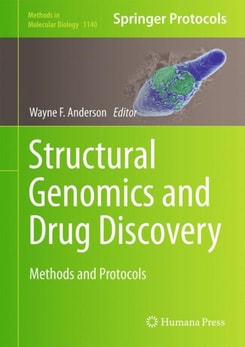
E-book
Unknown authorPrice
0
99.50 £
E-book
Unknown author0
0
Price
99.50 £
Structural Genomics and Drug Discovery: Methods and Protocols focuses on high throughput structure determination methods and how they can be applied to lay the groundwork for structure aided drug discovery.
Read moreE-book
Unknown authorPrice
0
89.50 £
E-book
Unknown author0
0
Price
89.50 £
The discovery of wide-spread RNA-based regulation in bacteria has led to new evaluations of the importance of bacterial regulatory RNA in every aspect of bacterial physiology.
Read more
E-book
Unknown authorPrice
0
139.50 £
E-book
Unknown author0
0
Price
139.50 £
This second edition provides a broad spectrum of methods used in long non-coding RNAs (lncRNA) research, ranging from computational annotation of lncRNA genes to molecular and cellular analyses of the function of individual lncRNA.
Read more
E-book
Unknown authorPrice
0
109.50 £
E-book
Unknown author0
0
Price
109.50 £
This volume presents techniques needed for the study of long non-coding RNAs (lncRNAs) in cancer from their identification to functional characterization.
Read moreE-book
Unknown authorPrice
0
109.50 £
E-book
Unknown author0
0
Price
109.50 £
This volume provides an overview on design PCR primers for successful DNA amplification.
Read moreE-book
Unknown authorPrice
0
89.50 £
E-book
Unknown author0
0
Price
89.50 £
Over the past two decades, expressed sequence tags (ESTs - single pass reads from randomly selected cDNAs), have proven to be a remarkably cost-effective route for the purposes of gene discovery.
Read more
E-book
Price
0
149.00 £
E-book
0
0
Price
149.00 £
This book summarizes the current knowledge of anthocyanins, provides systematic information for future exploration of anthocyanin applications.
Read moreE-book
Unknown authorPrice
0
89.50 £
E-book
Unknown author0
0
Price
89.50 £
The primary purpose of this volume is to demonstrate the range of applications of the Pyrosequencing technology in research and diagnostics and to provide detailed protocols.
Read moreE-book
Unknown authorPrice
0
105.50 £
E-book
Unknown author0
0
Price
105.50 £
As two of the leading causes of death worldwide, heart disease and stroke represent a clear target for genomic research aimed at deciphering the genes and cellular pathways that underlie cardiovascular disease and creating improved therapies.
Read moreE-book
Unknown authorPrice
0
89.50 £
E-book
Unknown author0
0
Price
89.50 £
Transposable elements are used as genetic tools for dissecting the function of a specific gene and elaborating on mechanisms leading to genetic change and diversity, and the evolutionary impact of mobile DNA on the biology and evolution of organism.
Read more