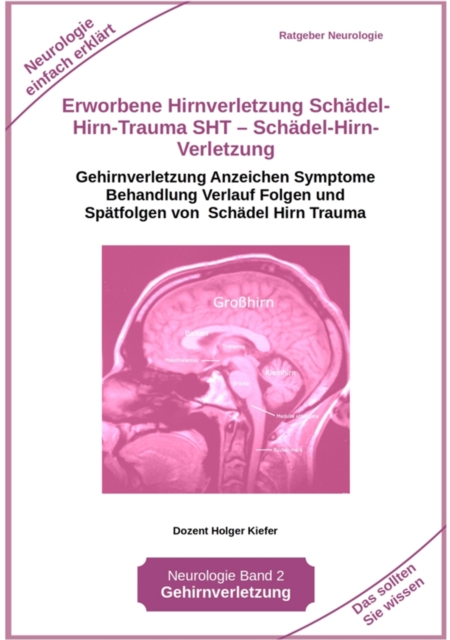
This book offers clear, detailed guidance on all aspects of prognostic evaluation in patients who have been involved in a serious accident with neurological consequences or have been diagnosed with a severe neurological illness.
This book reviews in detail the role of neuroradiological imaging in the evaluation of patients who have undergone surgery or interventional radiology procedures, and particularly its value in the documentation of normal and pathological post-treatment changes, detection of complications, and follow-up.
This book was born out of thirty years of didactic and practical experience with the intention of giving the reader concise neurosurgical elements and an appropriate selected iconography.
In the last ten years the pediatric neurosurgeon has witnessed a real revolution in the diagnosis and treatment of pediatric hydrocephalus, the most frequently encountered condition in everyday clinical practice.
Brain resuscitation is the therapeutic intervention for critically ill patients with severe brain damage, particularly the types caused by ischemia and hypoxia.
On the threshold of an exciting new era for acute stroke diagnosis and treatment, the Third International Symposium on Thrombolytic Therapy in Acute Ischemic Stroke was held in Nara, Japan, in April 1994.
The dawn of neurosurgery can be traced back to the first description preserved in the Edwin Smith papyrus' (3000 Be) which dealt with head and spinal injury.
During the past ten years, technology has been progressing at a rapid pace in the field of medical science, and there have been great improvements in the basic understanding, diagnosis, and treatment of hydrocephalus.
Despite recent technological innovations in neuroradiology, the ultimate diagnosis of brain tumors is still based on the histopathological findings from specimens taken during surgery.
Because stroke is essentially a disease of the vessels and blood flow, the most fundamental aspects of ischemic blood flow in the brain are under investigation by researchers.
This volume contains the papers presented at the International Symposium on Spine and Spinal Disorders in Growth and Aging held in Niigata on November 22-23, 1992.
The title of this monograph, Brain Tumor Research and Therapy, is the name of the Conference itself, which had its inaugural meeting in the United States in 1975 andhas since progressed to the international scale.
Rapid progress in technology and its application to diagnosis and monitoring of brain tissue temperature and metabolism have resulted in advances in the therapy for critically brain-injured patients and breakthroughs in understanding the pathophysiology of brain damage.
All laryngologists, especially general ENT doctors who see patients with paralytic dysphonia, as well as speech pathologists, will benefit from this book's coverage of many basic and clinical aspects of reinnervation in retrieving patients' normal voices.
The International Brain Hypothermia Symposium 2004, held in Tokyo, was a forum for many of the world's leading researchers and clinicians to present and discuss developments on the cutting edge of this most promising of neurological therapies.
This book describes the anatomy of the posterior fossa, together with the main associated surgical techniques, which are detailed in numerous photographs and step-by-step color illustrations.
Recent breakthroughs in understanding the effectiveness of brain hypothermia treatment have been brought about by rapid progress in experimental gene studies along with new findings in the areas of brain-injury mechanisms, brain thermo-pooling, hemoglobin dysfunction, insulin-resistant hyperglycemia, radical damage involving states of consciousness, management of lipid-dominant metabolism in the intensive care unit (ICU), and management of immune crises under conditions of hypothermia.
Techniques using evoked spinal cord potentials (SCPs) have become important clinical tools for monitoring spinal cord surgery and diagnosing spinal cord diseases.