Every so often a gathering of minds and experience occurs that results in an all encompassing overview in depth of such a vast subject as Cerebro-Vascular Malformations, as occurred in Verona in June 1992 and which warrants publication.
These proceedings from the Xth Congress of the European Society for Stereotactic and Functional Neurosurgery in Stockholm reflect the growing interest in these fields of neurosurgery.
Cervical Spine Research Society European Branch "e;The Cervical Spine Research Society is an organization of individuals interested in clinical and research problems of the cervical spine.
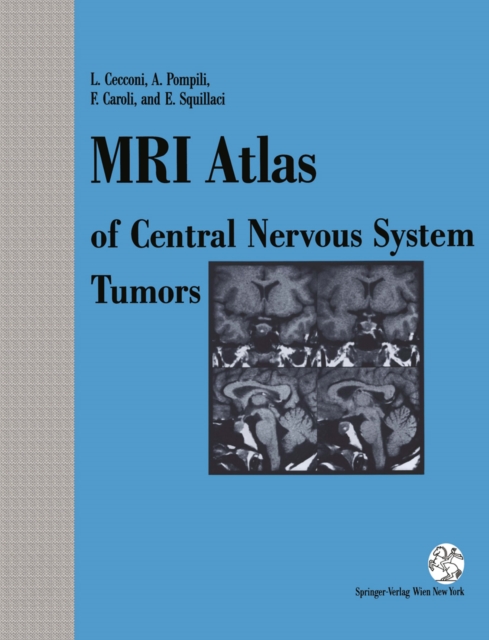
The tumors of the brain similar to other pathological changes of that particular organ claim for a separate position in scientific medicine regarding biology, morphology, features of clinical manifestation, diagnostics and therapy.
In 1981, the Norwegian physiologist and cyberneticist, Rune Aaslid, developed a device which made it possible to apply the transcranial Doppler sonographic technique in man.
Every few years a dissertation comes to the area of clinical application of medical technology which carries us forward as on a magic carpet into new regions of understanding and patient care.
This supplement to "e;Acta Neurochirurgica"e; contains a selection of papers which were presented at the 9th Scientific Meeting of the European Society for Paediatric Neurosurgery on Space Occupying Lesions of the Cerebral Midline in Vienna, October 10-13,1984.
Since the introduction of electrosurgery the techniques of surgery on the nervous system have passed through further improvements (bipolar coagulation, microscope), even if the procedure was not substantially modified.
Various textbooks on stereotactic neurosurgery have been published during the last few years (Riechert 1980, Schaltenbrand and Walker 1982, Spiegel 1982), all of them dealing with functional stereo tactics as the major subject in the field.
This series of yearly books on Advances in Neurotraumatology is being published under the auspices of the Scientific Committee of Neuro- traumatology of the World Federation of Neurological Surgeons.
This monograph presents a comprehensive review of the clinical experience in surgical repair of cranial defects which the author has gained during a period of over ten years.
In the clinic at Giessen during the last few years there has been an extensive programme of research into the various aspects of lesions of the diencephalon and brain stem and the associated autonomic and metabolic disturbances.
The main aim of this study is to define the clinical criteria which must be considered in order to come to an adequate decision whether a patient with intracranial arteriovenous malformation (AVM) should be operated upon or treated conservatively.
Language and Speech has been selected for the Fifth Convention of the Academia Eurasiana Neurochirurgica as a topic closely related to neurosurgery but also to philosophy, art, culture and humanity and treated by various experts of the field of this interdisciplinary subject.
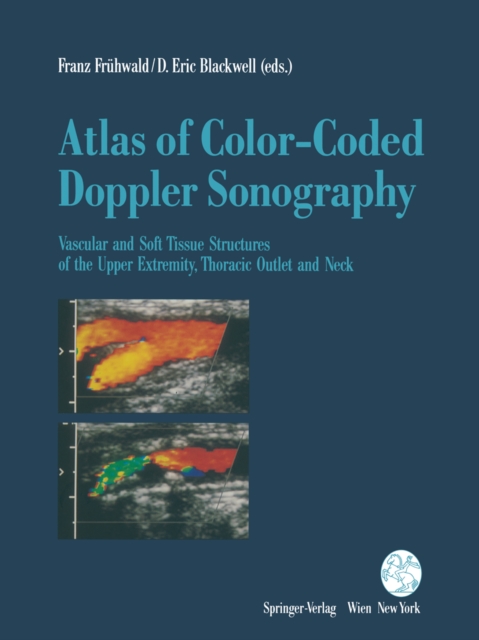
For those of us who have been associated with the field of ultrasound imaging of the arterial system since its infancy, this contribution by Friihwald and Blackwell provides the source where the results of over 30 years of hard-won advances can be found.
On the occasion of the 25th anniversary of the founding of the Vienna School of Neurosurgery at the University of Vienna an international symposium on the anatomy, the approaches to, and the treatment of pathologic processes of the cranial midline, and on the results obtained, was held in Vienna in May 1990.
The book gives the most up-to-date information for the expanding field of stereotactic and functional neurosurgery from European and international experts.
The 4th Advanced Seminar in Neurosurgical Research was held on May 17th-18th, 1989 in the Abbey of Praglia, a XIIth century Benedictine Monastery, near Padua, Italy, and was devoted to "e;Neurosurgical Aspects of Epilepsy"e;.
During the last decade a multitude of studies concerning the dynamic changes in cerebral blood flow (CBF), cerebral metabolic rate of oxygen (CMRO2), and intracranial pressure (ICP) in the acute phase after head injury have been published.
The Third Advanced Seminar in Neurosurgical Research was held in the Palazzo Pisani Moretta, Venice, Italy from 30th April to 1st May, 1987 and was devoted to "e;Neuroendocrinological Aspects of Neurosurgery"e;.
The second common meeting of the European Section and the Cervical Spine Research Society took place in Marseille (France) from June 12 to 15, 1988 and was organized by Rene Louis.
Dieses Buch gibt eine einfache Einführung in die Anfertigung und Befundung von akustisch evozierten Potentialen (AEP), wie sie routinemäßig in der Neurologie zu diagnostischen Zwecken eingesetzt werden.
The last ten years has witnessed a resurgence of interest in stereotactic surgery although this has been mainly in the field of the comparatively simple stereotactic biopsy of intracranial tumours.
During the last meeting of the European Association of Neurosurgical Societies (Barcelona 7-16 September 1987), a Symposium was devoted to the use of calcium antagonists in cerebral vasospasm.
The measurement of the cerebral circulation in children, particularly in newborns and young infants, has for a long time been high on the list of needs in clinical and scientific pediatrics.
At the 8th European Congress of Neurosurgery, which took place in Barcelona, September 6-11, 1987, a great number of papers from all fields of neurosurgery were presented, reflecting the major advances that have been achieved in recent years.