With the exploding progress we are experiencing in the field of lasers in neurosurgery it was felt that a new volume devoted to lasers in neurosurgery is needed.
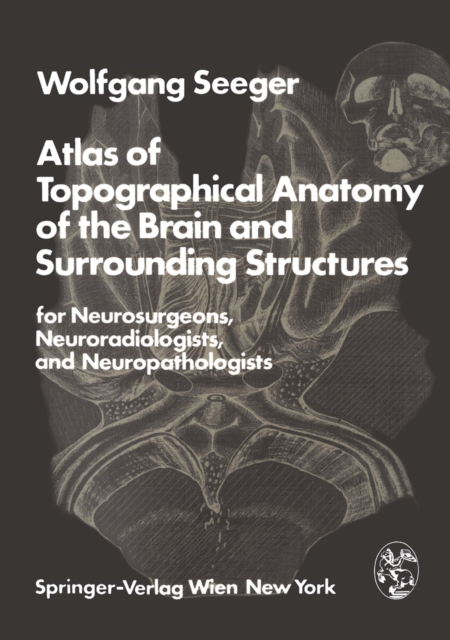
The traditional education of the neurosurgeon and duce simultaneous contrast preparations of the ar- the clinician working in related specialties is based teries and veins and thus obtain a complex photo- on their presumed knowledge of the macroscopic graphic representation of the structures of the prep- anatomy of the brain as traditionally taught.
As an addition to the European postgraduate training system for young neurosurgeons we began to publish in 1974 this*series devoted to Advances and Technical Standards in Neurosurgery which was later sponsored by the European Association of Neurosurgical Societies.
As an addition to the European postgraduate training system for young neurosurgeons we began to publish in 1974 this series devoted to Advances and Technical Standards in Neurosurgery which was later sponsored by the Euro- pean Association of Neurosurgical Societies.
As an addition to the European postgraduate training system for young neurosurgeons we began to publish in 1974 this series devoted to Advances and Technical Standards in Neurosurgery which was later sponsored by the Euro- pean Association of Neurosurgical Societies.
As an addition to the European postgraduate training system for young neurosurgeons we began to publish in 1974 this series devoted to Advances and Technical Standards in Neurosurgery which was later sponsored by the Euro- pean Association of Neurosurgical Societies.
As an addition to the European postgraduate training system for young neurosurgeons we began to publish in 1974 this series devoted to Advances and Technical Standards in Neurosurgery which was later sponsored by the European Association of Neurosurgical Societies.
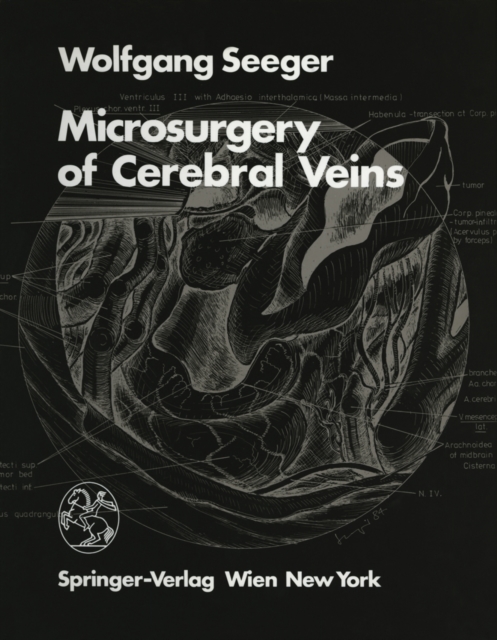
A description of cerebral veins under operative- versely, where there are large arterial vessel stems (at the base of the brain) the veins somewhat lose their technical aspects is practically a description of opera- significance.
As an addition to the European postgraduate training system for young neurosurgeons we began to publish in 1974 this series devoted to Advances and Technical Standards in Neurosurgery which was later sponsored by the European Association of Neurosurgical Societies.
As an addition to the European postgraduate training system for young neurosurgeons we began to publish in 1974 this series devoted to Advances and Technical Standards in Neurosurgery which was later sponsored by the European Association of Neurosurgical Societies.
As an addition to the European postgraduate training system for young neurosurgeons we began to publish in 1974 this series devoted to Advances and Technical Standards in Neurosurgery which was later sponsored by the European Association of Neurosurgical Societies.
In the previous volume, "e;Differential Approaches in - if approach is hindered through such variants, or - if the lesion itself has a close relationship to impor- Microsurgery of the Brain"e;, the particularly prob- lematical operations in the depth of the brain around tant vessels, for example, if arteries penetrate or the brainstem were covered.
As an addition to the European postgraduate training system for young neurosurgeons we began to publish in 1974 this series devoted to Advances and Technical Standards in Neurosurgery which was later sponsored by the European Association of Neurosurgical Societies.
The First Convention of the Academia Eurasiana Neurochirurgica was devoted to one of the main problems not only of medicine in general and especially of neurosurgery but also of theology and anthropology.
Our common interest in surgery of the vertebral artery was born in 1976, when as residents in the same hospital, we attended an attempt by two senior surgeons to treat an aneurysm of the vertebral artery at the C 3 level.
As an addition to the European postgraduate training system for young neurosurgeons we began to publish in 1974 this series devoted to Advances and Technical Standards in Neurosurgery which was later sponsored by the European Association of Neurosurgical Societies.
The idea for this treatise on the radiological anatomy of superficial and deep spinal cord vasculature evolved from daily routine neuroradiological work.
The decision of Harvey Cushing to leave general surgery and concentrate on the infant field of central nervous system surgery was in retrospect a landmark in the history of neurosurgery.
As an addition to the European postgraduate training system for young neurosurgeons we began to publish in 1974 this series devoted to Advances and Technical Standards in Neurosurgery which was later sponsored by the European Association of Neurosurgical Societies.
As an addition to the European postgraduate training system for young neurosurgeons we began to publish in 1974 this series of Advances and Technical Standards in Neurosurgery which was later sponsored by the European Association of Neurosurgical Societies.
In 1992 the Editors published the first volume of Minimally Invasive Neurosurgery (MIN I) which described the current state of the art in this rapidly developing field of neurosurgery and reported first clinical experiences with these new technologies.
As an addition to the European postgraduate training system for young neurosurgeons we began to publish in 1974 this series of Advances and Technical Standards in Neurosurgery which was later sponsored by the European Association of Neurosurgical Societies.
Ein einfacher Zugang zur Liquorzelldiagnostik wird anhand eines umfangreichen Farbbildteiles und leicht verständlicher Erläuterungen sowohl zu den theoretischen und technischen Grundlagen der Liquorzytologie als auch zur Bearbeitung der Proben im Labor ermöglicht.
An International Conference on "e;Neurosurgical Training and Reserach"e; was held in Munich from October 6 - 9, 1996, under the auspices of the EANS, and organized by H.
This volume is a compilation of papers presented at the Tenth International Symposium on Brain Edema held on October 20-23, 1996, in San Diego, California.
The recent progress of medical imaging due to the scanner, the MRI, and the three-dimensional reconstruction of cerebral structures calls for a better knowledge of brain anatomy; it is to be noted, though, that the accurate anatomy of the brain surface was already known thanks to the pio- neering work of late-nineteenth-and early-twentieth-century research workers, such as Eberstal- ler (1884), Cunningham (1892), Dejerine (1895), Retzius (1896), Zuckerkandl (1903), Elliot-Smith (1907) [14, 15,22,29, 30, 56, 751.
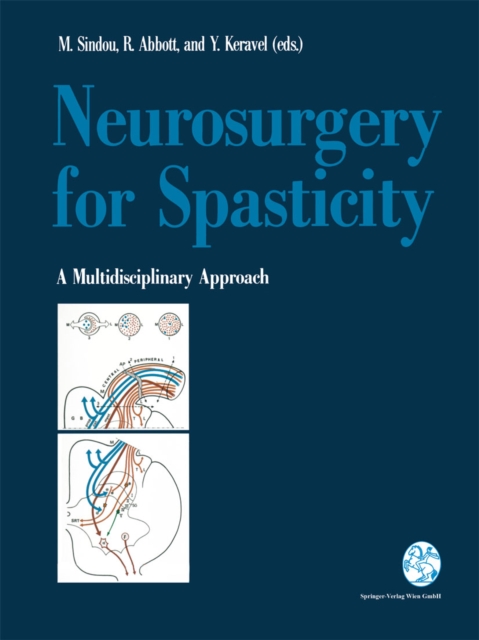
"e;Spasticity is one of the commonest sequelae of neurological disease and during the last few years many advances have been made in the treatment of this complaint by functional neurosurgery.
As an addition to the European postgraduate training system for young neurosurgeons we began to publish in 1974 this series devoted to Advances and Technical Standards in Neurosurgery which was later sponsored by the European Association of Neurosurgical Societies.
As an addition to the European postgraduate training system for young neurosurgeons we began to publish in 1974 this series devoted to Advances and Technical Standards in Neurosurgery which was later sponsored by the European Association of Neurosurgical Societies.