This collected volume is inspired by the work of Edward Halper and is historically focused with contributions from leading scholars in Ancient and Medieval philosophy.
This book examines the work of psychological illusionist Derren Brown to understand the significance of storytelling and ancient philosophy in our society.
Overcoming Uncertainty in Ancient Greek Political Philosophy makes an historical and theoretical contribution by explaining the role of opinion in ancient Greek political philosophy, showing its importance for Aristotle's theory of deliberation, and indicating a new model for a deliberative republic.
This book critically explores the development of radical criminological thought through the social, political and cultural history of three periods in Ancient Greece: the Classical, the Hellenistic and the Greco-Roman periods.
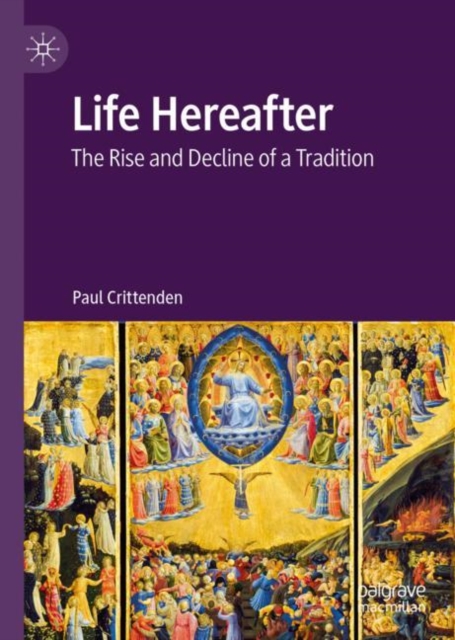
In this book, Paul Crittenden offers a critical guide to the problematic origins of biblical teaching about the afterlife and the way in which it was subsequently developed by Church authorities and theologians-Origen, Augustine, and Thomas Aquinas in particular.
The book offers the first comprehensive account of the debate on true courage as it was raging in ancient Greece, from the times when the immensely influential Homeric epics, the Iliad and the Odyssey, were composed, to the period of the equally influential author, Aristotle.
Edwin Hartman offers an account of his intellectual journey from Aristotle to organization theory to business ethics to an Aristotelian approach to business ethics.
This book argues that according to Metaphysics Zeta, substantial forms constitute substantial being in the sensible world, and individual composites make up the basic constituents that possess this kind of being.
This work synthesizes work previously published in leading journals in the field into a coherent narrative that has a distinctive focus on Germany while also being aware of a broader European dimension.
This edited volume brings together contributions from prominent scholars to discuss new approaches to Plato's philosophy, especially in the burgeoning fields of Platonic ontology and psychology.
This volume provides a much needed, historically accurate narrative of the development of theories of space up to the beginning of the eighteenth century.
This book explores the ways in which the origins of time, of the gods, and processes associated with time were conceptualised in antiquity, examining a variety of ancient sources from across the ancient world and addressing issues surrounding the sources themselves.
Hellenistic Philosophy of Mind is an elegant survey of Stoic and Epicurean ideas about the soul-an introduction to two ancient schools whose belief in the soul's physicality offer compelling parallels to modern approaches in the philosophy of mind.
This is the first volume to explore the modern reception and contemporary relevance of Aristotle and his philosophy in Japan, making it a valuable contribution to both global Aristotelian studies and studies of Japanese philosophical traditions.
Some of the most provocative questions confronting philosophers in Africa are grounded in the historical memory of conquest and the peripheralisation the continent.
Some of the most provocative questions confronting philosophers in Africa are grounded in the historical memory of conquest and the peripheralisation the continent.
"e;The journey of thousand miles begins with a single step"e; - Laozi In "e;Legacy: Ancient Philosophy for Modern Minds"e; Phil takes the philosophical approaches of the best and most revered ancient Philosophers and reworks them into methods that can be applied to any modern day challenge.
This book was written out of a sense of hopefulness; a sense that there is an answer to the perennial question asked by members of our species: Is there a state of mind which I can attain which will make my life wonderful, a joy to live?