This book bridges medieval and contemporary philosophical thinkers, examining the relationship between fiction and philosophy for bringing about social change.
An integrative approach to Jewish and Muslim philosophy in al-AndalusAl-Andalus, the Iberian territory ruled by Islam from the eighth to the fifteenth centuries, was home to a flourishing philosophical culture among Muslims and the Jews who lived in their midst.
In honor of what would have been Clarence Jordan's one hundredth birthday and the seventieth anniversary of Koinonia Farm, the first Clarence Jordan Symposium convened in historic Sumter County, Georgia, in 2012, gathering theologians, historians, actors, and activists in civil rights, housing, agriculture, and fair-trade businesses to celebrate a remarkable individual and his continuing influence.
An impassioned call for Christian churches to return to the values of service, love, and grace-and reject the twenty-first century gospel of material prosperity.
In stark contrast to the shrill and nasty interactions among many Christians regarding contentious LGBT issues, this book models a redemptive mode of engagement by featuring respectful conversations among deeply committed Christians who hold to diverging traditional and non-traditional views.
In today's multi-cultural and multi-religious world, evangelism is often viewed as scandalous, not only by those who are opposed to anything religious, but also by many Christians.
Because the Catholic Church, other Christian churches, and almost every national government permit exceptions to God's commandment that "e;you shall not kill,"e; Johannes Ude examines Catholic moral law to discern whether this commandment has absolute validity or may be modified so that in certain instances it is permissible to kill another human being.
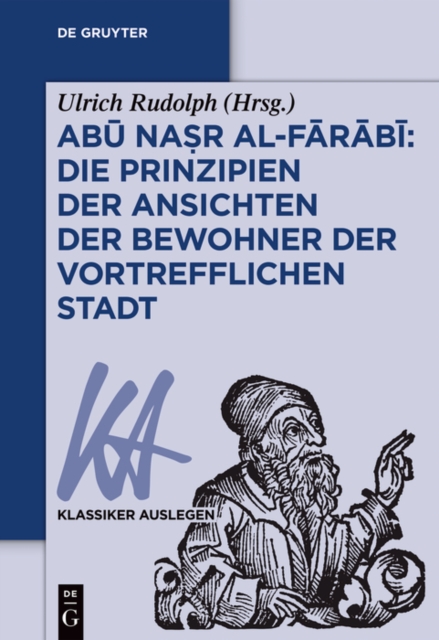
Al-Fārābīs 942-43 entstandene Schrift Die Prinzipien der Ansichten der Bewohner der vortrefflichen Stadt ist eine philosophische Summe, die zentrale Themen der frühen islamischen Philosophie in maßgeblicher Form erörtert.
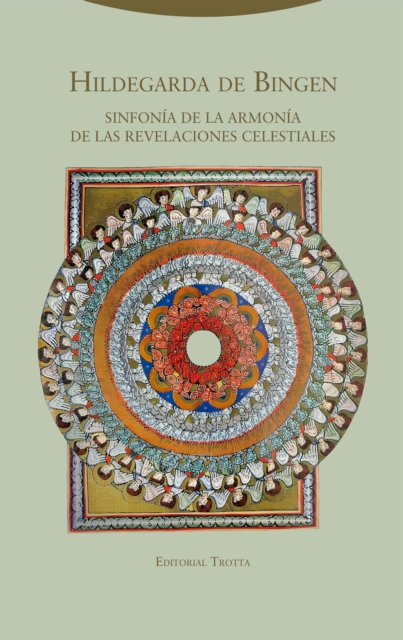
Hacia el año 1150, Hildegarda de Bingen reunió sus composiciones y formó con ellas un ciclo lírico completo al que llamó «Sinfonía de la armonía de las revelaciones celestiales», corpus que incluye la notación musical de la propia autora.
In Machines of the Mind, Katharine Breen proposes that medieval personifications should be understood neither as failed novelistic characters nor as instruments of heavy-handed didacticism.
How, Barbara Newman asks, did the myth of the separable heart take such a firm hold in the Middle Ages, from lovers exchanging hearts with one another to mystics exchanging hearts with Jesus?
This book discusses the seminal role played by Edward Bernays, a nephew of Sigmund Freud, in the founding of American-style public relations n persuasive communication through manipulation of symbols n and his huge (and cynical) impact on the American economic and political scene.
This book discusses the seminal role played by Edward Bernays, a nephew of Sigmund Freud, in the founding of American-style public relations , persuasive communication through manipulation of symbols , and his huge (and cynical) impact on the American economic and political scene.
Lo interesante de la presente investigación del medievalista Diego Alejandro Gracia Ortiz es que no se centra en los problemas sobre la pobreza y la política, sino que su foco de atención es la relación del ockhamismo con la universidad, una de las creaciones medievales de mayor resonancia en los tiempos medievales y postmedievales.
Se aborda en este volumen la revuelta realizada por Eriúgena (800-877), obstinado filósofo irlandés de la Edad Media que, apoyándose en la defensa y ejercicio de la razón frente a toda autoridad humana, interpretó la Escritura y sostuvo que el infierno no era sino un estado de consciencia; que la vida alcanza incluso a los seres que solemos pensar como inanimados; que el nombre más apropiado con que debemos llamar a Dios es "Nada"; que la Nada está más allá de todo y escapa al esfuerzo del pensamiento; y que el ser humano no es sino imagen de esa Nada.
The attribution of the Speculum Astronomiae to Albertus Magnus became a controversial issue only recently, when the great neo-Thomist historian Pierre Mandonnet suggested -- without any antecedents -- that the author was Roger Bacon rather than Albert.
Scepticism in the History of Philosophy is a dialogue between leading Latin American and North American scholars concerned with the history of scepticism from ancient times to present day philosophy.
On the most basic level, the articles brought together in the present volume aim to contribute to the charting of the (often subtle) links between the medieval and early modern periods in the fields of metaphysics, philosophical theology, and modal theory.
The Thomistic tradition takes it name from the thirteenth-century religious thinker and saint who is its source and inspiration: the Dominican Friar Thomas 1 Aquinas.