In seventeenth-century philosophy the mind-body problem and the nature of personal immortality were two of the most controversial and sensitive issues.
In seventeenth-century philosophy the mind-body problem and the nature of personal immortality were two of the most controversial and sensitive issues.
Graciela De Pierris presents a novel interpretation of the relationship between skepticism and naturalism in Hume's epistemology, and a new appraisal of Hume's place within early modern thought.
Descartes and the First Cartesians adopts the perspective that we should not approach Rene Descartes as a solitary thinker, but as a philosopher who constructs a dialogue with his contemporaries, so as to engage them and elements of his society into his philosophical enterprise.
Graciela De Pierris presents a novel interpretation of the relationship between skepticism and naturalism in Hume's epistemology, and a new appraisal of Hume's place within early modern thought.
Thirteen original essays by leading scholars explore aspects of Spinoza's ethical theory and, in doing so, deepen our understanding of the richly rewarding core of his system.
Archbishop of Canterbury from 1272 until his death in 1279, the Dominican friar Robert Kildwardby has long been known primarily for his participation in the Oxford Prohibitions of 1277, but his contributions spread far wider.
The ancient topic of universals was central to scholastic philosophy, which raised the question of whether universals exist as Platonic forms, as instantiated Aristotelian forms, as concepts abstracted from singular things, or as words that have universal signification.
Our culture attempts to separate competing ideological factions by denying relationships between multiple perspectives and influences outside of one's own narrow interpretive community.
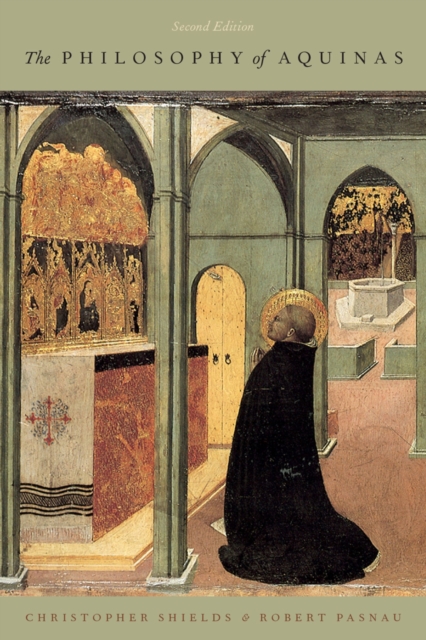
This new and updated edition of Christopher Shields and Robert Pasnau's The Philosophy of Aquinas introduces the Aquinas' overarching explanatory framework in order to provide the necessary background to his philosophical investigations across a wide range of areas: rational theology, metaphysics, philosophy of human nature, philosophy of mind, and ethical and political theory.
The ancient topic of universals was central to scholastic philosophy, which raised the question of whether universals exist as Platonic forms, as instantiated Aristotelian forms, as concepts abstracted from singular things, or as words that have universal signification.
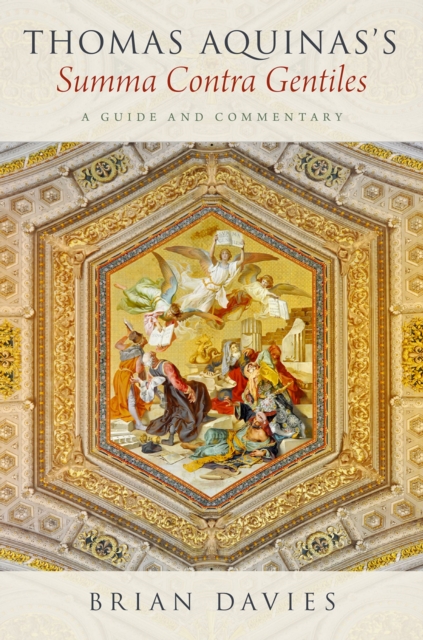
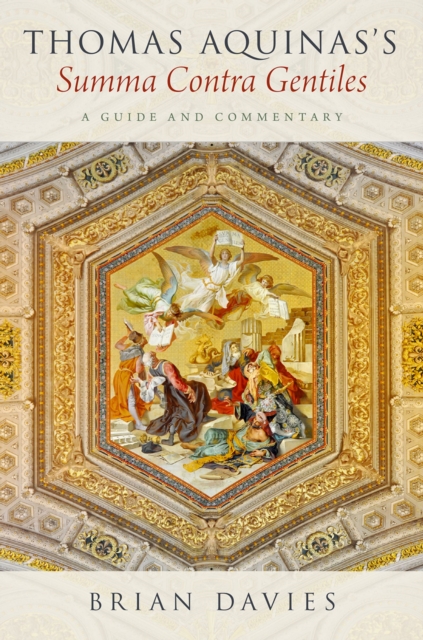
The Summa Contra Gentiles, one of Aquinas's best known works after the Summa Theologiae, is a philosophical and theological synthesis that examines what can be known of God both by reason and by divine revelation.
The Summa Contra Gentiles, one of Aquinas's best known works after the Summa Theologiae, is a philosophical and theological synthesis that examines what can be known of God both by reason and by divine revelation.
Born in Saxony in 1096, Hugh became an Augustinian monk and in 1115 moved to the monastery of Saint Victor, Paris, where he spent the remainder of his life, eventually becoming the head of the school there.
Ever since "e;Know Thyself"e; was inscribed at Delphi, Western philosophers have struggled to understand the relations between morality and self-interest.
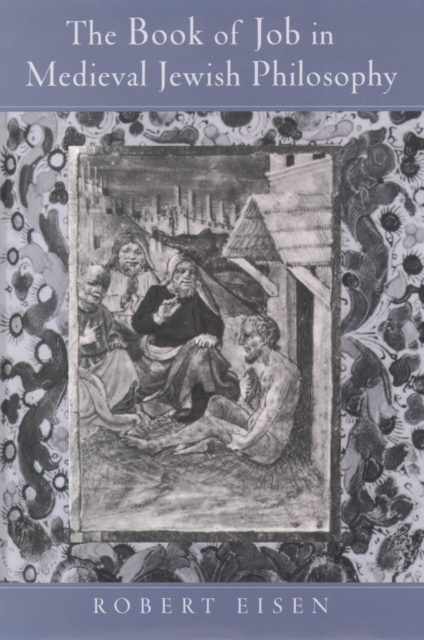
Medieval Jewish philosophers have been studied extensively by modern scholars, but even though their philosophical thinking was often shaped by their interpretation of the Bible, relatively little attention has been paid to them as biblical interpreters.
The work of Thomas Aquinas has always enjoyed a privileged position as a pillar of Catholic theology, but for centuries his standing among western philosophers was less sure.
This volume provides a brief and accessible introduction to the 9th-century philosopher and theologian John Scottus Eriugena--perhaps the most important philosophical thinker to appear in Latin Christendom in the period between Augustine and Anselm.
Attacks nothing less than the currently prevailing world philosophy--humanism, which the author feels is exceedingly dangerous in its hidden assumptions.
City of God is an enduringly significant work in the history of Christian thought, by one of its central figuresWritten as an eloquent defence of the faith at a time when the Roman Empire was on the brink of collapse, this great theological and philosophical work by St Augustine, bishop of Hippo, examines the ancient pagan religions of Rome, the arguments of the Greek philosophers and the revelations of the Bible.