The essays collected in this volume by Paul Guyer, one of the world's foremost Kant scholars, explore Kant's attempt to develop a morality grounded on the intrinsic and unconditional value of the human freedom to set our own ends.
The essays collected in this volume by Paul Guyer, one of the world's foremost Kant scholars, explore Kant's attempt to develop a morality grounded on the intrinsic and unconditional value of the human freedom to set our own ends.
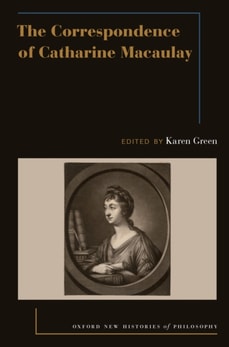
Catharine Macaulay was a celebrated republican historian, whose account of the reasons for the seventeenth-century English Revolution, the parliamentary period, and its aftermath was widely read by the mothers and fathers of American Independence and by central players in the French Revolution.
Catharine Macaulay was a celebrated republican historian, whose account of the reasons for the seventeenth-century English Revolution, the parliamentary period, and its aftermath was widely read by the mothers and fathers of American Independence and by central players in the French Revolution.
This book reconstructs Spinoza's theory of the human mind against the backdrop of the twofold notion that subjective experience is explainable and that its successful explanation is of ethical relevance, because it makes us wiser, freer, and happier.
Throughout his writings, and particularly in Religion within the Boundaries of Mere Reason, Kant alludes to the idea that evil is connected to self-deceit, and while numerous commentators regard this as a highly attractive thesis, none have seriously explored it.
Throughout his writings, and particularly in Religion within the Boundaries of Mere Reason, Kant alludes to the idea that evil is connected to self-deceit, and while numerous commentators regard this as a highly attractive thesis, none have seriously explored it.
Georges Dicker here provides a commentary on John Locke's masterwork, An Essay Concerning Human Understanding-the foundational work of classical Empiricism.
Georges Dicker here provides a commentary on John Locke's masterwork, An Essay Concerning Human Understanding-the foundational work of classical Empiricism.
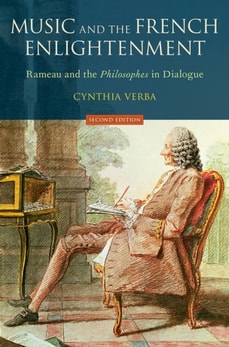
Around the middle of the eighteenth century, the leading figures of the French Enlightenment engaged in a philosophical debate about the nature of music.
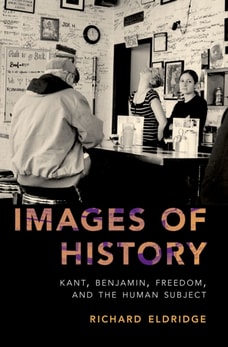
Developing work in the theories of action and explanation, Eldridge argues that moral and political philosophers require accounts of what is historically possible, while historians require rough philosophical understandings of ideals that merit reasonable endorsement.
Offering an original perspective on the central project of Descartes' Meditations, this book argues that Descartes' free will theodicy is crucial to his refutation of skepticism.
Developing work in the theories of action and explanation, Eldridge argues that moral and political philosophers require accounts of what is historically possible, while historians require rough philosophical understandings of ideals that merit reasonable endorsement.
We have long been taught that the Enlightenment was an attempt to free the world from the clutches of Christian civilization and make it safe for philosophy.
This book defends a new interpretation of Hegel's theoretical philosophy, according to which Hegel's project in his central Science of Logic has a single organizing focus, provided by taking metaphysics as fundamental to philosophy, rather than any epistemological problem about knowledge or intentionality.
We have long been taught that the Enlightenment was an attempt to free the world from the clutches of Christian civilization and make it safe for philosophy.
Offering an original perspective on the central project of Descartes' Meditations, this book argues that Descartes' free will theodicy is crucial to his refutation of skepticism.
Kant's discussion of the relations between cognition and self-consciousness lie at the heart of the Critique of Pure Reason, in the celebrated transcendental deduction.