The volume collects papers on central aspects of Alexius Meinong's Gegenstandstheorie (Theory of Objects) and its transformation in contemporary logic, semantics and ontology covering the impact of his views on grasping and representation, the status of nonexistent or inconsistent objects and their incorporation in theories like Noneism and Possible-World-Semantics.
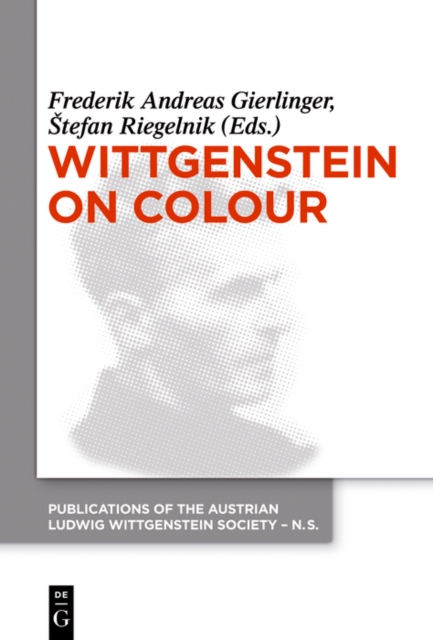
This volume is the first collection of articles dedicated to Ludwig Wittgenstein's thoughts on colour, focusing in particular on his so-called Remarks on Colour, a piece of writing that has received comparably little attention from Wittgenstein scholars.
This book compares three approaches to public reason and to the public space accorded to religions: the liberal platform of an overlapping consensus proposed by John Rawls, Jurgen Habermas's discourse ethical reformulation of Kant's universalism and its realization in the public sphere, and the co-founding role which Paul Ricoeur attributes to the particular traditions that have shaped their cultures and the convictions of citizens.
The phenomenological approach to the philosophy of mind, as inaugurated by Brentano and worked out in a very sophisticated way by Husserl, has been severely criticized by philosophers within the Wittgensteinian tradition and, implicitly, by Wittgenstein himself.
The papers in this volume present some of the most recent results of the work about contradictions in philosophical logic and metaphysics; examine the history of contradiction in crucial phases of philosophical thought; consider the relevance of contradictions for political and philosophical actuality.
A Chance for Possibility defends the view that the objective modal realm is tripartite: truths about possible worlds supervene on modal truths, which in turn supervene on truths about objective chances.
This volume brings out the varieties of forms of philosophical skepticism that have continued to preoccupy philosophers for the past of couple of centuries, as well as the specific varieties of philosophical response that these have engendered - above all, in the work of those who have sought to take their cue from Kant, Wittgenstein, or Cavell - and to illuminate how these philosophical approaches are related to and bear upon one another.
Der erste Band der Meinong Studien vereinigt historische Beitrage zur Meinong-Forschung im engeren Sinn mit solchen, die Meinongsche Themen und Gedanken in systematischer Absicht wieder aufnehmen.
The history of twentieth century philosophy is characterized by the gap between analytic and continental philosophy - even though both have their roots in a tradition referred to as "e;Austrian"e; or "e;Central-European"e; philosophy.
There is one question that any potential reader who suspects that Alfred North Whitehead (1861-1947) might be important for past, contemporary, and future philosophy inevitably raises: how should I read Whitehead?
Wittgenstein has written a great number of remarks relevant to aesthetical issues: he has questioned the relation between aesthetics and psychology as well as the status of our norms of judgment; he has drawn philosophers' attention to such topics as aspect-seeing and aspect-dawning, and has brought insights into the nature of our aesthetic reactions.
The phenomenologists were concerned to show that essential structures of being, knowable by rational insight, are found far more abundantly than is commonly thought.
The present book continues Rescher's longstanding practice of publishing groups of philosophical essays that originated in occasional lecture and conference presentations.
The term "e;method"e; of realist phenomenology and philosophy can refer to three kinds of things which are being explored extensively in this work: (1) Kinds of philosophical knowledge used to return to things themselves: intellectual "e;vision"e; of necessary intelligible essences, insights into necessary states of affairs, knowledge of less than necessary essences, knowledge of existence as such, of the ego cogitans and of a concretely existing world, other persons, and the absolute being, deductive forms of reasoning, and others.