The book addresses two main areas of Kant's theoretical philosophy: the doctrine of transcendental idealism and various central aspects of the arguments from the Metaphysical and Transcendental Deductions, as well as the relation between the deduction argument and idealism.
Entre la fin de la Seconde Guerre mondiale et le début des années 1960, certaines des figures majeures du courant phénoménologique en France, Jean-Paul Sartre, Maurice Merleau-Ponty et Trần Đức Thảo, considèrent que le projet d’articuler marxisme et phénoménologie constitue l’un des principaux enjeux de la philosophie dans le monde contemporain.
This book synthesizes Jacques Derrida's hauntology and spectrality with affect theory, in order to create a rhetorical framework analyzing the felt absences and hauntings of written and oral texts.
Every attempt to examine our consciousness's passive life and its dynamic in its various forms inevitably intersects with our primal awareness of the future.
Toward the beginning of 2013, I received reports of passages in the Black Notebooks that offered observations on Jewry, or as the case may be, world Jewry.
This book proposes an account of the place of the theory of race in Kant's thought as a central part of philosophical anthropology in his political system.
This book offers a new and original hypothesis on the origin of modal ontology, whose roots can be traced back to the mathematical debate about incommensurable magnitudes, which forms the implicit background for Plato's later dialogues and culminates in the definition of being as dynamis in the Sophist.
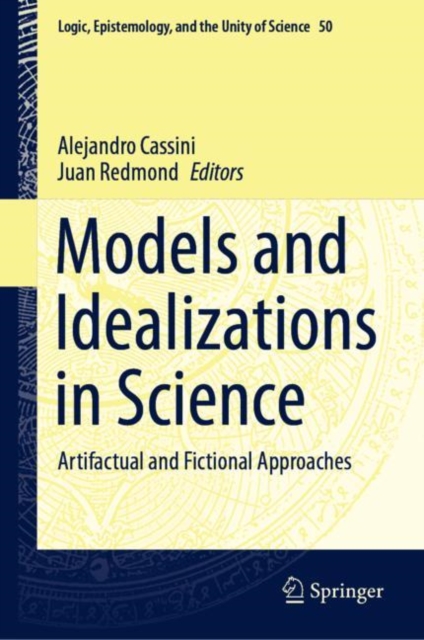
This book provides both an introduction to the philosophy of scientific modeling and a contribution to the discussion and clarification of two recent philosophical conceptions of models: artifactualism and fictionalism.
This book joins the contemporary recovery of Kant's empirical works to highlight the relevance of his concept of culture for understanding the sources of various characteristic modern dilemmas, such as the tension between culture and happiness, the morally ambivalent nature of cultural progress, or the existing conflicts between a factual plurality of cultures and the historical forces pressing toward a universal civilization.
This volume aims to contextualize the development and reception of Husserl's transcendental-phenomenological idealism by placing him in dialogue with his most important interlocutors - his mentors, peers, and students.
This book shows us how rather than abandoning psychology once he liberated phenomenology from the psychologism of the philosophy of arithmetic, Edmund Husserl remained concerned with the ways in which phenomenology held important implications for a radical reform of psychology throughout his intellectual career.
It was not so long ago that the dominant picture of Kant's practical philosophy was forma-listic, focusing almost exclusively on his Groundwork of the Metaphysics of Morals and Critique of Practical Reason.
This Handbook provides a comprehensive and authoritative analysis of the philosophical dimensions of German Romanticism, a movement that challenged traditional borders between philosophy, poetry, and science.
This book re-evaluates the philosophical status of Samuel Taylor Coleridge by providing an extended comparison between his work and the phenomenological theory of Edmund Husserl.
This book presents a multidisciplinary overview of a little known interethnic conflict in the southernmost part of the Americas: the tensions between the Mapuche indigenous people and the settlers of European descent in the Araucania region, in southern Chile.
The book is the first detailed and full exegesis of the role of death in Heidegger's philosophy and provides a decisive answer to the question of being.
Derrida and Textual Animality: For a Zoogrammatology of Literature analyses what has come to be known, in the Humanities, as 'the question of the animal', in relation to literary texts.
This book is a critical re-evaluation of Jean-Paul Sartre's phenomenological ontology, in which a theory of egological complicity and self-deception informing his later better known theory of bad faith is developed.
This book examines the role that human subjective experience plays in the creation of reality and introduces a new concept, the Bubble Universe, to describe the universe as it looks from the subjective viewpoint of an individual.
This book offers fresh perspective on the role of phenomenology in the philosophy of physics which opens new avenues for discussion among physicists, "e;standard"e; philosophers of physics and philosophers with phenomenological leanings.
Over the last four decades, John Dewey's pragmatist philosophy has formed an intellectual core in design research, underpinning Donald Schon's theory of reflective practice, the experiential perspective in HCI and the democratic commitments of participatory design.