The renowned postmodernist philosopher's tour-de-force contemplation of sex, technology, politics and disease in Western culture after the revolutionary 'orgy' of the 1960s.
This book presents a full decade of Sartre's work, from the publication of the Critique of Dialectical Reason in 1960, the basic philosophical turning-point in his postwar development, to the inception of his major study on Flaubert, the first volumes of which appeared in 1971.
This third book in the Cool Memories series is culled from Baudrillard's notebooks in the period when he was composing The Illusion of the End and The Perfect Crime.
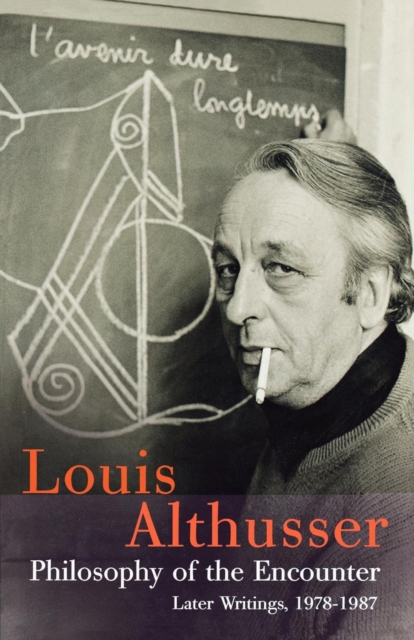
In the late 1970s and 1980s, Louis Althusser endured a period of intense mental instability during which he murdered his wife and was committed to a psychiatric hospital.
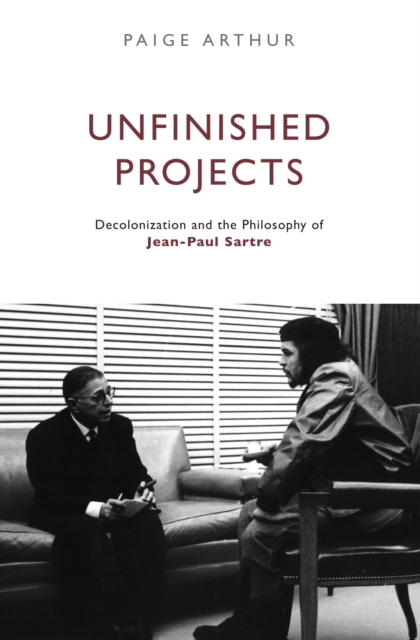
In this major new reading of Sartre's life and work, Paige Arthur traces the relationship between the philosopher's decades-long commitment to decolonization and his intellectual positions.
Originally published in 1962, when Lefebvre was beginning his career as a lecturer in sociology at the University of Strasbourg, it established his position in the vanguard of a movement which was to culminate in the events of May 1968.
Working his way through the various spheres and systems of everyday life-the political, the juridical, the economical, the aesthetic, the biological, among others-he finds that they are all characterized by the same non-equivalence, and hence the same eccentricity.
In his analysis of the deep social trends rooted in production, consumption, and the symbolic, Jean Baudrillard touches the very heart of the concerns of the generation currently rebelling against the framework of the consumer society.
In this present volume, the author of Man the Unknown makes clear why civilisation is on the edge of an abyss and propounds three basic laws of nature in which, he believes, lies mankind's only salvation: Effects of Chemical Factors, Effects of Physical Factors, and Effects of Physiological Habits.
A brief yet informative book by one of the founders of analytic philosophy in which he introduces the reader to various analytic movements throughout the 20th century-Philosophy, Logicism, and Mathematics-and their application.
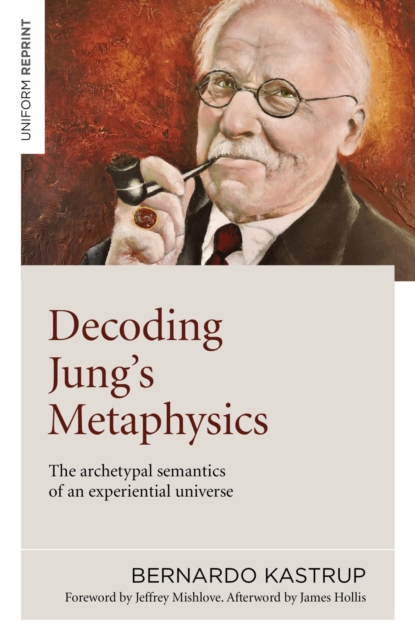
Embodied in this compact volume is a journey of discovery through Jungian thoughtscapes never before revealed with the depth, force and scholarly rigor you are about to encounter.
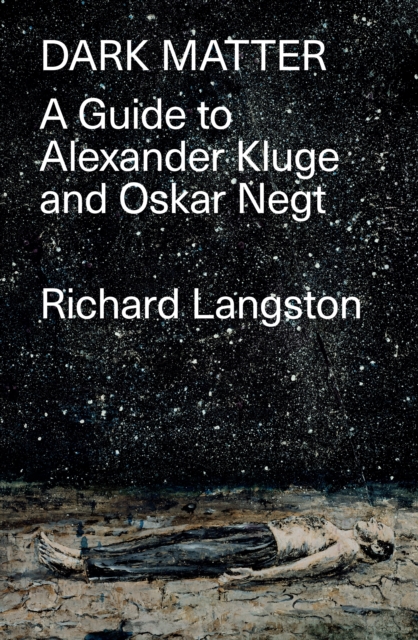
Collaborators for more than four decades, lawyer, author, filmmaker, and multimedia artist Alexander Kluge and social philosopher Oskar Negt are an exceptional duo in the history of Critical Theory precisely because their respective disciplines think so differently.
The System of Objects is a tour de force-a theoretical letter-in-a-bottle tossed into the ocean in 1968, which brilliantly communicates to us all the live ideas of the day-offering a cultural critique of the commodity in consumer society.
Although successive generations of the Frankfurt School have attempted to adapt Critical Theory to new circumstances, the work done by its founding members continues in the 21st century to unsettle conventional wisdom about culture, society and politics.
Between mass participation in two world wars and mass participation in Communist parties, in the 20th century millions of people across the globe addressed each other as 'comrade'.
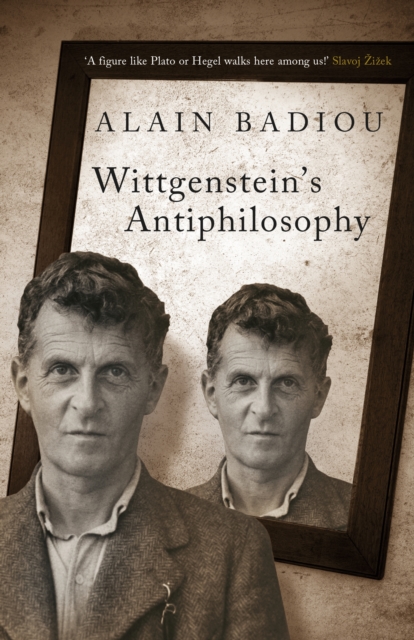
Alain Badiou takes on the standard bearer of the "e;linguistic turn"e; in modern philosophy and anatomizes the "e;antiphilosophy"e; of Ludwig Wittgenstein.
A compelling reevaluation of the Enlightenment from one of its leading historiansIn this concise and powerful book, one of the world's leading historians of the Enlightenment provides a bracing and clarifying new interpretation of this watershed period.
Adorno, Foucault, and the Critique of the West argues that critical theory continues to offer valuable resources for critique and contestation during this turbulent period in our history.
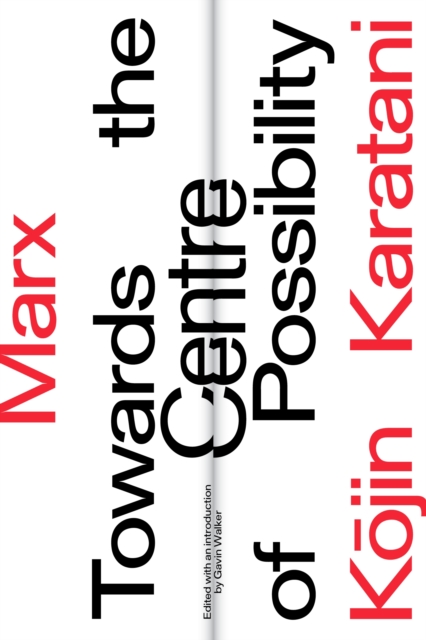
Originally published in 1974, Kojin Karatani's Marx: Towards the Centre of Possibility has been among his most enduring and pioneering works in critical theory.