The challenge presented by the recent tendencies to "e;naturalize"e; phenomenology, on the basis of the progress in biological and neurological sciences, calls for an investigation of the traditional mind-body problem.
Mit diesem Sammelband sollen die zahlreichen Bezüge der Phänomenologie zu den Nachbardisziplinen in den Geisteswissenschaften und die vielfältigen Ansätze zu einer Kooperation mit den Naturwissenschaften dargestellt und zugleich belebt werden.
This study brings together ideas developed over many years in various lectures in an endeavour to clarify the concept of hermeneutic fore-structure of scientific research.
Abductive Reasoning: Logical Investigations into Discovery and Explanation is a much awaited original contribution to the study of abductive reasoning, providing logical foundations and a rich sample of pertinent applications.
(YET ANOTHER INTRODUCTION IN PHENOMENOLOGY) In both his published and unpublished works, Edmund Husserl, the "e;father of phenomenology,"e; struggles repeatedly with the relation of the individual subject and intersubjectivity.
By proposing the Microcosm and Macrocosm analogy for dialogue between Islamic Philosophy and Occidental Phenomenology, the authors of this volume are reviving the perennial positioning of the human condition in the play of forces within and without the human being.
Having established in the ontopoiesis/phenomenology of life the creative function of the human being as the fulcrum of our beingness-in-becoming, let us now turn to investigate the creative logos.
Prompted and ever diversified by the specifically human interrogative logos, scientific inquiries seek a common system of links in order to mutually confirm and rectify their results.
Charles Sanders Peirce (1839-1914), the principal subject of this book, was one of the most profound and prolific thinkers and scientists to have come out of the United States.
Situated at the crossroads of nature and culture, physics and consciousness, cosmos and life, history - intimately conjoined with time - continues to puzzle the philosopher as well as the scientist.
During its century-long unfolding, spreading in numerous directions, Husserlian phenomenology while loosening inner articulations, has nevertheless maintained a somewhat consistent profile.
This anthology originated from three conferences, which were held at Waseda University, Tokyo, Japan, on March 26-28, 1999, at the Univ- sity of Konstanz, Germany, on May 26-29, 1999 and a session at the SPHS annual meeting at the University of Oregon, USA, on October 5-7, 1999.
When I heard the rumor that the findings about the central nervous system obtained with new technology, such as Magnetic Resonance Imaging (MRI) and Positron Emission Tomography (PET), were too subtle to correlate with the crude results of many decades of behavioristic psychology, and that some psychologists were now turning to descriptions of subjective phenomena in William James, Edmund Husserl, and Maurice Merleau-Ponty-and even in Buddhism-I asked myself, "e;Why not Aron Gurwitsch as well?
At the origin of this volume, a simple question: what to make of that surprisingly monotonous series of statements produced by our societies and our philosophers that all converge in one theme - the importance of difference?
The goal of the investigation is a phenomenological theory of the methods and later the methodology of the human sciences, first of all the philological interpretation of texts.
-Selected papers on phenomenology offers the best work in this field by the acclaimed historian of philosophy, Karl Schuhmann (1941-2003), displaying the extraordinary range and depth of his unique scholarship, -Topics covered include the development of Husserl's concept of intentionality, Husserl and Indian philosophy, the origins of speech act theory in Munich phenomenology, the historical background of the notion of "e;phenomenology"e;, and Johannes Daubert's critique of Martin Heidegger, -This book brings together, in chronological arrangement, fourteen papers.
In his last work, "e;Crisis of the European Sciences and Transcendental Phenomenology"e;, Edmund Husserl formulated a radical new approach to phenomenological philosophy.
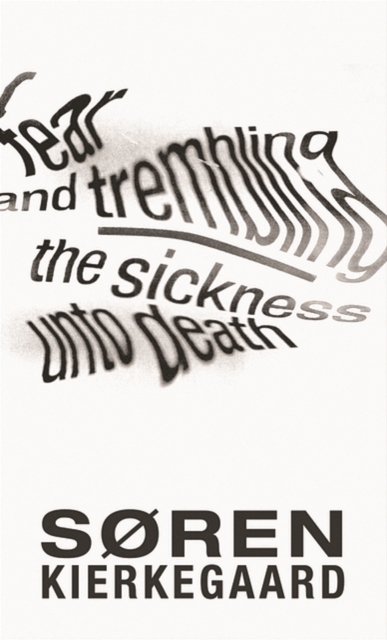
A masterful new translation of one of Kierkegaard's most engaging worksIn the Sermon on the Mount, Jesus tells his followers to let go of earthly concerns by considering the lilies of the field and the birds of the air.
This new edition features the previously unpublished delivery text of Berlin's inaugural lecture as a professor at Oxford, which derives from this volume and stands as the briefest and most pithy version of his famous essay "e;Two Concepts of Liberty.
A comprehensive look at the intellectual and cultural innovations of the Weimar periodDuring its short lifespan, the Weimar Republic (1918-33) witnessed an unprecedented flowering of achievements in many areas, including psychology, political theory, physics, philosophy, literary and cultural criticism, and the arts.
A brilliant brief account of romanticism and its influence from one of the most important philosophers and intellectual historians of the twentieth centuryIn The Roots of Romanticism, one of the twentieth century's most influential philosophers dissects and assesses a movement that changed the course of history.
The Devil's Tabernacle is the first book to examine in depth the intellectual and cultural impact of the oracles of pagan antiquity on modern European thought.
Walter Lowrie's classic, bestselling translation of Soren Kierkegaard's most important and popular books remains unmatched for its readability and literary quality.
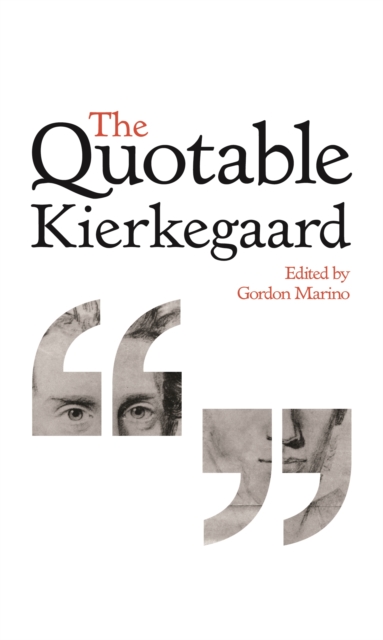
The most comprehensive and authoritative collection of Kierkegaard quotations ever publishedWhy I so much prefer autumn to spring is that in the autumn one looks at heavenin the spring at the earth.
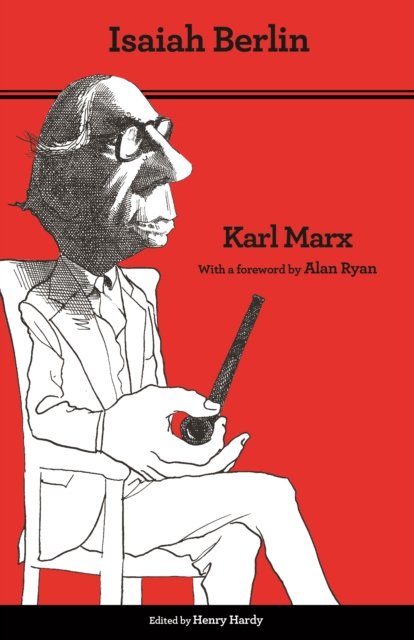
Isaiah Berlin's intellectual biography of Karl Marx has long been recognized as one of the best concise accounts of the life and thought of the man who had, in Berlin's words, a more "e;direct, deliberate, and powerful"e; influence on mankind than any other nineteenth-century thinker.
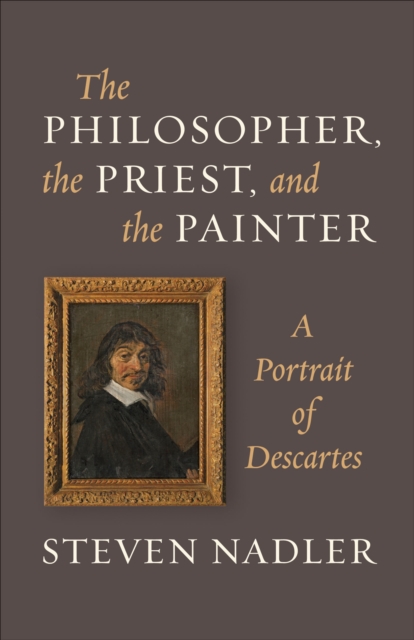
How a famous painting opens a window into the life, times, and philosophy of Rene DescartesIn the Louvre museum hangs a portrait that is considered the iconic image of Rene Descartes, the great seventeenth-century French philosopher.
"e;In the vast literature of love, The Seducer's Diary is an intricate curiosity--a feverishly intellectual attempt to reconstruct an erotic failure as a pedagogic success, a wound masked as a boast,"e; observes John Updike in his foreword to Soren Kierkegaard's narrative.
Soren Kierkegaard, the nineteenth-century Danish philosopher rediscovered in the twentieth century, is a major influence in contemporary philosophy, religion, and literature.
Between 1945 and 1953, while the Soviet Union confronted postwar reconstruction and Cold War crises, its unchallenged leader Joseph Stalin carved out time to study scientific disputes and dictate academic solutions.
Why democracy is the best way of deciding how decisions should be madePragmatism and its consequences are central issues in American politics today, yet scholars rarely examine in detail the relationship between pragmatism and politics.
The Flame of Eternity provides a reexamination and new interpretation of Nietzsche's philosophy and the central role that the concepts of eternity and time, as he understood them, played in it.
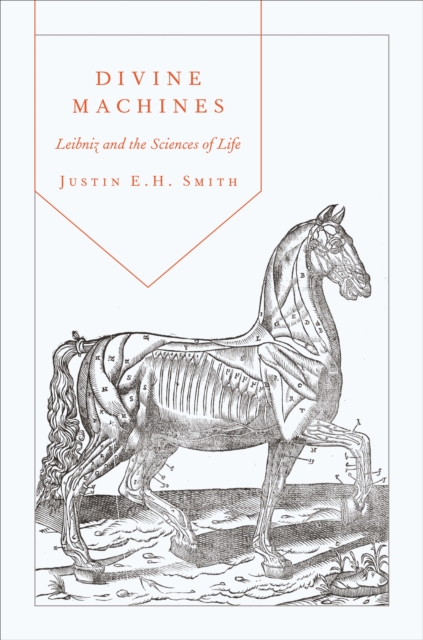
Though it did not yet exist as a discrete field of scientific inquiry, biology was at the heart of many of the most important debates in seventeenth-century philosophy.
We think of the Enlightenment as an era dominated by ideas of progress, production, and industry--not an era that favored the lax and indolent individual.
In the most influential chapter of his most important philosophical work, the Phenomenology of Spirit, Hegel makes the central and disarming assertions that "e;self-consciousness is desire itself"e; and that it attains its "e;satisfaction"e; only in another self-consciousness.