This book explores the relevance of Sartre's work in various areas of contemporary philosophy, including the imagination, philosophy of language, scepticism, social ontology, logic, film, practical rationality, emotions, and psychoanalysis.
This book explores the relevance of Sartre's work in various areas of contemporary philosophy, including the imagination, philosophy of language, scepticism, social ontology, logic, film, practical rationality, emotions, and psychoanalysis.
Ralph Waldo Emerson: The Wisdom & The Philosophy gathers the central energies of Emerson's thought: self-reliance, moral intuition, nature as revelation, and the sovereignty of the individual mind.
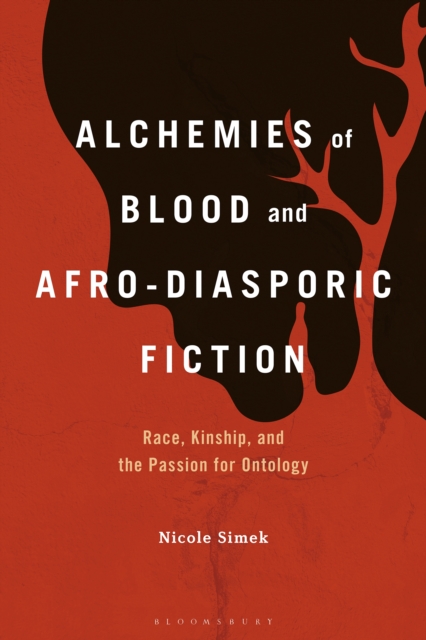
Alchemies of Blood and Afro-Diasporic Fiction focuses on the resurgence of biological racism in 21st-century public discourse, the ontological and material turns in the academy that have occurred over the same time period, and how Afro-diasporic fiction has responded to both with alternative visions of bloodlines, kinship, and community.
Alchemies of Blood and Afro-Diasporic Fiction focuses on the resurgence of biological racism in 21st-century public discourse, the ontological and material turns in the academy that have occurred over the same time period, and how Afro-diasporic fiction has responded to both with alternative visions of bloodlines, kinship, and community.
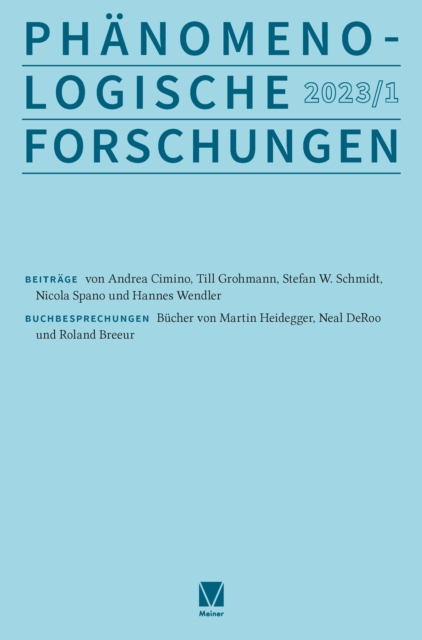
Die von Thiemo Breyer, Inga Römer und Michela Summa herausgegebenen »Phänomenologischen Forschungen« sind ein international offenes Forum für die Publikation aller im weitesten Sinne phänomenologisch orientierten Arbeiten.
1973 identifizierte ein Mitarbeiter der Deutschen Bank in Heidelberg den einflussreichen Literatursoziologen und Marxisten György Lukács (1885–1971) als den Besitzer eines dort seit 1917 hinterlegten Materialkonvoluts.
The 100th anniversary of the first publication of Wittgenstein's Tractatus is celebrated by a collection of original papers by well-known experts on various aspects of one of the greatest works of philosophy in the twentieth century.
The 100th anniversary of the first publication of Wittgenstein's Tractatus is celebrated by a collection of original papers by well-known experts on various aspects of one of the greatest works of philosophy in the twentieth century.
Heideggerian Existential Therapy focuses on Martin Heidegger's philosophy in order to provide both a wider accessibility as well as understanding of its relevance to therapeutic practice.
Heideggerian Existential Therapy focuses on Martin Heidegger's philosophy in order to provide both a wider accessibility as well as understanding of its relevance to therapeutic practice.
This book investigates a number of central problems in the philosophy of Charles Peirce grouped around the realism of his semiotics: the issue of how sign systems are developed and used in the investigation of reality.
Hegels Ruhm gründet sich auf seine Berliner Vorlesungen, die in der zweiten Abteilung der »Gesammelten Werke« nun erstmals in textkritischer Edition vorgelegt werden.
«Finitud y culpabilidad» aborda la culpa y la experiencia del mal humano, cuyo carácter absurdo y opaco para la descripción esencial obliga a liberar la indagación del paréntesis propio del análisis fenomenológico.
Dieser Band enthält Schriften und Fragmente aus der zweiten Hälfte der Berliner Jahre Hegels, von 1826–1831: Ueber die Bekehrten aus der Berliner Schnellpost, die Rezensionen und Repliken aus den Jahrbüchern für wissenschaftliche Kritik, die lateinische Rede zur 300-Jahr-Feier der Übergabe der Confessio Augustana und die Abhandlung Über die englische Reformbill, ferner als Beilagen drei Fragmente, die Vorstufen zur Hamann-Rezension, zur Replik auf Schubarth und zur Reformbill-Schrift bilden, und schließlich einen Nachtrag zu Band 15 der Gesammelten Werke.
Inhaltsverzeichnis: WISSENSCHAFT DER LOGIK ZWEITER BAND DIE SUBJECTIVE LOGIK ODER LEHRE VOM BEGRIFF Vorbericht Inhaltsanzeige Vom Begriff im allgemeinen Eintheilung ERSTER ABSCHNITT DIE SUBJECTIVITÄT Erstes Kapitel Der Begriff A) Der allgemeine Begriff B) Der besondere Begriff Anmerkung C) Das Einzelne Zweytes Kapitel Das Urtheil A.
Inhaltsverzeichnis: WISSENSCHAFT DER LOGIK ERSTER THEIL DIE OBJECTIVE LOGIK ERSTER BAND DIE LEHRE VOM SEYN Vorrede zur ersten Ausgabe Vorrede zur zweyten Ausgabe Inhaltsanzeige Einleitung Allgemeiner Begriff der Logik Allgemeine Eintheilung der Logik ERSTES BUCH Die Lehre vom Seyn Womit muß der Anfang der Wissenschaft gemacht werden?
Inhaltsverzeichnis: ENCYCLOPÄDIE DER PHILOSOPHISCHEN WISSENSCHAFTEN IM GRUNDRISSE Vorrede zur zweiten Ausgabe Vorrede zur ersten Ausgabe Vorwort zur dritten Ausgabe Inhalts-Anzeige Einleitung ERSTER THEIL.
Bringing together Edmund Husserl, Martin Heidegger and Jan Patocka, this book provides a comprehensive examination of the central role that questioning plays in phenomenology.
Dieses eBook: "Populäre Geschichte der Philosophie" ist mit einem detaillierten und dynamischen Inhaltsverzeichnis versehen und wurde sorgfältig korrekturgelesen.
Volume XXI Special Issue, 2023Part 1: Phenomenological Perspectives on Aesthetics and ArtPart 2: Heidegger and Contemporary French PhilosophyAim and Scope: The New Yearbook for Phenomenology and Phenomenological Philosophy provides an annual international forum for phenomenological research in the spirit of Husserl's groundbreaking work and the extension of this work by such figures as Reinach, Scheler, Stein, Heidegger, Sartre, Levinas, Merleau-Ponty and Gadamer.
This book considers diverse philosophical topics unified by the identification of false moves commonly found in modern philosophy, mainstream Anglo-American philosophy, and social theory.
This book considers diverse philosophical topics unified by the identification of false moves commonly found in modern philosophy, mainstream Anglo-American philosophy, and social theory.
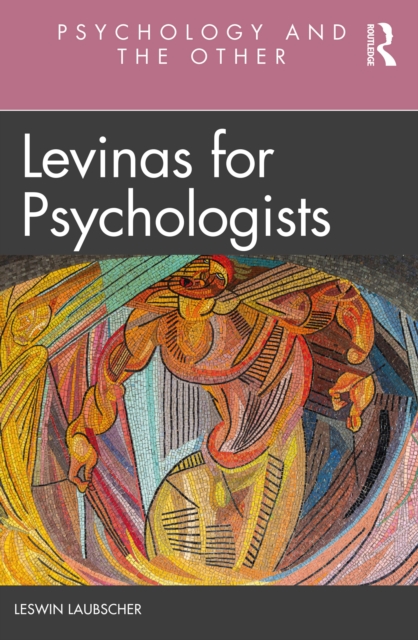
Levinas for Psychologists provides a rigorous, yet accessible, examination of Emmanuel Levinas's philosophy and its implications for psychology and the human and social sciences.
This Palgrave Handbook showcases how the phenomenological approach, especially but not only as developed by Alfred Schutz, can make important contributions to the theoretical analysis of macro-social phenomena such as the state, history, culture and interculturality, class relations and struggles, social movements and protests, capitalism, democracy, and digitalization processes.
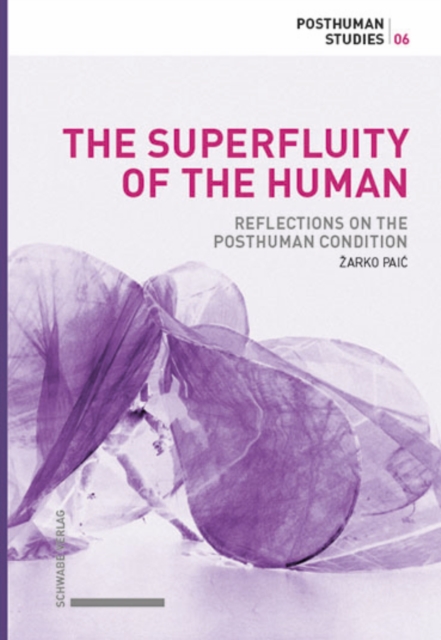
The author claims that concerning the "e;progress"e; and "e;development"e; of the technoscientific mind in the application of artificial intelligence, the anthropological definition of man has become not only outdated and ineffective, but "e;man"e; has become "e;superfluous"e; for the logic of the digital age.
Sofern es im phänomenologischen Sinne nur Sein geben kann, wenn es Erscheinen gibt, ist unsere Seinserfahrung an eine originär leibliche Subjektivität gebunden, welche als Lebenserprobung jeder Seinsbegegung transzendental vorausliegt.
This Palgrave Handbook showcases how the phenomenological approach, especially but not only as developed by Alfred Schutz, can make important contributions to the theoretical analysis of macro-social phenomena such as the state, history, culture and interculturality, class relations and struggles, social movements and protests, capitalism, democracy, and digitalization processes.