This impressive edited collection investigates the relationship between British Pop Art pioneer Eduardo Paolozzi and the philosopher Ludwig Wittgenstein.
This book examines the concept of post-truth and the impact it is having on contemporary life, bringing out both its philosophical and political dimensions.
This book brings together the work of Ludwig Wittgenstein and Jacques Lacan around their treatments of 'astonishment,' an experience of being struck by something that appears to be extraordinarily significant.
This book offers a new and original hypothesis on the origin of modal ontology, whose roots can be traced back to the mathematical debate about incommensurable magnitudes, which forms the implicit background for Plato's later dialogues and culminates in the definition of being as dynamis in the Sophist.
This book aids in the rehabilitation of the wrongfully deprecated work of William Parry, and is the only full-length investigation into Parry-type propositional logics.
From Aristotle to Cognitive Neuroscience identifies the strong philosophical tradition that runs from Aristotle, through phenomenology, to the current analytical philosophy of mind and consciousness.
This book explores the possibility of philosophical praxis by weaving an ontological thread through four principal thinkers: Heidegger, Schelling, Goethe, and Heraclitus.
This volume offers perspectives on the theme of surprise crossing philosophical, phenomenological, scientific, psycho-physiology, psychiatric, and linguistic boundaries.
This book is about Positioning Theory (Davies & Harre, 1990) and its potential applications in bilingual and multilingual contexts involving teachers, learners, speakers, and users of a second/foreign or additional language.
This book presents the history of metaphysics through transcendental phenomenology and interpretations of Kant, Fichte, Cohen, Windelband, Rickert, Husserl, Scheler, and Heidegger.
This book is an investigation of the role of creative labor and the five senses in Rainer Maria Rilke's prose works, including his "e;Primal Sound"e; essay, the Stories of God, The Notebooks of Malte Laurids Brigge, and his monograph on Auguste Rodin.
This book offers a readable introduction to the main aspects of thought experimenting in philosophy and science (together with related imaginative activities in mathematics and linguistics).
Critically evaluating and synthesizing all the previous research on the phenomenology of Czech philosopher Jan Patocka, the book brings a new voice into contemporary philosophical discussions.
This book provides a clear and nuanced appraisal of Hegel's treatment of Africa, India, and Islam, and of the implications of this treatment for postcolonial and global studies.
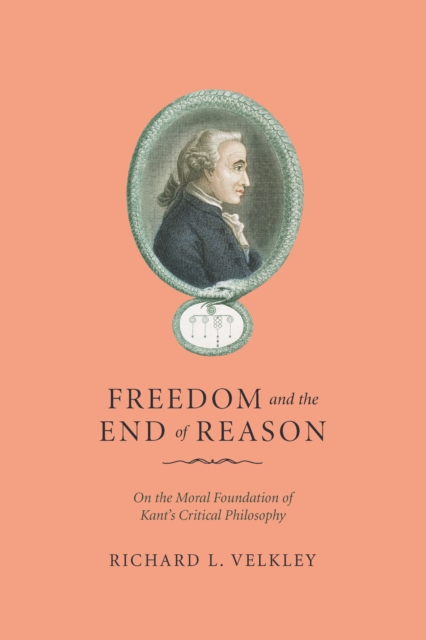
Ever since Kant and Hegel, the notion of autonomy-the idea that we are beholden to no law except one we impose upon ourselves-has been considered the truest philosophical expression of human freedom.
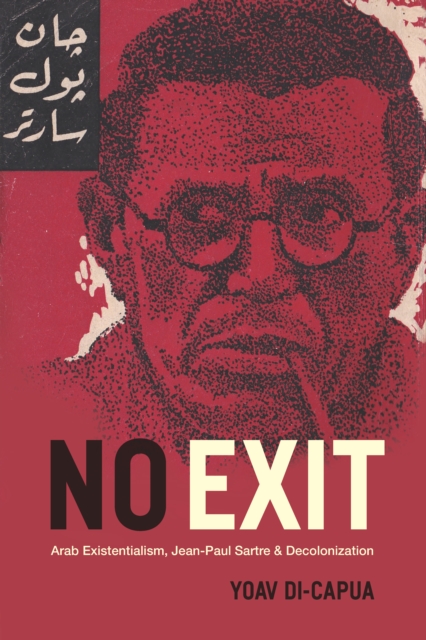
It is a curious and relatively little-known fact that for two decades-from the end of World War II until the late 1960s-existentialism's most fertile ground outside of Europe was in the Middle East, and Jean-Paul Sartre was the Arab intelligentsia's uncontested champion.
First published in 1985, this reissue indicates the extent to which our basic perceptual structure is bound to and limited by a particular underlying perceptual patterning.
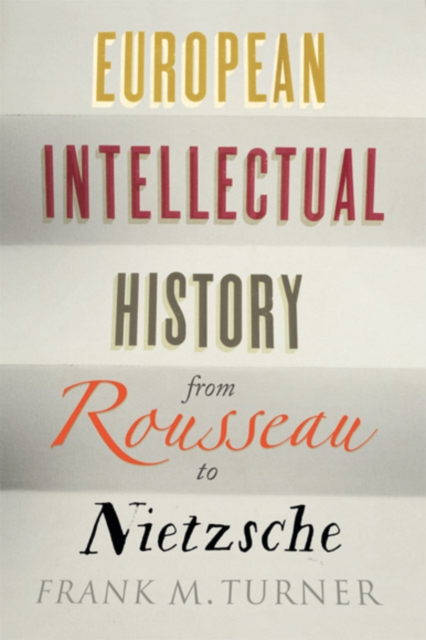
One of the most distinguished cultural and intellectual historians of our time, Frank Turner taught a landmark Yale University lecture course on European intellectual history that drew scores of students over many years.
The concept of the ordinary, along with such cognates as everyday life, ordinary language, and ordinary experience, has come into special prominence in late modern philosophy.
Marjorie Perloff, among our foremost critics of twentieth-century poetry, argues that Ludwig Wittgenstein provided writers with a radical new aesthetic, a key to recognizing the inescapable strangeness of ordinary language.
This book—the first commentary on Ernst Cassirer’s Metaphysics of Symbolic Forms—provides an introduction to the metaphysical views that underlie the philosopher’s conceptions of symbolic form and human culture.
By drawing on the insights of diverse scholars from around the globe, this volume systematically investigates the meaning and reality of the concept of negation in Post-Kantian Philosophy-German Idealism, Early German Romanticism, and Neo-Kantianism.
Many philosophical accounts of reason are geared toward providing rational justifications ex post facto rather than accounting for the role reason plays in actu in the process of creative work.