An inspired and impassioned historical examination of humanity's search for the divineFrom Plato to Wittgenstein and religions from Judaism to the Hindu tradition, interspersed with divine influences from Classical Greece, Romantic poetry, and the occasional scene from 'Alien', ';God: A Guide for the Perplexed' charts the path of humanity's great spiritual odyssey: the search for God.
'The most thought-provoking thing in our thought-provoking time is that we are still not thinking' Heidegger'We should never allow our fears of the expectations of others to set the frontiers of our destiny'Martin Heidegger was one of the most controversial philosophers of the 20th century, and still causes widespread division.
'What experience and history teaches us is that people and governments have never learned anything from history, or acted on principles deduced from it'What and how much I possess is a matter of indifference so far as rights are concerned'Education is the art of making man ethical'Without Hegel, modern thought is unthinkable - all those whose ideas have made the modern age have worked in his shadow.
As a parent, you want your children to grow up to become self-motivated, financially savvy, contributing members of society who maintain a deeply satisfying adult life.
Shinto: The Way of the Gods II - The Soul of Japan Between Tradition and PresentDiscover a unique journey into the fascinating world of Shintoism, the oldest religion in Japan, with "e;Shinto: The Way of the Gods II"e;.
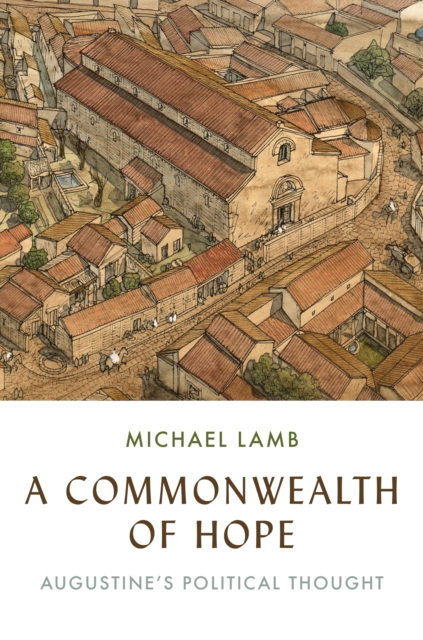
A bold new interpretation of Augustine's virtue of hope and its place in political lifeWhen it comes to politics, Augustine of Hippo is renowned as one of history's great pessimists, with his sights set firmly on the heavenly city rather than the public square.
To avid fans around the world, A Cup of Comfort has gained recognition as the #1 series for providing a pick-me-up when readers need it mostas well as for remarkable stories that turn the ordinary into the extraordinary.
THE NEW YORK TIMES BESTSELLER* From the writer and executive producer of the award-winning Netflix series The Good Place that made moral philosophy fun: a foolproof guide to making the correct moral decision in every situation you ever encounter, anywhere on earth, forever *'An absolute breeze to read; funny and enlightening and revealing' - Guardian'Enormously enjoyable, useful and readable' - The TimesHow can we live a more ethical life?
‘Émile, Or Treatise on Education’ is a treatise on the nature of education and on the nature of man written by Jean-Jacques Rousseau, who considered it to be the "best and most important of all my writings".
Philosophy may be said to contain the principles of the rational cognition that concepts afford us of things (not merely, as with logic, the principles of the form of thought in general irrespective of the objects), and, thus interpreted, the course, usually adopted, of dividing it into theoretical and practical is perfectly sound.
In What''s Wrong With The World Chesterton rightly points out that what people see as "wrong with the world" are only the symptoms of a deeper problem.
Men would never be superstitious, if they could govern all their circumstances by set rules, or if they were always favoured by fortune: but being frequently driven into straits where rules are useless, and being often kept fluctuating pitiably between hope and fear by the uncertainty of fortune''s greedily coveted favours, they are consequently, for the most part, very prone to credulity.
The theoretical knowledge of right and law in principle, as distinguished from positive laws and empirical cases, belongs to the pure science of right The science of right thus designates the philosophical and systematic knowledge of the principles of natural right.
Collected here in this omnibus edition are three of Nietzsche''s three most important books: The Anti-Christ, Beyond Good and Evil, and Thus Spake Zarathustra, as well as The Philosophy of Friedrich Nietzsche by Henry Louis Mencken.
Collected here are nine short essays, On the Sufferings of the World, The Vanity of Existence, On Suicide, Immortality: A Dialogue, Psychological Observations, On Education, Of Women, On Noise, and, A Few Parables, by the world renowned philosopher Arthur Schopenhauer.
After experience had taught me that all the usual surroundings of social life are vain and futile; seeing that none of the objects of my fears contained in themselves anything either good or bad, except in so far as the mind is affected by them, I finally resolved to inquire whether there might be some real good having power to communicate itself, which would affect the mind singly, to the exclusion of all else: whether, in fact, there might be anything of which the discovery and attainment would enable me to enjoy continuous, supreme, and unending happiness.
If there exists on any subject a philosophy (that is, a system of rational knowledge based on concepts), then there must also be for this philosophy a system of pure rational concepts, independent of any condition of intuition, in other words, a metaphysic.
My thoughts concerning the genealogy of our moral prejudices—for they constitute the issue in this polemic—have their first, bald, and provisional expression in that collection of aphorisms entitled Human, all-too-Human, a Book for Free Minds, the writing of which was begun in Sorrento, during a winter which allowed me to gaze over the broad and dangerous territory through which my mind had up to that time wandered.
The reference to the Antichrist is not intended to refer to the biblical Antichrist but is rather an attack on the "slave morality" and apathy of Western Christianity.
In Beyond Good and Evil, Nietzsche attacks past philosophers for their alleged lack of critical sense and their blind acceptance of the Christian premises in their consideration of morality.