The methodological needs of environmental studies are unique in the breadth of research questions that can be posed, calling for a textbook that covers a broad swath of approaches to conducting research with potentially many different kinds of evidence.
As bio-capital in the form of medical knowledge, skills and investments moves with greater frequency from its origin in First World industrialized settings to resource-poor communities with weak or little infrastructure, countries with emerging economies are starting to expand new indigenous science bases of their own.
Racial and ethnic categories have appeared in recent scientific work in novel ways and in relation to a variety of disciplines: medicine, forensics, population genetics and also developments in popular genealogy.
In the past fifteen years, there has been a virtual explosion of anthropological literature arguing that morality should be considered central to human practice.
As in a number of France s major cities, civil war erupted in Lyon in the summer of 1793, ultimately leading to a siege of the city and a wave of mass executions.
Anthropologists have expressed wariness about the concept of evil even in discussions of morality and ethics, in part because the concept carries its own cultural baggage and theological implications in Euro-American societies.
An unexpected detour can change the course of our lives forever, and, for white American anthropologist Margaret Willson, a stopover in Brazil led to immersion in a kaleidoscopic world of street urchins, capoeiristas, drug dealers, and wise teachers.
Leaves of Water is an inspirational, thought-provoking poetry book with poems featuring such topics as the calming symphony of rain on the leaves, the silence of the wind and the glory of God.
In this provocative new book, renowned educator and philosopher Nel Noddings extends her influential work on the ethics of care toward a compelling objective-global peace and justice.
With numerous examples to supplement her rich theoretical discussion, Nel Noddings builds a compelling philosophical argument for an ethics based on natural caring, as in the care of a mother for her child.
This study of religion and violence "e;forces us to reexamine some of our most cherished self-images of modern liberal democratic societies"e; (Charles Taylor).
Inspired by a vision of soaring towers, high-speed transit cars, pristine skies, and blossoming gardens, we move beyond today's automobile-based urban model and embrace a design where the freedom of the individual is paramount and the human energy that defines city life flows unimpeded within an urban matrix engineered to allow for its highest expression.
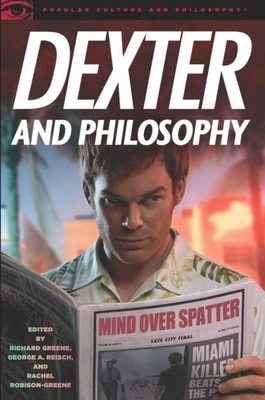
What explains the huge popular following for Dexter, currently the most-watched show on cable, which sympathetically depicts a serial killer driven by a cruel compulsion to brutally slay one victim after another?
The increasing interest in postcolonial theologies has initiated a vital conversation within and outside the academy in recent decades, turning many "e;standard theologies"e; on their head.
How do educators, clergy, attorneys, and the concerned public come to terms with meaningful, workable ethics in an age that eschews any attempt to define truth and error?
Yesterday is a book that each of us needs to write based on who and what we were and have become; the sum total of our education and experiences as we made our way through our allotted years.
Sources of Holocaust Insight maps the odyssey of an American Christian philosopher who has studied, written, and taught about the Holocaust for more than fifty years.
The modern restorative justice movement, perhaps one of the most important social movements of our time, was born in a Christian home to Christian parents, specifically to Christian peace workers striving to put their faith into action in the public arena.
The intention of Trauma Sensitive Theology is to help theologians, professors, clergy, spiritual care givers, and therapists speak well of God and faith without further wounding survivors of trauma.
Symptoms of broken systems are all around us, due to our over-consumptive lifestyles, nearly unfettered capitalism, failure to live peaceably together, and the societal dismissal of nature's limits.
Have you ever wondered how it would look to live out a Christian sexual ethic amid the varied and confusing sexual messages that are part of modern culture?