Two trends in the early twenty-first-century intersect to give this volume immediate relevance: 1) The emerging postmodern ethos in North America is calling into question many things we have taken for granted, including the purposes of the church; and 2) our time is increasingly fractious as groups with distinct worldviews become polarized and often antagonistic.
Two and a half years after the devastation of Hurricanes Katrina and Rita, New Orleans and south Louisiana continue to struggle in an unsettled gumbo of environmental, social, and rebuilding chaos.
The purpose of the series is to explore the central and unique role of organizational ethics in creating and sustaining a pluralistic, free enterprise economy.
Developed through a series of encounters with a Bosnian Serb soldier, The ethics of researching war is a meditation on the possibilities and limitations of responding to the extreme violence of the Bosnian war.
From Buffy the Vampire Slayer to the Marvel Cinematic Universe, Joss Whedon's work presents various representations of home spaces that give depth to his stories and storytelling.
The ethical dimensions of managing healthcare services are often daunting, but the sixth edition of this highly regarded text provides the principles to educate students and guide practitioners as they strive to make the "e;right"e; decisions.
Love in a Time of Climate Change challenges readers to develop a loving response to climate change, which disproportionately harms the poor, threatens future generations, and damages God's creation.
Planetary Solidarity brings together leading Latina, womanist, Asian American, Anglican American, South American, Asian, European, and African woman theologians on the issues of doctrine, women, and climate justice.
A compelling exploration of how our pursuit of happiness makes us unhappyWe live in an age of unprecedented prosperity, yet everywhere we see signs that our pursuit of happiness has proven fruitless.
From Pulitzer Prize-finalist Steven Nadler, an engaging guide to what Spinoza can teach us about life's big questionsIn 1656, after being excommunicated from Amsterdam's Portuguese-Jewish community for "e;abominable heresies"e; and "e;monstrous deeds,"e; the young Baruch Spinoza abandoned his family's import business to dedicate his life to philosophy.
Dealing with a diverse set of problems in practical and theoretical ethics, these fourteen essays, three of them previously unpublished, reconfirm Joel Feinberg's leading position in the field of legal philosophy.
In this completely revised Texas A&M University Press edition, Guthery and coauthor Fidel Hernndez have breathed new life into a classic work that for more than twenty years has been teaching biologists, managers, and ranchers to think like a quail.
A new edition of the highly acclaimed book Multiculturalism and "e;The Politics of Recognition,"e; this paperback brings together an even wider range of leading philosophers and social scientists to probe the political controversy surrounding multiculturalism.
A bold reevaluation of Spinoza that reveals his powerful, inclusive vision of religion for the modern ageSpinoza is widely regarded as either a God-forsaking atheist or a God-intoxicated pantheist, but Clare Carlisle says that he was neither.
The acknowledged masterpiece of Unamuno expresses the anguish of modern man as he is caught up in the struggle between the dictates of reason and the demands of his own heart.
An intellectual history of the philosophers who grappled with the problem of evil, and the case for why pessimism still holds moral value for us todayIn the seventeenth and eighteenth centuries, philosophers engaged in heated debates on the question of how God could have allowed evil and suffering in a creation that is supposedly good.
A provocative and timely case for how the science of genetics can help create a more just and equal societyIn recent years, scientists like Kathryn Paige Harden have shown that DNA makes us different, in our personalities and in our health-and in ways that matter for educational and economic success in our current society.
This book is comprised of essays previously published in Philosophy & Public Affairs and also an extended excerpt from Michael Walzer's Just and Unjust Wars.
Nineteenth-century European thought, especially in Germany, was increasingly dominated by a new historicist impulse to situate every event, person, or text in its particular context.
This is the first major work in English to explore at length the meaning, context, aims, and vital importance of Thomas Hobbes's concepts of the law of nature and the right of nature.
Machiavelli's Ethics challenges the most entrenched understandings of Machiavelli, arguing that he was a moral and political philosopher who consistently favored the rule of law over that of men, that he had a coherent theory of justice, and that he did not defend the "e;Machiavellian"e; maxim that the ends justify the means.
After deciding to terminate his authorship with the pseudonymous Concluding Unscientific Postscript, Kierkegaard composed reviews as a means of writing without being an author.
A beautiful reflection on the rhythm of God's justice and a call to engage with that rhythm in a way that takes us back toward healing, wholeness, and restoration.
Aimed at addressing the difficulties associated with teaching often abstract elements of technical ethics, this book is an extended fictional case study into the complexities of technology and social structures in complex organizations.
New perspectives on the role of collective responsibility in modern politicsStates are commonly blamed for wars, called on to apologize, held liable for debts and reparations, bound by treaties, and punished with sanctions.
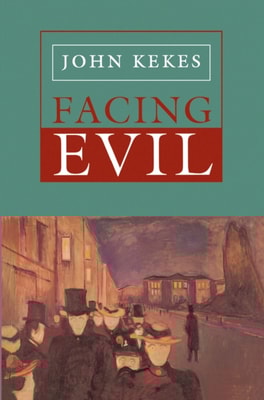
Arguing that the prevalence of evil presents a fundamental problem for our secular sensibility, John Kekes develops a conception of character-morality as a response.
This is the first comprehensive interpretation of John Locke's solution to one of philosophy's most enduring problems: free will and the nature of human agency.
Adam Seligman, one of our most important social thinkers, continues the incisive critique of modernity he began in his previously acclaimed The Idea of Civil Society and The Problem of Trust.