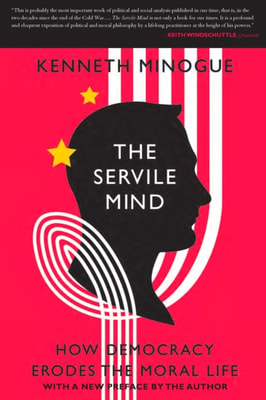
One of the grim comedies of the twentieth century was that miserable victims of communist regimes would climb walls, swim rivers, dodge bullets, and find other desperate ways to achieve liberty in the West at the same time that progressive intellectuals would sentimentally proclaim that these very regimes were the wave of the future.
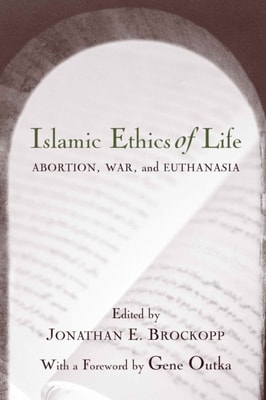
A pioneering work on controversial issues within the Muslim worldIslamic Ethics of Life considers three of the most contentious ethical issues of our time-abortion, war, and euthanasia-from the Muslim perspective.
Ethical questions lie at the very heart of all philosophy, and no one is better equipped to untangle the many facets of ethical theory than respected thinker and professor Jan Narveson.
Against the idea that comedy offers us a relief from the horrors of the real world, the German-Jewish-American filmmaker Ernst Lubitsch defended his masterpiece To Be or Not to Be, a comedy from 1942 about the concurrent Nazi occupation of Poland, with the claim that he had made up his mind "e;to make a picture with no attempt to relieve anybody from anything at any time.
This dramatic re-evaluation of Sartres ethical theory establishes its author as a leading American exponent of phenomenology and wins many new followers for Sartre in the English-speaking world.
Follow the author's odyssey of the mind in his endless search for God and meaning in life, as well as his plea for moral action in the uncertainty, discord, and chaos of a world that appears callous and cruel and is prone to political exploitation of vulnerable people, cultures, and countries of our shared planet.
Human embryos, it has been said, "e;have no muscles, nerves, digestive system, feet, hands, face, or brain; they have nothing to distinguish them as a human being, and if one of them died, no one would mourn as they would for one of us.
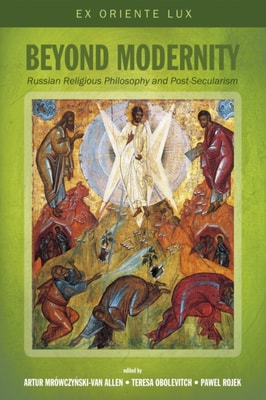
The overall problem raised in this book is that the Western culture of modern rationality, power, and economics departs from a rather narrow, secular and ego-centric worldview.
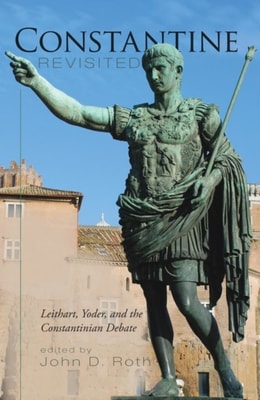
This collection of essays continues a long and venerable debate in the history of the Christian church regarding the legacy of the Roman emperor Constantine the Great.
Taking its cue from Mark Nation's regret that John Howard Yoder refrained from a fuller engagement with the Western philosophical tradition, this book is an effort to explore the possibilities inherent in that conversation.
Obesity in the Global North and starvation in the Global South can be attributed to the same cause: the concentration of enormous power in the hands of transnational agricultural corporations.
Dennis Jensen looks at two very important problems that have led many to reject religious belief generally and Christianity in particular: Why has God allowed the extreme suffering we find in our world?
A Bird in the Hand is not a "e;how to"e; book, but a "e;how so"e; book in which the reader is invited to travel with Leah Kostamo on the wild ride of salmon saving, stranger welcoming, and God worshiping as she and her husband help establish the first Christian environmental center in Canada.
Goicoechea explains Nietzsche's thesis that the agapeic love of Jesus is humankind's highest affirmation, even for sinners like the author's father, Joe Goicoechea, who lived it out existentially.
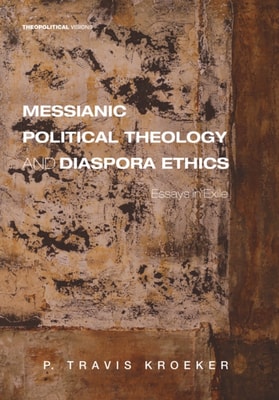
Political theology as a normative discourse has been controversial not only for secular political philosophers who are especially suspicious of messianic claims but also for Jewish and Christian thinkers who differ widely on its meaning.
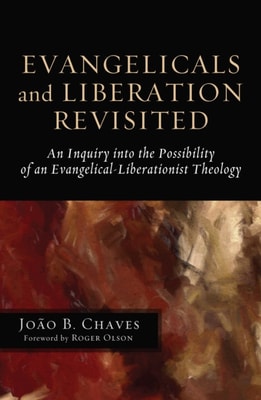
Despite the fact that the theological gains of Latin American Liberation Theology (LALT) have been incorporated into several theologies around the world, many North Atlantic evangelicals still consider LALT a heresy.
The Church of God Reformation Movement (founded in 1881) has the distinction of having been founded on the two core principles of holiness and visible unity.
Because the Catholic Church, other Christian churches, and almost every national government permit exceptions to God's commandment that "e;you shall not kill,"e; Johannes Ude examines Catholic moral law to discern whether this commandment has absolute validity or may be modified so that in certain instances it is permissible to kill another human being.
For the Healing of the Nation offers a serious look at the social and political climate in the United States from a biblical perspective, emphasizing race and "e;otherness,"e; economics and the environment, and institutional violence (war and capital punishment).
Theologizing in Black is a creative and rigorous comparative study on black theological musings and liberative intellectual contemplations engaging the theological ethics and anthropology of both continental African theologians (Tanzania, Kenya, Democratic Republic of the Congo) and black theologians in the African Diaspora (Haiti, Trinidad, Jamaica, Antigua and Barbuda, United States).