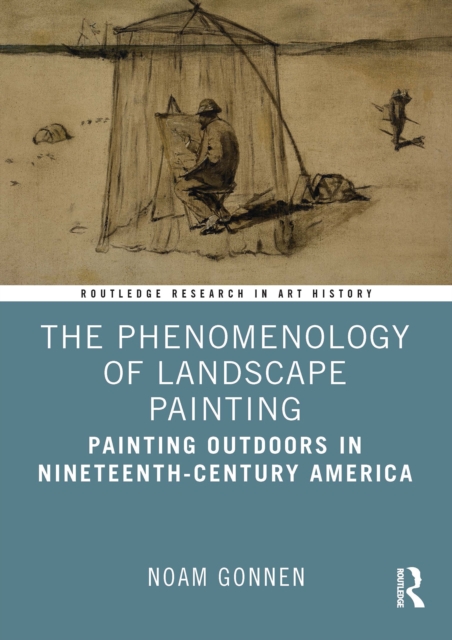
Offering a new view of nineteenth-century American landscape painting, this book focuses on the praxis of open-air painting and its distinctive role in generating and invigorating a new conceptualization of American landscape painting in the late nineteenth century.
Offering a new view of nineteenth-century American landscape painting, this book focuses on the praxis of open-air painting and its distinctive role in generating and invigorating a new conceptualization of American landscape painting in the late nineteenth century.
The volume investigates the phenomenology of individual agency in the context of the challenges dictated by modern science and technology as well as the role of the individual body in the creation of the societal/cultural reality.
The volume investigates the phenomenology of individual agency in the context of the challenges dictated by modern science and technology as well as the role of the individual body in the creation of the societal/cultural reality.
Aesthetic Transaction, Digital Answerability and Literature: Contact Light brings the theories of John Dewey, Mikhail Bakhtin, and Louise Rosenblatt into the evolving world of digital culture, where texts, images, and performances move through widening currents of circulation and meaning gathers shape through renewed contact.
Aesthetic Transaction, Digital Answerability and Literature: Contact Light brings the theories of John Dewey, Mikhail Bakhtin, and Louise Rosenblatt into the evolving world of digital culture, where texts, images, and performances move through widening currents of circulation and meaning gathers shape through renewed contact.
Aesthetic Ethics: Towards A Moral Imagination seeks to challenge and expand the boundaries of how we conceive ethics and morality, proposing that beauty, sublimity and emotional resonances found in the realm of the arts are essential for re-imagining a more just and compassionate world.
Aesthetic Ethics: Towards A Moral Imagination seeks to challenge and expand the boundaries of how we conceive ethics and morality, proposing that beauty, sublimity and emotional resonances found in the realm of the arts are essential for re-imagining a more just and compassionate world.
A Matter of Detail inspires new ways of thinking about detail by bringing anthropology, philosophy, art history, and aesthetics into direct conversation.
This thoughtful exploratory study deals with three seminal issues in film theory, notably the relationship of image and sound, early manifestations of the moving image, and new connections between the voice and the use of the body in contemporary cinema.
This thoughtful exploratory study deals with three seminal issues in film theory, notably the relationship of image and sound, early manifestations of the moving image, and new connections between the voice and the use of the body in contemporary cinema.
La inteligencia artificial se está abriendo paso con fuerza también en el ámbito del arte, y una serie de preguntas que hasta no hace mucho nos hubieran sonado insólitas, ahora ya, para bien o para mal, nos resultan habituales: ¿Puede una máquina ser verdaderamente creativa?
Leading international scholars present analysis and case studies from different cultural settings, East and West, exploring aesthetic interest and experience in our daily lives at home, in workplaces, using everyday things, in our built and natural environments, and in our relationships and communities.
This book examines the desire for, and intoxication with destruction as it appears in cultural objects and representation, arguing that all cultural and aesthetic value is fundamentally predicated on its own fragility, as well as the living transience of those who make and encounter it.
This book brings together two of the most important figures of twentieth-century criticism, Walter Benjamin and Theodor Adorno, to consider a topic that was central to their thinking: the place of and reason for art in society and culture.
The Aesthetics and Politics of Cinematic Pedestrianism: Walking in Films offers a rich exploration of the cinematic aesthetics that filmmakers devised to reflect the corporeal and affective experience of walking in the city.