As one of the most important philosophers of the 20th century, Michel Foucault's reputation today rests on his political philosophy in relation to the contemporary subject in a neo-liberal and globalized society.
In The Value of Literature, Rafe McGregor employs a unique approach - the combination of philosophical work on value theory and critical work on the relationship between form and content - to present a new argument for, and defence of, literary humanism.
Against Value in the Arts and Education proposes that it is often the staunchest defenders of art who do it the most harm, by suppressing or mollifying its dissenting voice, by neutralizing its painful truths, and by instrumentalizing its ambivalence.
Is it possible to incite a turn towards Media Philosophy, a field that accounts for the autonomy of media, for machine agency and for the new modalities of thought and subjectivity that these enable, rather than dwelling on representations, audiences and extensions of the self?
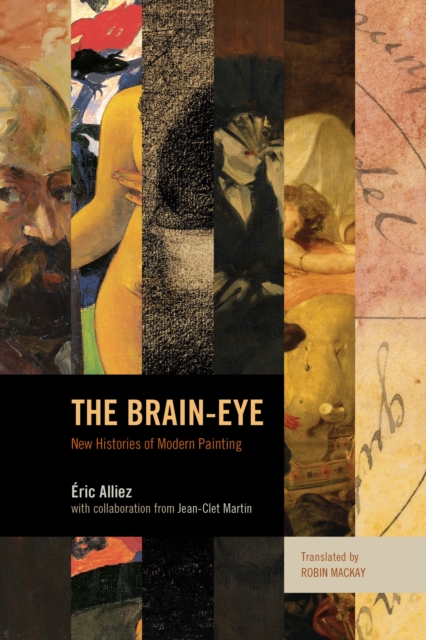
A detailed and inventive study of the thinking at work in modern painting, drawing on a formidable body of scholarly evidence to challenge modernist and phenomenological readings of art history, The Brain-Eye presents a series of interlinked 'case studies' in which philosophical thought encounters the hallucinatory sensations unleashed by 'painter-researchers.
Claude Simon: Fashioning the Past by Writing the Present considers the aesthetic, cultural, and philosophical facets of a temporal paradox in the works of French novelist Claude Simon (1913-2005), and its broader implications for the study of narrative, and for cultural and post-modern theory.
This highly original new book highlights the importance and significance of Heidegger's engagement with the Greeks, the ways in which his views are commensurate with ecofeminism, and the insights that a study of that intersection provides for both the diagnoses of our world's ills and possible curative prescriptions.
Legendary philosopher and literary critic Mikhail Bakhtin (1895-1975) developed concepts which are bywords within poststructuralist and new historicist literary criticism and philosophy yet have been under-utilised by artists, art historians and art critics.
Sound Pressure reveals how speaker systems mounted in public, employment, military and entertainment environments have played a pivotal role in the way that humans have been physiologically and psychologically organised and disciplined throughout the past century.
Adorno's writings are often the starting point for the teaching of popular music studies, usually passing swiftly on, after concluding that 'he didn't listen to the right jazz' or 'he was a snob'.
The volume is inspired by Gilles Deleuze's philosophical project, which builds on the critique of European Humanism and opens up inspiring new perspectives for the renewal of the field.
This book introduces narrative justice, a new theory of aesthetic education - the thesis that the cultivation of aesthetic or artistic sensibility can both improve moral character and achieve political justice.
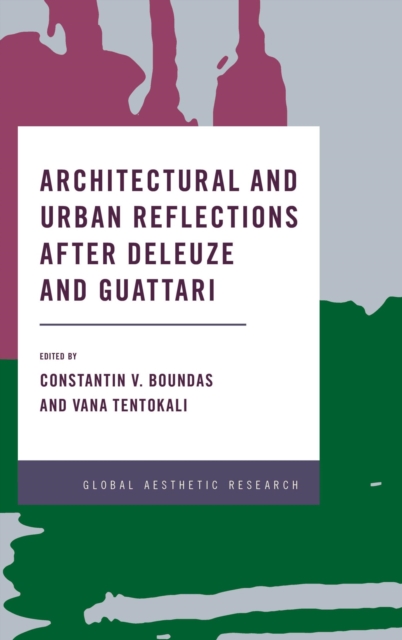
The post humanist movement which currently traverses various disciplines in the arts and humanities, as well as the role that the thought of Deleuze and Guattari has had in the course of this movement, has given rise to new practices in architecture and urban theory.
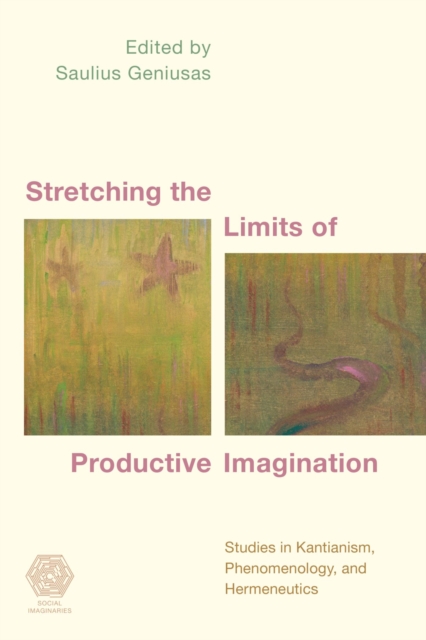
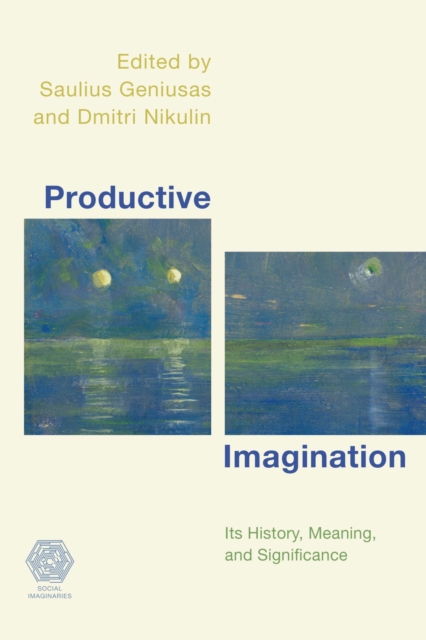
Although the concept of productive imagination plays a fundamental role in Kant, German Idealism, Romanticism, Phenomenology and Hermeneutics, the meaning of this central concept remains largely undetermined.
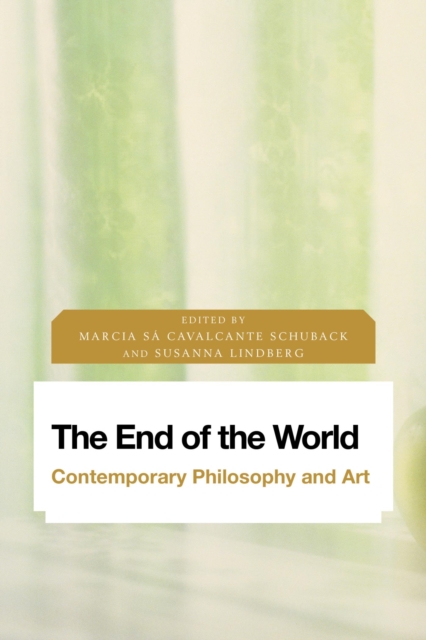
The 'end of the world' opens up philosophical questions concerning the very notion of the world, which is a fundamental element of all existential, phenomenological and hermeneutical philosophy.
This highly original new book highlights the importance and significance of Heidegger's engagement with the Greeks, the ways in which his views are commensurate with ecofeminism, and the insights that a study of that intersection provides for both the diagnoses of our world's ills and possible curative prescriptions.
This book argues that a renewed consideration of artistic value should both critique contemporary bureaucratic misunderstandings of what art is and address the complexities and questions of contemporary philosophers in new and provocative ways.
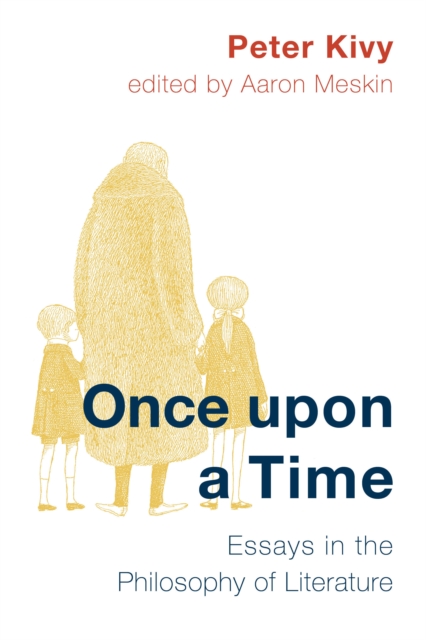
Once Upon a Time is a collection of essays in the philosophy of literature with two central themes: the significance of story -telling for us and the question of whether the novel, perhaps the art form most closely associated with story-telling, is a legitimate source of human knowledge.
Written by members of the Social Imaginaries Editorial Collective, these programmatic essays showcase new critical interventions in understandings of social imaginaries and the human condition.
Literary Knowing in Neoclassical France analyzes the work of several literary critics in France and England, at the end of the seventeenth and beginning of the eighteenth centuries, who were inspired by the idea that literature - especially the literary sublime - might offer us the deepest kind of knowledge.
Effeminate Years: Literature, Politics, and Aesthetics in Mid-Eighteenth-Century Britain investigates the gendered, eroticized, and xenophobic ways in which the controversies in the 1760s surrounding the political figure John Wilkes (1725-97) legitimated some men as political subjects, while forcefully excluding others on the basis of their perceived effeminacy or foreignness.
Claude Simon: Fashioning the Past by Writing the Present considers the aesthetic, cultural, and philosophical facets of a temporal paradox in the works of French novelist Claude Simon (1913-2005), and its broader implications for the study of narrative, and for cultural and post-modern theory.
From Ecclesiastes to Simone Weil: Varieties of Philosophical Spirituality reads major philosophers from the Western philosophical canon and beyond for the spirituality implicit in their metaphysics, epistemology, ethics, aesthetics, and logic.
In this third edition of The Triadic Structure of the Mind, Francesco Belfiore begins from the basic ontological conception of the structure and functioning of the "e;mind"e; or "e;spirit"e; as an evolving, conscious triad composed of intellect, sensitiveness, and power, each exerting a selfish and a moral activity.
In The Triadic Structure of the Mind, Francesco Belfiore begins from the basic ontological conception of the structure and functioning of the "e;mind"e; or "e;spirit"e; as an evolving, conscious triad composed of intellect, sensitiveness, and power, each exerting a selfish or moral activity.
The issue of the other has always been an urgent one, especially since 1980's, when the political debates over race, gender, class, culture, ethnicity, and post-colonialism took the central stage.
Essays on Aesthetic Genesis is a collection of essays written on Jeff Mitscherling's work in realist phenomenology, Aesthetic Genesis: The Origin of Consciousness in the Intentional Being of Nature.
Erman Kaplama explores the principle of transition (Ubergang) from metaphysics to physics developed by Kant in his unfinished magnum opus, Opus Postumum.
In Aesthetic Genesis, the author argues for a reversal of the most fundamental tenet of phenomenology-namely, that all consciousness is intentional (that is, directed toward an object).
Public Art acknowledges the trend among contemporary museums to promote participatory and processual exhibition strategies meant to elicit subjective experience.
In this book, Barry and Gail Lord focus their two lifetimes of international experience working in the cultural sector on the challenging questions of why and how culture changes.