Decomposition is a bracing, revisionary, and provocative inquiry into music—from Beethoven to Duke Ellington, from Conlon Nancarrow to Evelyn Glennie—as a personal and cultural experience: how it is composed, how it is idiosyncratically perceived by critics and reviewers, and why we listen to it the way we do.
A passionate and moving tribute to the captivating power of dance, not just as an art form but as a language that transcends barriers "e;[A] smart, bracing book of reflection, analysis, memoir and history.
A groundbreaking study of the development of form in eighteenth-century aesthetics In this original work, Abigail Zitin proposes a new history of the development of form as a concept in and for aesthetics.
Ranging from Homer to Picasso, and from the Iranian Revolution to The Wizard of Oz, this "e;sparkling and informative"e; book awakens us to the role of color (Wall Street Journal).
A profound meditation on how design reflects the uses and abuses of power from the Pulitzer Prize-nominated author of Time and the Art of Living “If good design tells the truth,” writes Robert Grudin in this path-breaking book on esthetics and authority, “poor design tells a lie, a lie usually related .
A theory of the neural bases of aesthetic experience across the arts, which draws on the tools of both cognitive neuroscience and traditional humanist inquiry.
This lively collection of essays explores the vital role of beauty in the human experience of place, interactions with other species, and contemplation of our own embodied lives.
This lively collection of essays explores the vital role of beauty in the human experience of place, interactions with other species, and contemplation of our own embodied lives.
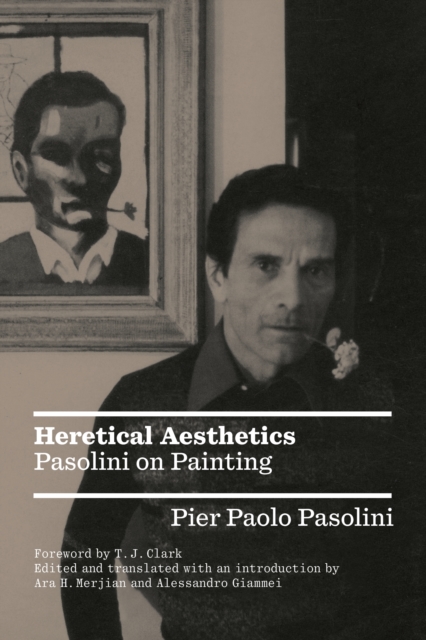
One of Europe's most mythologized Marxist intellectuals of the 20th century, Pier Paolo Pasolini was not only a poet, filmmaker, novelist, and political martyr.
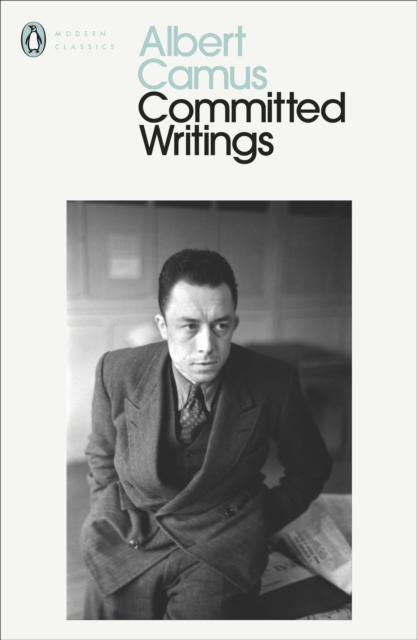
'To create today means to create dangerously'This new collection contains some of Camus' most brilliant political writing as he reflects on moral responsibility and the role of the artist in the world.
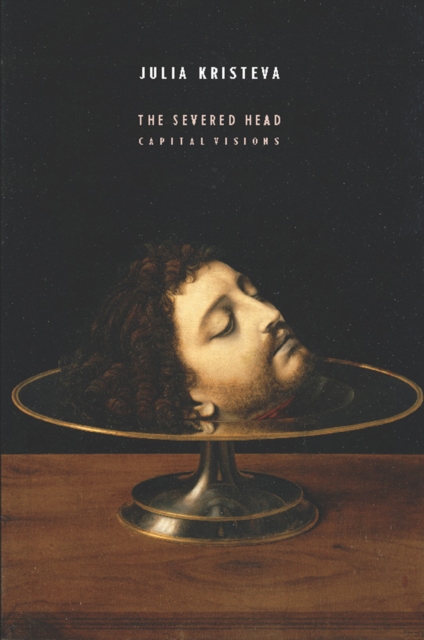
Informed by a provocative exhibition at the Louvre curated by the author, The Severed Head unpacks artistic representations of severed heads from the Paleolithic period to the present.
Arguing on recent cognitive evidence that reading a Bible is much more difficult for human brains than seeing images, this book exposes the depth and breadth of Protestant theologians' misunderstandings about how people could reform their spiritual lives - how they could literally change their minds.
Examining multiple modes of spatio-temporal and geometric figurations of life, the author explores how relationships between space, geometry and aesthetics generate productive expressions of subjectivity, developed through Kant's 'reflective subject' and 'geometric' texts by Plato and others towards Deleuze's philosophy of sense.
The articles in this collection focus attention on the concept of literature and on the relationship between this concept and the concepts of a literary work and a literary text.
Over the last decade or so, aesthetic and art theory has played an increasingly significant role in the way work and its organization has come to be understood.
The Aesthetics of Free Speech: Rethinking the Public Sphere is one of the first books to theoretically explore the relationship between free speech and the public sphere.
In a series of philosophical discussions and artistic case studies, this volume develops a materialist and immanent approach to modern and contemporary art.