This is the third edition of a classic book first published in 1960, which has sold thousands of copies in two paperback edition and has been translated into several foreign languages.
Ehring shows the inadequacy of received theories of causation, and, introducing conceptual devices of his own, provides a wholly new account of causation as the persistence over time of individual properties, or "e;tropes.
This work offers a provocative new historical and systematic interpretation of the epistemological doctrines of three twentieth-century giants: Husserl, Heidegger, and Merleau-Ponty.
Edited by three leading figures in the field, this exciting volume presents cutting-edge work in decision theory by a distinguished international roster of contributors.
Reasoning Practically deals with a classical philosophical topic, the link between thought and action--how we think about what we do or ought to do, and how we move from thinking to doing.
Since the beginning of philosophy, philosophers have sought objective knowledge: knowledge of things whose existence does not depend on one's conceiving of them.
Vigorous and controversial, this book develops a sustained argument for a realist interpretation of science, based on a new analysis of the concept of predictive novelty.
This fresh look at the philosophy of language focuses on the interface between a theory of literal meaning and pragmatics--a philosophical examination of the relationship between meaning and language use and its contexts.
This volume in the Vancouver Studies in Cognitive Science series concerns metarepresentation: the construction and use of representations that represent other representations.
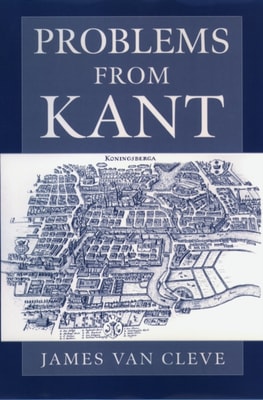
This rigorous examination of Kant's Critique of Pure Reason provides a comprehensive analysis of the major metaphysical and epistemological questions of Kant's most famous work.
This volume collects four published articles by the late Tamara Horowitz and two unpublished papers on decision theory: "e;Making Rational Decisions When Preferences Cycle"e; and the monograph-length "e;The Backtracking Fallacy.
Morality Without Foundations investigates fundamental metaethical questions about the meaning, truth, and justification of moral thought and discourse.
Virtue epistemology is an exciting, new movement receiving an enormous amount of attention from top epistemologists and ethicists; this pioneering volume reflects the best work in that vein.
The new field of experimental philosophy has emerged as the methods of psychological science have been brought to bear on traditional philosophical issues.
The new field of experimental philosophy has emerged as the methods of psychological science have been brought to bear on traditional philosophical issues.
Stereotypes sometimes lead us to make poor judgements of other people, but they also have the potential to facilitate quick, efficient, and accurate judgements.
Stereotypes sometimes lead us to make poor judgements of other people, but they also have the potential to facilitate quick, efficient, and accurate judgements.
A central conclusion developed and defended throughout the book is that epistemic autonomy is necessary for knowledge (both knowledge-that and knowledge-how) and in ways that epistemologists have not yet fully appreciated.
A central conclusion developed and defended throughout the book is that epistemic autonomy is necessary for knowledge (both knowledge-that and knowledge-how) and in ways that epistemologists have not yet fully appreciated.
In Physics, Structure, and Reality, Jill North addresses a set of questions that get to the heart of the project of interpreting physics--of figuring out what physics is telling us about the world.
In Physics, Structure, and Reality, Jill North addresses a set of questions that get to the heart of the project of interpreting physics--of figuring out what physics is telling us about the world.
Although it is common to see Kant's philosophy as at its core a reaction to (and partial rejection of) the dogmatism and rationalism of Leibniz, Wolff, and their followers, it is surprising how little detailed and critical study there has been of the relation between Leibniz and Kant.