This book explores the history of the international order in the eighteenth and nineteenth century through a new study of Emer de Vattel's Droit des gens (1758).
This volume contains 21 new and original contributions to the study of formal semantics, written by distinguished experts in response to landmark papers in the field.
Edited in collaboration with FoLLI, the Association of Logic, Language and Information this book constitutes the refereed proceedings of the 28th Workshop on Logic, Language, Information and Computation, WoLLIC 2022, Iasi, Romania, in September 2022.
This book develops a novel generalization of possible world semantics, called 'world line semantics', which recognizes worlds and links between world-bound objects (world lines) as mutually independent aspects of modal semantics.
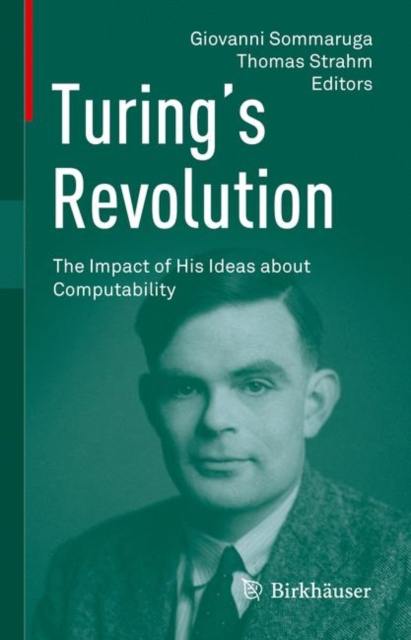
This book provides an overview of the confluence of ideas in Turing's era and work and examines the impact of his work on mathematical logic and theoretical computer science.
Using both Father Kevin Wall's eidetic matrix of "e;the relational unity of being"e; and Edith Stein's remarkable synoptic view of intentionality in both Aquinas and Husserl, this book uncovers purely logical ground for a subalternate eidetic science called "e;convergent phenomenology,"e; itself located at the inmost depths of Husserlian phenomenology.
The theory of the square of opposition has been studied for over 2,000 years and has seen a resurgence in new theories and research since the second half of the twentieth century.
This is a collection of new investigations and discoveries on the history of a great tradition, the Lvov-Warsaw School of logic and mathematics, by the best specialists from all over the world.
This volume is a result of the international symposium "e;The Tradition of the Lvov-Warsaw School in European Culture,"e; which took place in Warsaw, Poland, September 2015.
This is a collection of new investigations and discoveries on the theory of opposition (square, hexagon, octagon, polyhedra of opposition) by the best specialists from all over the world.
This wide-ranging book introduces information as a key concept not only in physics, from quantum mechanics to thermodynamics, but also in the neighboring sciences and in the humanities.
This first volume has as its main focus the philosophical foundations of Michalos' work and describes it in the broad context of the study of logic, the philosophy of social sciences, and a general theory of value.
Edited in collaboration with FoLLI, the Association of Logic, Language and Information this book constitutes the refereed proceedings of the 27th Workshop on Logic, Language, Information and Communication, WoLLIC 2021, Virtual Event, in October 2021.
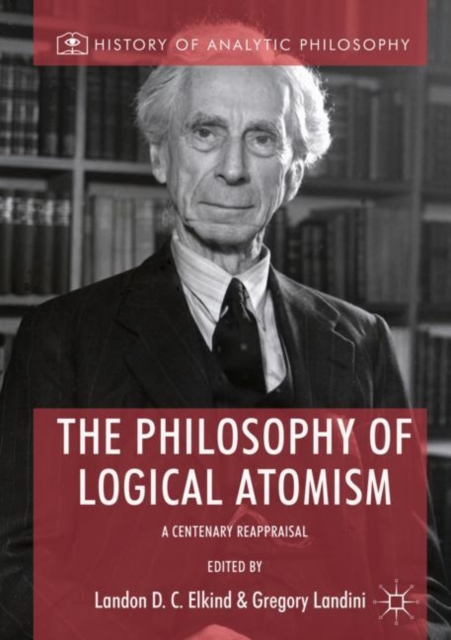
This book offers a comprehensive critical survey of issues of historical interpretation and evaluation in Bertrand Russell's 1918 logical atomism lectures and logical atomism itself.
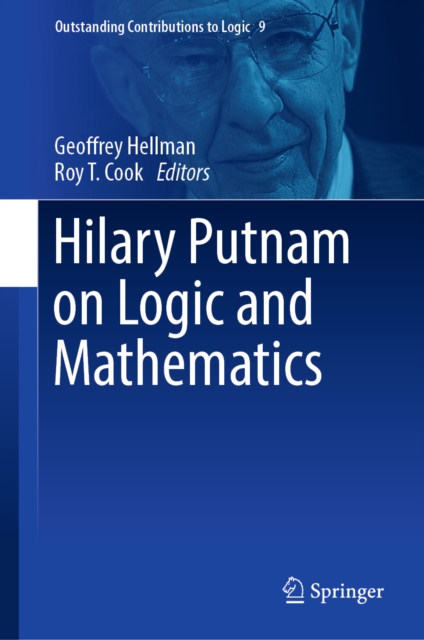
This book explores the research of Professor Hilary Putnam, a Harvard professor as well as a leading philosopher, mathematician and computer scientist.
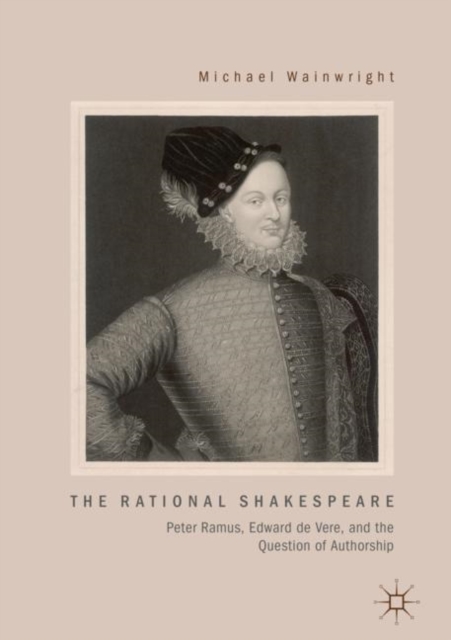
The Rational Shakespeare: Peter Ramus, Edward de Vere, and the Question of Authorship examines William Shakespeare's rationality from a Ramist perspective, linking that examination to the leading intellectuals of late humanism, and extending those links to the life of Edward de Vere, Seventeenth Earl of Oxford.
Essays on Husserl's Logic and Philosophy of Mathematics sets out to fill up a lacuna in the present research on Husserl by presenting a precise account of Husserl's work in the field of logic, of the philosophy of logic and of the philosophy of mathematics.
This volume brings together a group of logic-minded philosophers and philosophically oriented logicians, mainly from Asia, to address a variety of logical and philosophical topics of current interest, offering a representative cross-section of the philosophical logic landscape in early 21st-century Asia.