This edited book examines conditionals from a number of interdisciplinary perspectives, drawing on research from fields as diverse as linguistics, psychology, philosophy and logic.
"e;More than any other living scholar of medieval philosophy, Gyula Klima has influenced the way we read and understand philosophical texts by showing how the questions they ask can be placed in a modern context without loss or distortion.
Uncover the truth under all the BSIn the daily battle for our hearts and minds--not to mention our hard-earned cash--the truth is usually the first casualty.
Although Hegel considered Science of Logic essential to his philosophy, it has received scant commentary compared with the other three books he published in his lifetime.
This is the first complete English translation of On the Purity of the Art of Logic, a handbook of logic written in Latin by English philosopher Walter Burley (c.
This Routledge Revival, first published in 1985, gives detailed attention to the bearing of literary theory on questions of truth, meaning and reference.
Bertrand Russell (1872-1970) was renowned as one of the founding figures of "e;analytic"e; philosophy, and for his lasting contributions to the study of logic, philosophy of language, philosophy of mathematics and epistemology.
A brief account of philosophical logic from one of the world's leading authoritiesPhilosophical Logic is a clear and concise critical survey of nonclassical logics of philosophical interest written by one of the world's leading authorities on the subject.
In The Yin Yang Complex you will be taken on a journey of discovery that will unearth the reason why the world is in its current state and why you have evolved in the manner that you have.
Developed by the Foundation for Critical Thinking, The International Critical Thinking Reading and Writing Test assesses the extent to which students have acquired the reading and writing abilities required for skilled analysis and evaluation.
The Thinker's Guide for Students on How to Study and Learn a Discipline empowers students to take control of their own learning by asking questions, challenging assumptions, drawing upon reliable information, and exploring alternative opinions.
The Thinker's Guide to the Art of Socratic Questioning introduces readers to powerful methods of inquiry that pinpoint underlying beliefs and systems of logic.
How to Read a Paragraph introduces the importance of purposeful skilled reading and lays out methods by which to develop close reading skills using the tools of critical thinking.
In The Thinker's Guide to Ethical Reasoning, Richard Paul and Linda Elder present the vital role of ethics in the creation and ultimate success of cooperative societies.
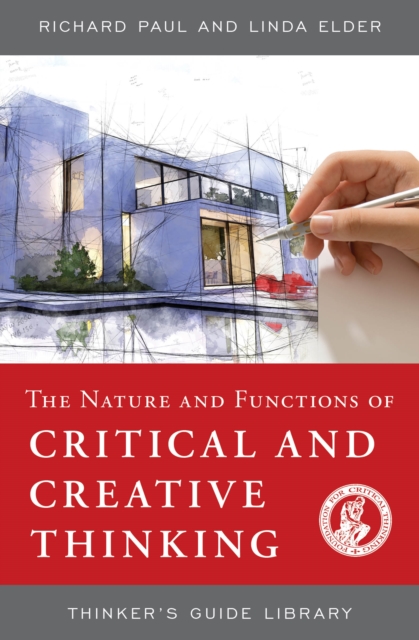
Written by international authorities on critical thinking, this book details an integrated, universal concept of critical thinking that is both substantive and applicable to any and every situation in which human thinking is necessary.
In How to Improve Student Learning, critical thinking pioneer Richard Paul and educational psychologist Linda Elder distill decades of teaching experience into thirty methods to increase student comprehension and engagement in any area of study.
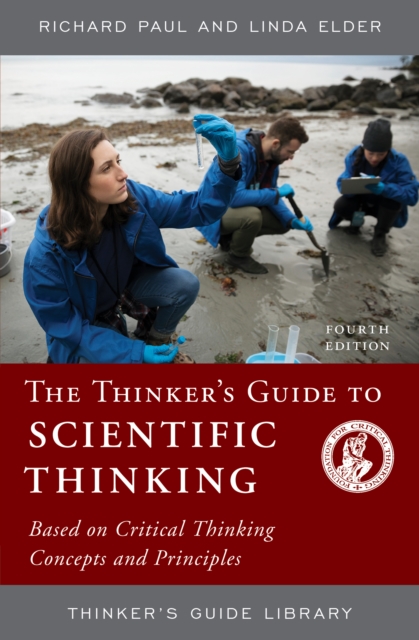
The Thinker's Guide to Scientific Thinking focuses on developing the intellectual skills inherent in the well-cultivated practice of every area of scientific research and study.
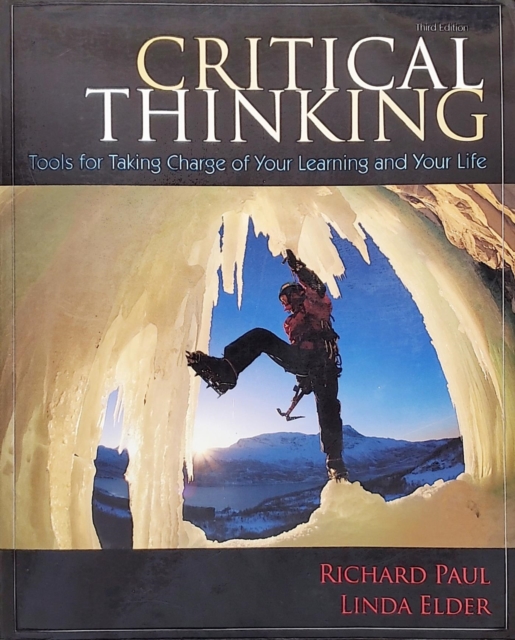
Written by two of the leading experts in the field, this introductory text presents critical thinking as a process for taking charge of and responsibility for one's thinking.
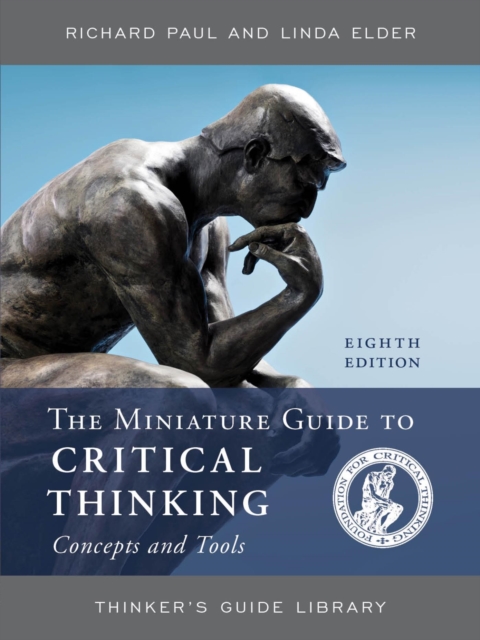
This powerful book introduces core critical thinking concepts and principles as an empowering problem-solving framework for every profession, course of study, and indeed every area of life.
The Thinker's Guide to Fallacies introduces the concept of mental trickery and shows readers how to discern and see through forty-four different types of fallacies.
The Aspiring Thinker's Guide to Critical Thinking introduces concepts and strategies for developing essential reasoning skills and intellectual character.
Over a million students have learned to be more discerning at constructing and evaluating arguments with the help of Hurley's A CONCISE INTRODUCTION TO LOGIC.
This volume comprises a selection of contributions to the theorizing about argumentation that have been presented at the 9th conference of the International Society for the Study of Argumentation (ISSA), held in Amsterdam in July 2018.