In this volume, different aspects of logics for dependence and independence are discussed, including both the logical and computational aspects of dependence logic, and also applications in a number of areas, such as statistics, social choice theory, databases, and computer security.
This volume covers a wide range of topics in the most recent debates in the philosophy of mathematics, and is dedicated to how semantic, epistemological, ontological and logical issues interact in the attempt to give a satisfactory picture of mathematical knowledge.
The aim of this volume is to collect original contributions by the best specialists from the area of proof theory, constructivity, and computation and discuss recent trends and results in these areas.
This work breaks new ground by carefully distinguishing the concepts of belief, confirmation, and evidence and then integrating them into a better understanding of personal and scientific epistemologies.
The Dialectical Forge identifies dialectical disputation (jadal) as a primary formative dynamic in the evolution of pre-modern Islamic legal systems, promoting dialectic from relative obscurity to a more appropriate position at the forefront of Islamic legal studies.
This volume discusses some crucial ideas of the founders of the analytic philosophy: Gottlob Frege, Bertrand Russell and Ludwig Wittgenstein, or the 'golden trio'.
In this volume, the author investigates and argues for, a particular answer to the question: What is the right way to logically analyze modalities from natural language within formal languages?
This book provides an overview of the confluence of ideas in Turing's era and work and examines the impact of his work on mathematical logic and theoretical computer science.
This volume presents 50 contributions on the themes of reasonableness and effectiveness and their connections, which are central issues in argumentation theory.
As a Festschrift, this book celebrates and honours the scholarly achievements of Professor Jaysankar Lal Shaw, one of the most eminent and internationally acclaimed comparative philosophers of our times.
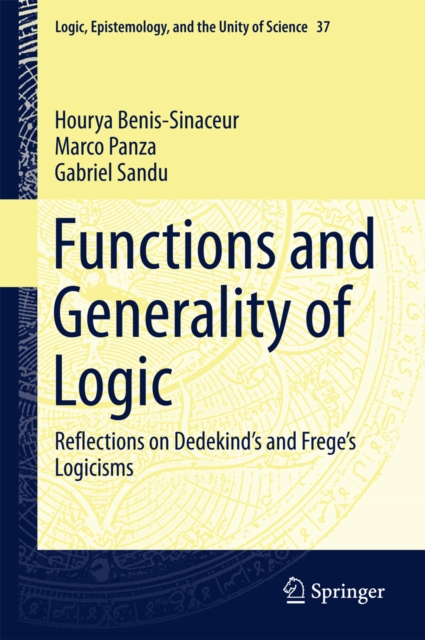
This book examines three connected aspects of Frege's logicism: the differences between Dedekind's and Frege's interpretation of the term 'logic' and related terms and reflects on Frege's notion of function, comparing its understanding and the role it played in Frege's and Lagrange's foundational programs.
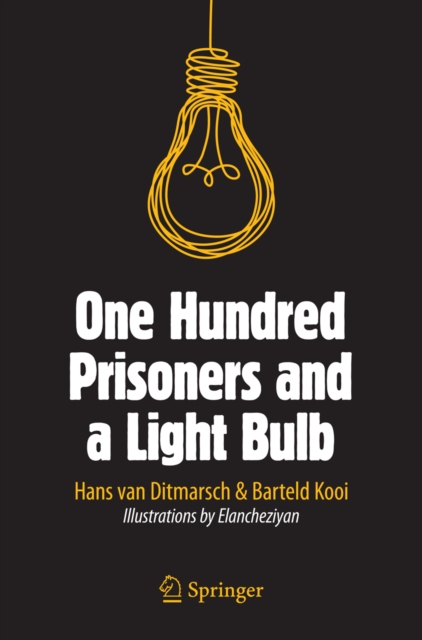
A group of 100 prisoners, all together in the prison dining area, are told that they will be all put in isolation cells and then will be interrogated one by one in a room containing a light with an on/off switch.
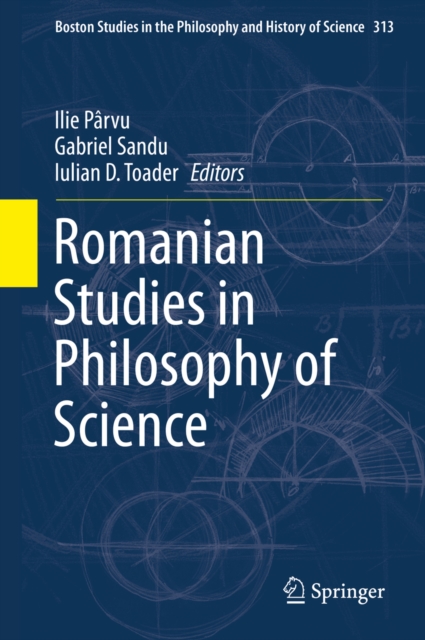
This book presents a collection of studies by Romanian philosophers, addressing foundational issues currently debated in contemporary philosophy of science.
This book focuses on the problems of rules, rule-following and normativity as discussed within the areas of analytic philosophy, linguistics, logic and legal theory.
This collection of essays explores the philosophy of human knowledge from a multitude of perspectives, with a particular emphasis upon the justification component of the classical analysis of knowledge and with an excursion along the way to explore the role of knowledge in Texas Hold 'Em poker.
This volume presents recent advances in philosophical logic with chapters focusing on non-classical logics, including paraconsistent logics, substructural logics, modal logics of agency and other modal logics.
This book on infinite regress arguments provides (i) an up-to-date overview of the literature on the topic, (ii) ready-to-use insights for all domains of philosophy, and (iii) two case studies to illustrate these insights in some detail.
This volume celebrates the work of Petr Hajek on mathematical fuzzy logic and presents how his efforts have influenced prominent logicians who are continuing his work.
This book develops a naturalistic aesthetic theory that accounts for aesthetic phenomena in mathematics in the same terms as it accounts for more traditional aesthetic phenomena.
This book presents comparisons of recent accounts in the formalization of natural language (dynamic logics and formal semantics) with informal conceptions of interaction (dialogue, natural logic and attribution of rationality) that have been developed in both psychology and epistemology.
This meticulous critical assessment of the ground-breaking work of philosopher Stanislaw Lesniewski focuses exclusively on primary texts and explores the full range of output by one of the master logicians of the Lvov-Warsaw school.
Welche Aussagen konstruktivistischer Theorieangebote eignen sich eigentlich dafür, Lehren und Lernen in Bezug auf das weite Feld der Religion zu beschreiben?
This book explores new territory at the interface between semantics and pragmatics, reassessing a number of linguistic phenomena in the light of recent advances in pragmatic theory.
Mit einigem Recht kann man Freges grundlegenden Aufsatz von 1892 als Gründungsurkunde der neueren Sprachphilosophie verstehen: Als Ausarbeitung seines Aufsatzes »Funktion und Begriff« entwirft er in diesem Paper nicht mehr und nicht weniger als eine völlig neue, allgemeine Bedeutungslehre, die erhebliche Auswirkungen bis heute hat.