Essays on Existence and Essence presents a series of writings--including several previously unpublished--by Bob Hale on the topics of ontology and modality.
Essays on Existence and Essence presents a series of writings--including several previously unpublished--by Bob Hale on the topics of ontology and modality.
Peter Adamson and Jonardon Ganeri present a lively introduction to one of the world's richest intellectual traditions: the philosophy of classical India.
Peter Adamson and Jonardon Ganeri present a lively introduction to one of the world's richest intellectual traditions: the philosophy of classical India.
Ideas about relativity underlie much ancient Greek philosophy, from Protagorean relativism, to Plato's theory of Forms, Aristotle's category scheme, and relational logic.
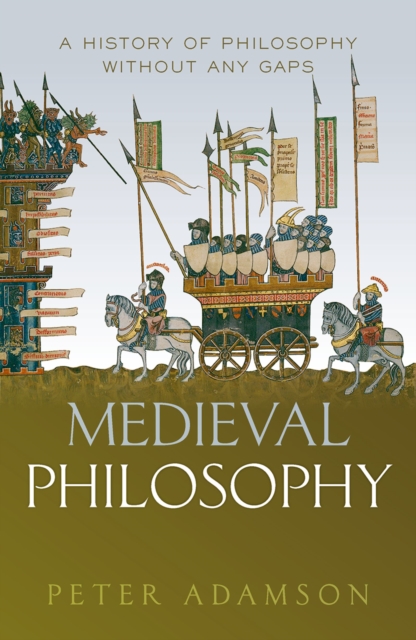
Peter Adamson presents a lively introduction to six hundred years of European philosophy, from the beginning of the ninth century to the end of the fourteenth century.
Peter Adamson presents a lively introduction to six hundred years of European philosophy, from the beginning of the ninth century to the end of the fourteenth century.
After Plato's Forms, and Aristotle's substances, the Stoics posited the fundamental reality of lekta - the meanings of sentences, distinct from the sentences themselves.
After Plato's Forms, and Aristotle's substances, the Stoics posited the fundamental reality of lekta - the meanings of sentences, distinct from the sentences themselves.
A long tradition, going back to Aristotle, conceives of logic in terms of necessity and possibility: a deductive argument is correct if it is not possible for the conclusion to be false when the premises are true.
A long tradition, going back to Aristotle, conceives of logic in terms of necessity and possibility: a deductive argument is correct if it is not possible for the conclusion to be false when the premises are true.
In Wittgenstein on Logic as the Method of Philosophy, Oskari Kuusela examines Wittgenstein's early and late philosophies of logic, situating their philosophical significance in early and middle analytic philosophy with particular reference to Frege, Russell, Carnap, and Strawson.
In Wittgenstein on Logic as the Method of Philosophy, Oskari Kuusela examines Wittgenstein's early and late philosophies of logic, situating their philosophical significance in early and middle analytic philosophy with particular reference to Frege, Russell, Carnap, and Strawson.
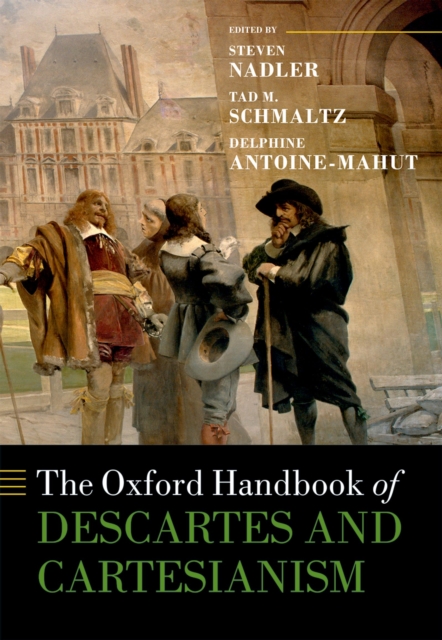
The Oxford Handbook of Descartes and Cartesianism comprises fifty specially written chapters on Rene Descartes (1596-1650) and Cartesianism, the dominant paradigm for philosophy and science in the seventeenth century, written by an international group of leading scholars of early modern philosophy.