Ordinary language and scientific language enable us to speak about, in a singular way (using demonstratives and names), what we recognize not to exist: fictions, the contents of our hallucinations, abstract objects, and various idealized but nonexistent objects that our scientific theories are often couched in terms of.
A Transition to Advanced Mathematics: A Survey Course promotes the goals of a "e;bridge' course in mathematics, helping to lead students from courses in the calculus sequence (and other courses where they solve problems that involve mathematical calculations) to theoretical upper-level mathematics courses (where they will have to prove theorems and grapple with mathematical abstractions).
In this text, a variety of modal logics at the sentential, first-order, and second-order levels are developed with clarity, precision and philosophical insight.
The Logical Must is an examination of Ludwig Wittgenstein's philosophy of logic, early and late, undertaken from an austere naturalistic perspective Penelope Maddy has called "e;Second Philosophy.
Robert Batterman examines a form of scientific reasoning called asymptotic reasoning, arguing that it has important consequences for our understanding of the scientific process as a whole.
McCarthy develops a theory of radical interpretation--the project of characterizing from scratch the language and attitudes of an agent or population--and applies it to the problems of indeterminacy of interpretation first described by Quine.
The work of Thomas Aquinas has always enjoyed a privileged position as a pillar of Catholic theology, but for centuries his standing among western philosophers was less sure.
John Horty effectively develops deontic logic (the logic of ethical concepts like obligation and permission) against the background of a formal theory of agency.
Since the publication of Carl Hempel and Paul Oppenheim's ground-breaking work "e;Studies in the Logic of Explanation,"e; the theory of explanation has remained a major topic in the philosophy of science.
In this collection of essays written over a period of twenty years, Solomon Feferman explains advanced results in modern logic and employs them to cast light on significant problems in the foundations of mathematics.
Edited by three leading figures in the field, this exciting volume presents cutting-edge work in decision theory by a distinguished international roster of contributors.
Reasoning Practically deals with a classical philosophical topic, the link between thought and action--how we think about what we do or ought to do, and how we move from thinking to doing.
This volume brings together mostly previously unpublished studies by prominent historians, classicists, and philosophers on the roles and effects of religion in Socratic philosophy and on the trial of Socrates.
This clear, accessible account of Hegelian logic makes a case for its enormous seductiveness, its surprising presence in the collective consciousness, and the dangers associated therewith.
This work is a sequel to the author's Godel's Incompleteness Theorems, though it can be read independently by anyone familiar with Godel's incompleteness theorem for Peano arithmetic.
When ordinary people--mathematicians among them--take something to follow (deductively) from something else, they are exposing the backbone of our self-ascribed ability to reason.
It was well known to the Greeks that the phenomenon of vagueness in natural language gives rise to hard problems and paradoxes, yet more than two millennia passed before Philosophy began to pay any degree of concerted attention to the challenges of vagueness to match the effort expended, for example, on the Liar paradox and its kin.
In The Open Future: Why Future Contingents are all False, Patrick Todd launches a sustained defense of a radical interpretation of the doctrine of the open future.
In The Open Future: Why Future Contingents are all False, Patrick Todd launches a sustained defense of a radical interpretation of the doctrine of the open future.
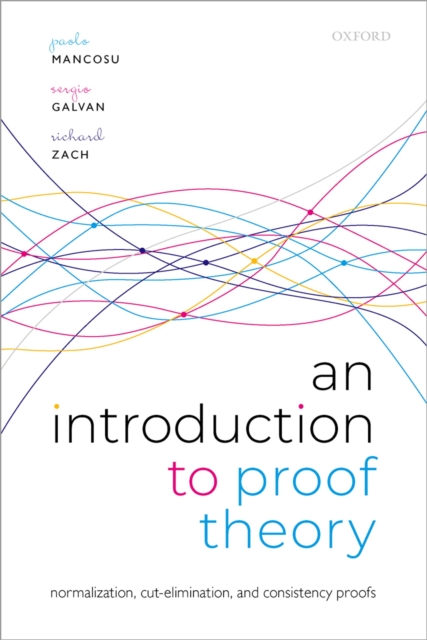
An Introduction to Proof Theory provides an accessible introduction to the theory of proofs, with details of proofs worked out and examples and exercises to aid the reader's understanding.
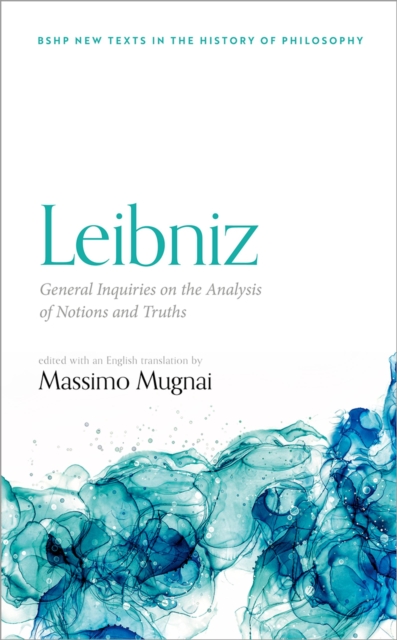
New Texts in the History of PhilosophyPublished in association with the British Society for the History of PhilosophyThe aim of this series is to encourage and facilitate the study of all aspects of the history of philosophy, including the rediscovery of neglected elements and the exploration of new approaches to the subject.
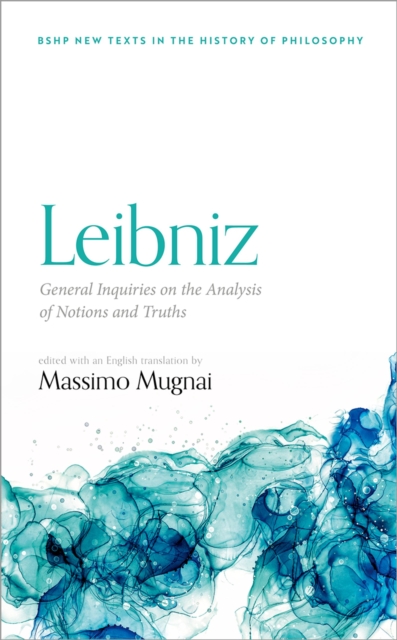
New Texts in the History of PhilosophyPublished in association with the British Society for the History of PhilosophyThe aim of this series is to encourage and facilitate the study of all aspects of the history of philosophy, including the rediscovery of neglected elements and the exploration of new approaches to the subject.
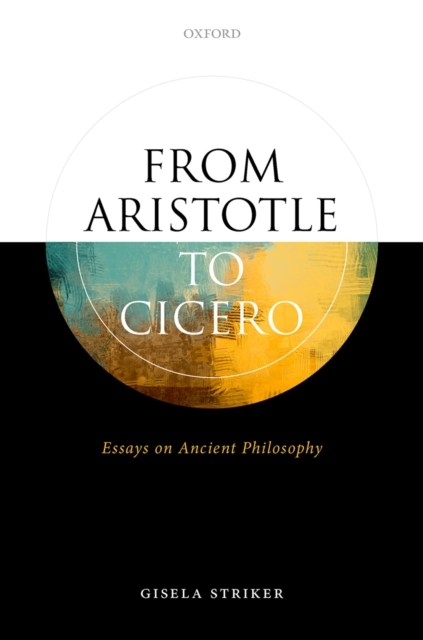
From Aristotle to Cicero: Essays in Ancient Philosophy draws together a selection of Gisela Striker's essays from the last forty years in the areas of research for which she is best known.