A brief account of philosophical logic from one of the world's leading authoritiesPhilosophical Logic is a clear and concise critical survey of nonclassical logics of philosophical interest written by one of the world's leading authorities on the subject.
Taking Wittgenstein at His Word is an experiment in reading organized around a central question: What kind of interpretation of Wittgenstein's later philosophy emerges if we adhere strictly to his claims that he is not in the business of presenting and defending philosophical theses and that his only aim is to expose persistent conceptual misunderstandings that lead to deep philosophical perplexities?
Propositions are routinely invoked by philosophers, linguists, logicians, and other theorists engaged in the study of meaning, communication, and the mind.
Propositions are routinely invoked by philosophers, linguists, logicians, and other theorists engaged in the study of meaning, communication, and the mind.
First published in 1943, and revised for this 1952 edition, this book was intended for use by students of philosophy and as such traditional and modern developments in logic have been combined in a unified treatment.
First published in 1943, and revised for this 1952 edition, this book was intended for use by students of philosophy and as such traditional and modern developments in logic have been combined in a unified treatment.
Taking Wittgenstein at His Word is an experiment in reading organized around a central question: What kind of interpretation of Wittgenstein's later philosophy emerges if we adhere strictly to his claims that he is not in the business of presenting and defending philosophical theses and that his only aim is to expose persistent conceptual misunderstandings that lead to deep philosophical perplexities?
This collection of essays, by Reding, in the emergent field of Sino-Hellenic studies, explores the neglected inchoative strains of rational thought in ancient China and compares them to similar themes in ancient Greek thought, right at the beginnings of philosophy in both cultures.
This collection of essays, by Reding, in the emergent field of Sino-Hellenic studies, explores the neglected inchoative strains of rational thought in ancient China and compares them to similar themes in ancient Greek thought, right at the beginnings of philosophy in both cultures.
Post-Analytic Tractatus establishes Wittgenstein's early work in the Tractatus Logico-Philosophicus as an invaluable source for exploring current debate on analytic philosophy in its origins, history, limits and relations with European philosophy.
Post-Analytic Tractatus establishes Wittgenstein's early work in the Tractatus Logico-Philosophicus as an invaluable source for exploring current debate on analytic philosophy in its origins, history, limits and relations with European philosophy.
The International research Library of Philosophy collects in book form a wide range of important and influential essays in philosophy, drawn predominantly from English-language journals.
The International research Library of Philosophy collects in book form a wide range of important and influential essays in philosophy, drawn predominantly from English-language journals.
Are there universal properties grounding our sense of resemblance or qualitative identity among a number of distinct things or events which appear to form a class, a type or a kind of some other sort?
Are there universal properties grounding our sense of resemblance or qualitative identity among a number of distinct things or events which appear to form a class, a type or a kind of some other sort?
This book offers a new approach to the theory of argumentation that conceptualizes argumentation as a fundamentally ethical activity whose norms are grounded in, and must be selected according to, moral reasons.
This title was first published in 2000: Intermediate quantifiers express logical quantities which fall between Aristotle's two quantities of categorical propositions - universal and particular.
This title was first published in 2000: Intermediate quantifiers express logical quantities which fall between Aristotle's two quantities of categorical propositions - universal and particular.
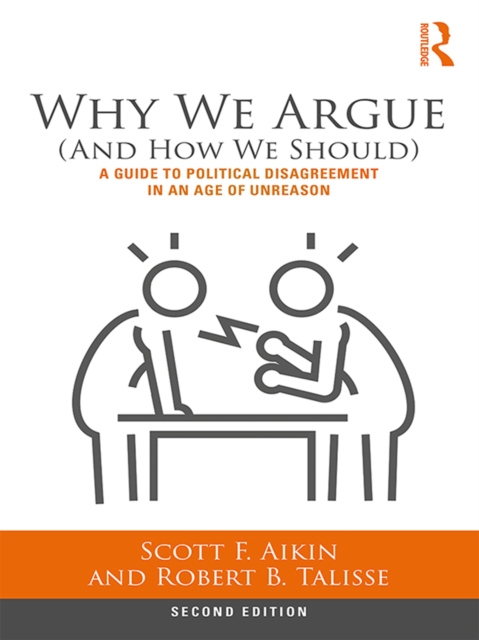
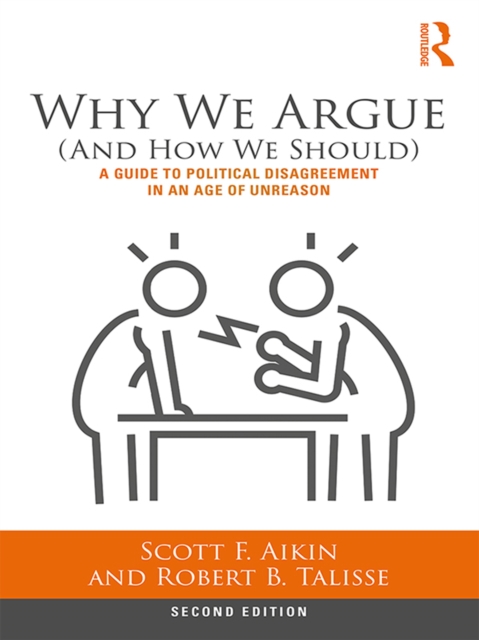
Why We Argue (And How We Should): A Guide to Political Disagreement in an Age of Unreason presents an accessible and engaging introduction to the theory of argument, with special emphasis on the way argument works in public political debate.
Why We Argue (And How We Should): A Guide to Political Disagreement in an Age of Unreason presents an accessible and engaging introduction to the theory of argument, with special emphasis on the way argument works in public political debate.
Inferentialism is a philosophical approach premised on the claim that an item of language (or thought) acquires meaning (or content) in virtue of being embedded in an intricate set of social practices normatively governed by inferential rules.
Inferentialism is a philosophical approach premised on the claim that an item of language (or thought) acquires meaning (or content) in virtue of being embedded in an intricate set of social practices normatively governed by inferential rules.
This volume presents the best scholarship from the 19th National Communication Association/American Forensic Association Conference on Argumentation, which took place July 30-August 2, 2015, at Cliff Lodge, Snowbird Resort, in Alta, Utah.