This book deals with the philosophy of Ibn Sina - Avicenna as he was known in the Latin West- a Persian Muslim who lived in the eleventh century, considered one of the most important figures in the history of philosophy.
This book deals with the philosophy of Ibn Sina - Avicenna as he was known in the Latin West- a Persian Muslim who lived in the eleventh century, considered one of the most important figures in the history of philosophy.
Philosophers approach the problem of possibility in two markedly different ways: with reference to worlds, whereby an event is possible if there is a world in which it occurs, and with reference to modal properties, whereby an event is a possible manifestation of a property of some substance or object.
Philosophers approach the problem of possibility in two markedly different ways: with reference to worlds, whereby an event is possible if there is a world in which it occurs, and with reference to modal properties, whereby an event is a possible manifestation of a property of some substance or object.
Spanning the period between Wittgenstein's return to Cambridge in 1929 and the first version of Philosophical Investigations in 1936, Piotr Dehnel explores the middle stage in Ludwig Wittgenstein's philosophical development and identifies the major issues which engrossed him, including phenomenology, philosophy of mathematics and philosophy of language.
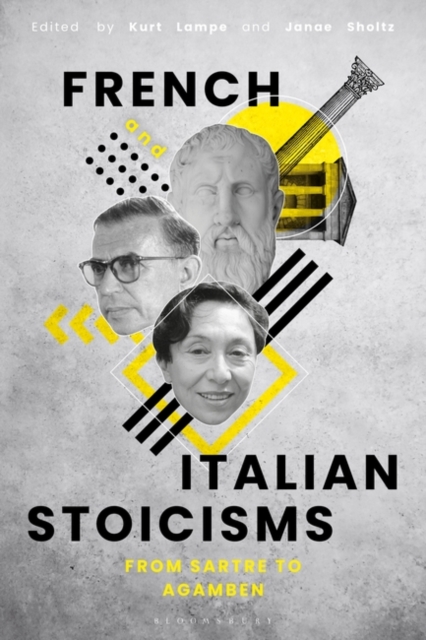
The importance of Stoicism for Gilles Deleuze's Logic of Sense and Michel Foucault's Hermeneutics of the Subject and The Care of the Self is well known.
The importance of Stoicism for Gilles Deleuze's Logic of Sense and Michel Foucault's Hermeneutics of the Subject and The Care of the Self is well known.
This book offers new critical perspectives on the relationship between the notions of speculation, logic and reality in Hegel's thought as basis for his philosophical account of nature, history, spirit and human experience.
This book offers new critical perspectives on the relationship between the notions of speculation, logic and reality in Hegel's thought as basis for his philosophical account of nature, history, spirit and human experience.
The first critical work to attempt the mammoth undertaking of reading Badiou's Being and Event as part of a sequence has often surprising, occasionally controversial results.
Yasuma Takata (1883-1971), nicknamed 'the Japanese Marshall' by Martin Bronfenbrenner, dominated sociology and then economics in Japan over a long period.
From the viewpoint of carrying out multi-disciplinary studies between economics and other social sciences, Pareto's theories are especially important as they are the core of contemporary orthodox economics.
Become a more sophisticated thinker with THINKING CRITICALLY, which teaches you a surefire process for developing the thinking abilities you need for academic and career success.
LOGIC AND CONTEMPORARY RHETORIC: THE USE OF REASON IN EVERYDAY LIFE, 13th Edition, introduces you to sound reasoning using current, relevant, and stimulating examples in a witty and invigorating writing style.
Over a million students have learned to be more discerning at constructing and evaluating arguments with the help of A CONCISE INTRODUCTION TO LOGIC, 13th Edition.