Philosophers have long theorized about what makes people's lives go well, and why, and the extent to which morality and self-interest can be reconciled.
Since the ground-breaking work of Saul Kripke, David Lewis, and others in the 1960s and 70s, one dominant interest of analytic philosophers has been in modal truths, which concerns the questions of what is possible and what is necessary.
Antonia Lolordo presents an original interpretation of John Locke's conception of moral agency--one that has implications both for his metaphysics and for the foundations of his political theory.
Kevin Scharp proposes an original theory of the nature and logic of truth on which truth is an inconsistent concept that should be replaced for certain theoretical purposes.
Though John Locke set out to write a book that would resolve questions about the origin and scope of human knowledge, his Essay Concerning Human Understanding is also a profound contribution to metaphysics, full of arguments about the fundamental features of bodies, the notions of essence and kind, the individuation of material objects, personal identity, the nature and scope of volition, freedom of action, freedom of will, and the relationship between matter and mind.
Eugene Marshall presents an original, systematic account of Spinoza's philosophy of mind, in which the mind is presented as an affective mechanism, one that, when rational, behaves as a spiritual automaton.
It was well known to the Greeks that the phenomenon of vagueness in natural language gives rise to hard problems and paradoxes, yet more than two millennia passed before Philosophy began to pay any degree of concerted attention to the challenges of vagueness to match the effort expended, for example, on the Liar paradox and its kin.
Drawing together his work from four decades, Phillip Bricker provides a comprehensive account of modal reality - the realm of possible worlds - from a Humean perspective, with excursions into neighboring topics in metaphysics.
The analysis of the connections between truth, meaning, thought, and action poses a major philosophical challenge--one that Donald Davidson addressed by establishing a unified theory of language and mind.
Paul Katsafanas explores how we might justify normative claims as diverse as 'murder is wrong' and 'agents have reason to take the means to their ends.
Chance and Temporal Asymmetry presents a collection of cutting-edge research papers in the metaphysics of science, tackling the perplexing philosophical problems raised by recent progress in the physics and metaphysics of chance and time.
Metasemantics comprises new work on the philosophical foundations of linguistic semantics, by a diverse group of established and emerging experts in the philosophy of language, metaphysics, and the theory of content.
Necessary Beings is concerned with two central areas of metaphysics: modality--the theory of necessity, possibility, and other related notions; and ontology--the general study of what kinds of entities there are.
Many different features of the world figure consciously in our perceptual experiences, in the sense that they make a subjective difference to those experiences.
This volume of newly written chapters on the history and interpretation of Wittgenstein's Tractatus represents a significant step beyond the polemical debate between broad interpretive approaches that has recently characterized the field.
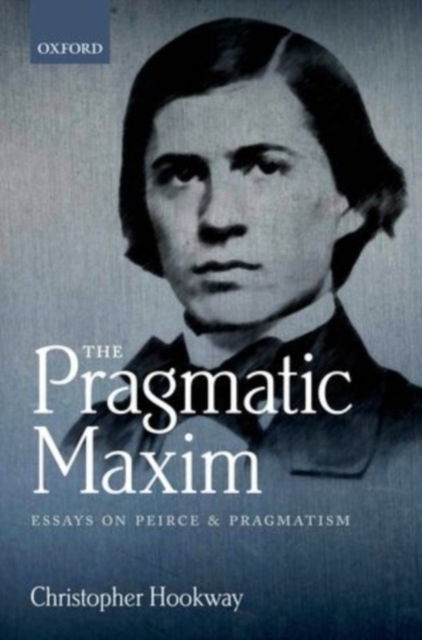
Christopher Hookway presents a series of essays on the philosophy of Charles Sanders Peirce (1839-1913), the 'founder of pragmatism' and one of the most important and original American philosophers.