While much has been written on Descartes' theory of mind and ideas, no systematic study of his theory of sensory representation and misrepresentation is currently available in the literature.
Sounds and Perception is a collection of original essays on auditory perception and the nature of sounds - an emerging area of interest in the philosophy of mind and perception, and in the metaphysics of sensible qualities.
Time, Space, and Metaphysics engages with major philosophical questions concerning time and space, a framework for the investigation being provided by the debate between the absolutists and the relationists, so between Newton and Leibniz, and their followers.
The ten essays in this collection were written to celebrate the 50th anniversary of the lectures which became Wilfrid Sellars's Empiricism and the Philosophy of Mind, one of the crowning achievements of 20th-century analytic philosophy.
The principal aim of this volume is to elucidate what freedom, sovereignty, and autonomy mean for Nietzsche and what philosophical resources he gives us to re-think these crucial concepts.
On the traditional Cartesian picture, knowledge of one's own internal world -- of one's current thoughts and feelings -- is the unproblematic foundation for all knowledge.
Throughout his philosophical career at Michigan, UCLA, Yale, and Oxford, Robert Merrihew Adams's wide-ranging contributions have deeply shaped the structure of debates in metaphysics, philosophy of religion, history of philosophy, and ethics.
Internalism in philosophy of mind is the thesis that all conditions that constitute a person's current thoughts and sensations, with their characteristic contents, are internal to that person's skin and contemporaneous.
As the study of time has flourished in the physical and human sciences, the philosophy of time has come into its own as a lively and diverse area of academic research.
In 1945 Alonzo Church issued a pair of referee reports in which he anonymously conveyed to Frederic Fitch a surprising proof showing that wherever there is (empirical) ignorance there is also logically unknowable truth.
Thoughts is a collection of twelve essays by Stephen Yablo which together constitute a modern-day examination of Cartesian themes in the metaphysics of mind.
Descartes's philosophy has had a considerable influence on the modern conception of the mind, but many think that this influence has been largely negative.
John Cottingham explores central areas of Descartes's rich and wide-ranging philosophical system, including his accounts of thought and language, of freedom and action, of our relationship to the animal domain, and of human morality and the conduct of life.
There are few more unsettling philosophical questions than this: What happens in attempts to reduce some properties to some other more fundamental properties?
Philosophers, both western and eastern, have long been divided between 'humanists', for whom 'man is the measure of things', and their opponents, who claim that there is a way, in principle knowable and describable, that the world anyway is, independent of human perspectives and interests.
RenA(c) Descartes (1596-1650) had a remarkably short working life, and his output was small, yet his contributions to philosophy and science have endured to the present day.
Kathrin Koslicki offers an analysis of ordinary materials objects, those material objects to which we take ourselves to be committed in ordinary, scientifically informed discourse.
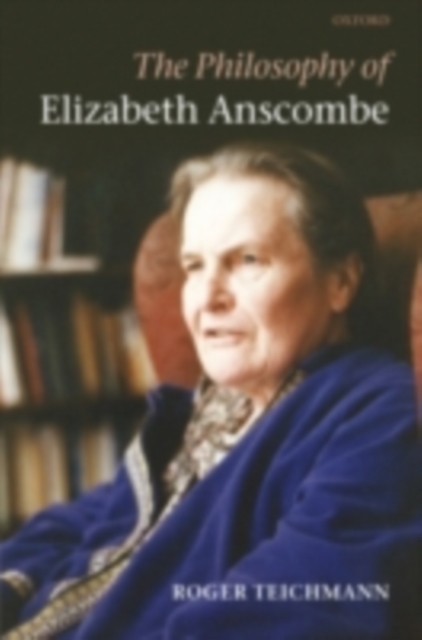
One of the most important philosophers of recent times, Elizabeth Anscombe wrote books and articles on a wide range of topics, including the ground-breaking monograph Intention.