Contemporary analytic philosophy can generally be characterized by the following tendencies: commitment to first-order predicate logic as the only viable formal logic; rejection of correspondence theories of truth; a view of existence as something expressed by the existential quantifier; a metaphysics that doesn't give the world as a whole its due.
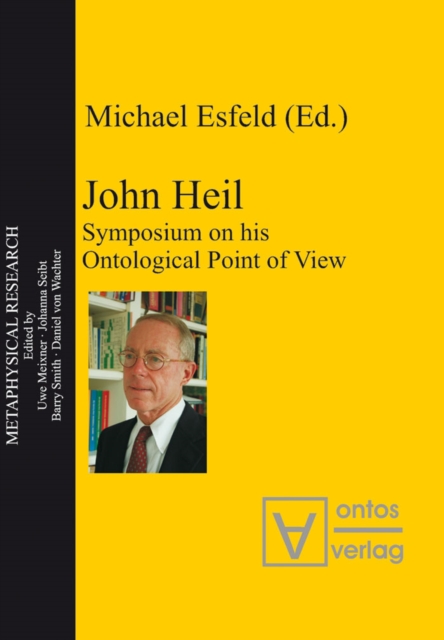
Fifty years after Willard Van Orman Quine published From a logical point of view (1953), John Heil brought out his book 'From an ontological point of view' (2003).
Jerzy Perzanowski's ideas were based on an original blend of logic and ontology in what he called onto/logic, where the slash is meant to suggest a quotient of ontology by logic.
The present book is a natural outgrowth of Rescher's longstanding preoccupation with the rational systematization of our knowledge as manifested in such earlier works as Cognitive Systematization (Oxford: Blackwell, 1979), and Complexity (New Brunswick: Transaction Publishers, 1998).
The book develops the metaphysics of meaning along the lines set up by Paul Grice, defining the three central notions of what is meant, said and implicated.
The traditional and lively interest in Meinong's philosophy and related topics among Italian philosophers gives rise to this volume of MEINONG STUDIES.
This book supports a version of the trope-bundle view of individual substances matching also with a coherent account of change, individuation and individual essences.
The book seeks to characterize reflexive conceptual structures more thoroughly and more precisely than has been done before, making explicit the structure of paradox and the clear connections to major logical results.
In the last decades ontology has been successfully developed in many directions and has fostered various approaches for depicting the contemporary ontological landscapes.