Maine de Biran's work has had an enormous influence on the development of French Philosophy – Henri Bergson called him the greatest French metaphysician since Descartes and Malebranche, Jules Lachelier referred to him as the French Kant, and Royer-Collard called him simply 'the master of us all' – and yet the philosopher and his work remain unknown to many English speaking readers.
Maine de Biran's work has had an enormous influence on the development of French Philosophy – Henri Bergson called him the greatest French metaphysician since Descartes and Malebranche, Jules Lachelier referred to him as the French Kant, and Royer-Collard called him simply 'the master of us all' – and yet the philosopher and his work remain unknown to many English speaking readers.
Metaphysics deals with truth, existence and goodness; it also considers change, time and causation, which characterise the physical world, and thought and language.
Metaphysics deals with truth, existence and goodness; it also considers change, time and causation, which characterise the physical world, and thought and language.
Until the launch of this series over fifteen years ago, the 15,000 volumes of the ancient Greek commentators on Aristotle, written mainly between 200 and 600 AD, constituted the largest corpus of extant Greek philosophical writings not translated into English or other European languages.
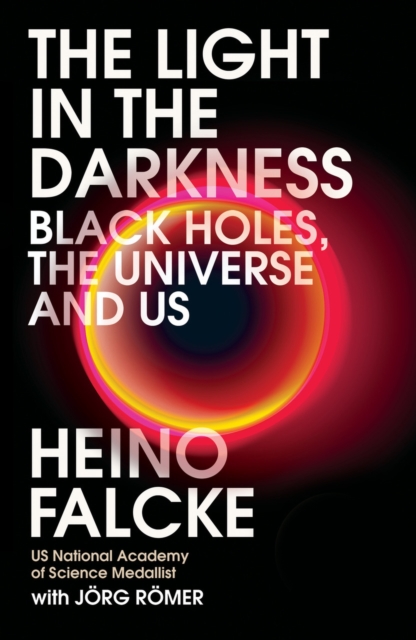
As featured in THE EDGE OF ALL WE KNOW - the new Netflix documentary about Black HolesFor readers of Stephen Hawking, a fascinating account of the universe from the perspective of world-leading astrophysicist Heino Falcke, who took the first ever picture of a black hole.
Puzzled Isles of Spirit:My intentions, with these words, are to reach as many wandering souls, as possible, to achieve an energetic shift of consciousness, towards serious and mutually beneficial CHANGE.
This book approaches humanism in the new era in China by discussing the nature of value philosophy and by analyzing in depth the significance of value research for China's modernization and future development.
As the third in a musicological trilogy that seeks objective answers to physical and metaphysical questions by way of musical ratios and proportions, this book may start with the acoustical properties of vibrating strings, but it certainly does not stop there.
Querido lector si quieres conocer los secretos de una vida eterna, si somos ngeles solares en un cuerpo de materia, si la vida fue trada por los extraterrestres o por la deidad, si ay vida despus de la muerte, si somos la semilla que poblara el universo, los secretos de las siete puertas del saber, a donde vamos al morir antes de reencarnar, el secreto de la reencarnacin, nuestras mansiones futuras, nuestra relacin con la luna y los planetas, a donde vamos al morir antes de volver de nuestro viaje por el infinito, donde estn nuestros muertos, el camino hacia tu paz interna, el camino verdadero a la felicidad, todo esto y ms encontraras en este libro, te invito a entrar en este mundo fascinante del saber de la vida eterna y de tu relacin directa con la deidad por medio del espritu divino.
Reflections On A Near Universe is a study and theoretic presentation of quantum and metaphysical concepts and perceptions based on a scientific like research .
In 1976 (the US Bi-Centennial year), when I first began seriously looking at Americas collection of state and national symbols, it felt like I was peeking into the nations dream-journalbecause symbols are the language of the soul and talk to us on that level.
The only anthology available on material constitution, this book collects important recent work on well known puzzles in metaphysics and philosophy of mind.