In recent years there have been a number of books-both anthologies and monographs-that have focused on the Liar Paradox and, more generally, on the semantic paradoxes, either offering proposed treatments to those paradoxes or critically evaluating ones that occupy logical space.
Simone de Beauvoir and Luce Irigaray famously insisted on their philosophical differences, and this mutual insistence has largely guided the reception of their thought.
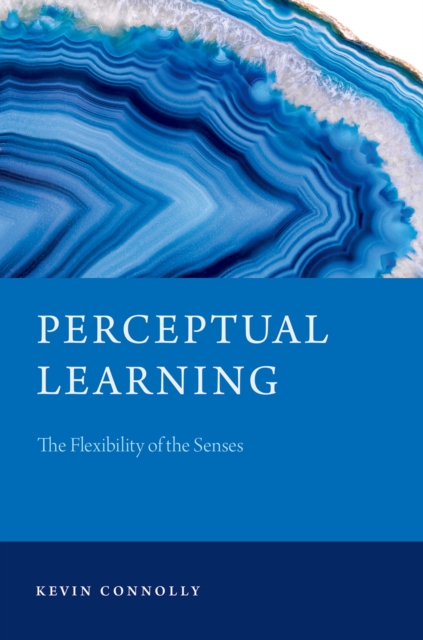
Experts from wine tasters to radiologists to bird watchers have all undergone perceptual learning-long-term changes in perception that result from practice or experience.
Experts from wine tasters to radiologists to bird watchers have all undergone perceptual learning-long-term changes in perception that result from practice or experience.
Andy Clark is a leading philosopher of cognitive science, whose work has had an extraordinary impact throughout philosophy, psychology, neuroscience, and robotics.
Andy Clark is a leading philosopher of cognitive science, whose work has had an extraordinary impact throughout philosophy, psychology, neuroscience, and robotics.
This volume collects four published articles by the late Tamara Horowitz and two unpublished papers on decision theory: "e;Making Rational Decisions When Preferences Cycle"e; and the monograph-length "e;The Backtracking Fallacy.
In the last fifteen years, there has been significant interest in studying the brain structures involved in moral judgments using novel techniques from neuroscience such as functional magnetic resonance imaging (fMRI).
In recent decades, memory has become one of the major concepts and a dominant topic in philosophy, sociology, politics, history, science, cultural studies, literary theory, and the discussions of trauma and the Holocaust.
This volume collects the best and most influential essays that Stephen Stich has published in the last 40 years on topics in the philosophy of mind and the philosophy of language.
This volume is aimed at readers who wish to move beyond debates about the existence of free will and the efficacy of consciousness and closer to appreciating how free will and consciousness might operate.
The senses, or sensory modalities, constitute the different ways we have of perceiving the world, such as seeing, hearing, touching, tasting and smelling.
Philosophers typically suppose that the contents of our beliefs and other cognitive attitudes are propositions-things that might be true or false, and their truth values do not vary from time to time, place to place, or person to person.
Although we no longer live in the relative simplicity of the Jurassic age, and even though we are not aware of them, primitive mammalian brain that developed in that era still live on inside our skulls and remain crucial to our daily functions.
Ignorance and Imagination advances a novel way to resolve the central philosophical problem about the mind: how it is that consciousness or experience fits into a larger naturalistic picture of the world.