Capitalism, by the twenty-first century, has brought us an era of escalating, overlapping crisis - ecological, political, social - which we may not survive.
In the wake of national crises and sharp shifts in the electorate, new members of Congress march off to Washington full of intense idealism and the desire for instant changebut often lacking in any sense of proportion or patience.
The surprising story of how Greek classics are being pressed into use in contemporary China to support the regime's political agendaAs improbable as it may sound, an illuminating way to understand today's China and how it views the West is to look at the astonishing ways Chinese intellectuals are interpreting-or is it misinterpreting?
An updated and expanded edition of the classic introduction to PPE-philosophy, politics, and economics-coauthored by one of the field's pioneersPhilosophy, Politics, and Economics offers a complete introduction to the fundamental tools and concepts of analysis that PPE students need to study social and political issues.
In this follow-up to The Kingdom and the Glory and The Highest Poverty, Agamben investigates the roots of our moral concept of duty in the theory and practice of Christian liturgy.
Notions of self-determination are central to modern politics, yet the relationship between the self-determination of individuals and peoples has not been adequately addressed, nor adequately allied to cosmopolitanism.
The Italian philosopher and author of Totalitarianism "e;rescues the concept of evil as an element necessary for guidance in political reflection"e; (Dialogue: Canadian Philosophical Review).
This book offers a close reading of Romans that treats Paul as a radical political thinker by showing the relationship between Paul's perspective and that of secular political theorists.
In Philosophical Essays concerning Human Families, Stanley Vodraska describes a principle of moral practice that he calls "e;the principle of familial preference.
En este libro, Ariadna nombra lo real y lo hace desde un trazo estético, pensante y experiencial de lo femenino en su devenir histórico hasta nuestros días, que cobra sentido en el mundo de la cultura a través de Esquilo, Sófocles, Ovidio, Nietzsche, Marker, Butler, Malabou, entre otros.
Now in its twelfth edition, Political Ideologies and the Democratic Ideal continues the book's tradition of offering a clear, concise, and comprehensive introduction to the ideas and ideals that shake and shape our political world.
Two centuries after his birth, Karl Marx is read almost solely through the lens of Marxism, his works examined for how they fit into the doctrine that was developed from them after his death.
George Herbert Mead is a foundational figure in sociology, best known for his book Mind, Self, and Society, which was put together after his death from course notes taken by stenographers and students and from unpublished manuscripts.
Thought under Threat reveals and combats the forces diminishing the power and role of critical thinking, whether in our individual lives or collectively.
By the end of the eighteenth century, politicians in America and France were invoking the natural rights of man to wrest sovereignty away from kings and lay down universal basic entitlements.
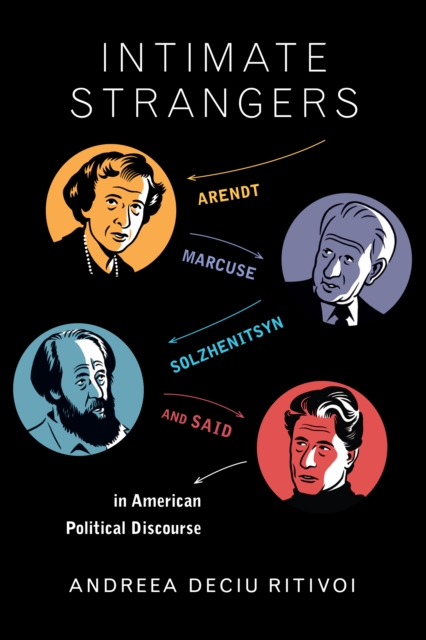
Hannah Arendt, Herbert Marcuse, Alexander Solzhenitsyn, and Edward Said each steered major intellectual and political schools of thought in American political discourse after World War II, yet none of them was American, which proved crucial to their ways of arguing and reasoning both in and out of the American context.
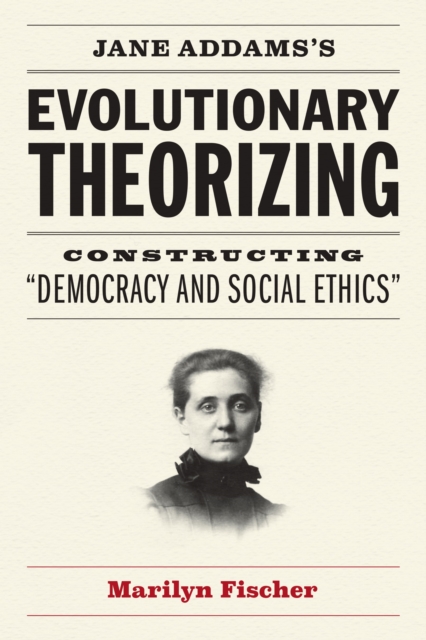
In Jane Addams's Evolutionary Theorizing, Marilyn Fischer advances the bold and original claim that Addams's reasoning in her first book, Democracy and Social Ethics, is thoroughly evolutionary.
Western philosophy has been dominated by the concept or the idea-the belief that there is one sovereign notion or singular principle that can make reality explicable and bring all that exists under its sway.
Decades into its existence as a foundational aspect of modern political and economic life, the welfare state has become a political cudgel, used to assign blame for ballooning national debt and tout the need for personal responsibility.