This book offers a comprehensive theory of invisibility as a critical sociological concept, addressing the relationship between social suffering and invisibilization.
This edited collection charts the rise and the fall of the self, from its emergence as an autonomous agent during the Enlightenment, to the modern-day selfie self, whose existence is realised only through continuous external validation.
This book investigates how the externalisation of EU migration policies is implemented in Tunisia after the fall of the Ben Ali regime in 2011 through the involvement of civil society organisations.
This edited volume discusses critically discursive claims about the theological foundations connecting Islam to certain manifestations of violent extremism.
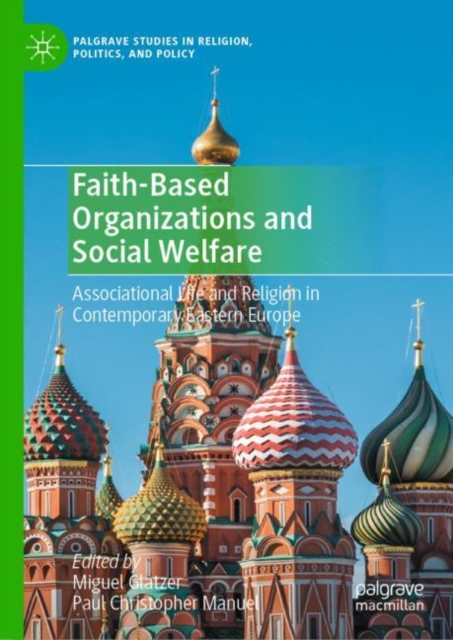
This volume seeks to understand the role and function of religious-based organizations in strengthening associational life through the provision of social services, thereby legitimizing a new role for faith in the formerly secular public sphere.
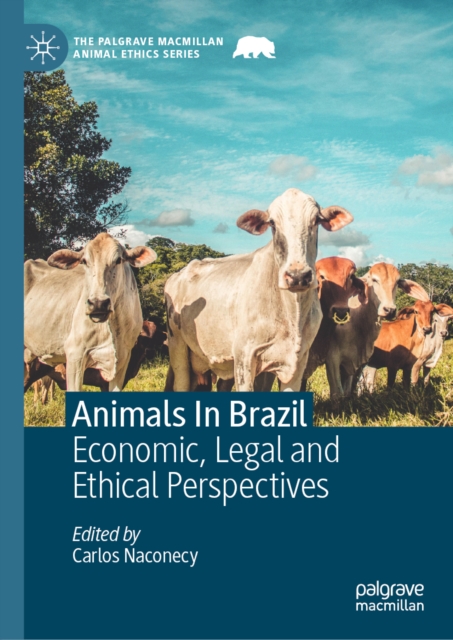
This book presents a collection of essays exploring the legal, economic, socio-environmental, and ethical dimensions of human-animal interaction in Brazil.
This book illustrates the role of researchers' affects and emotions in understanding and making sense of the phenomena they study during ethnographic fieldwork.
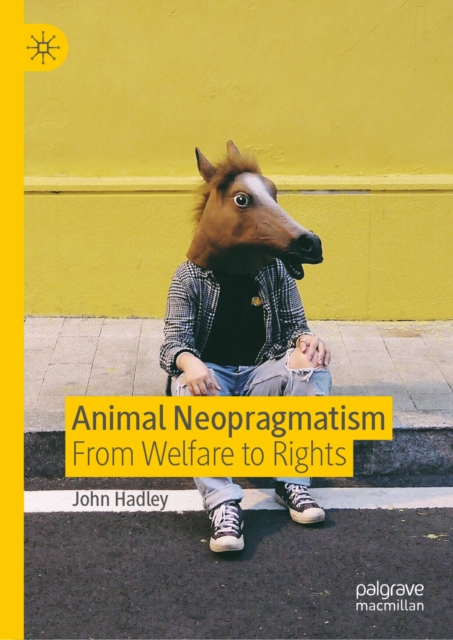
This book affords a neopragmatic theory of animal ethics, taking its lead from American Pragmatism to place language at the centre of philosophical analysis.
"e;A fine collection of essays exploring, and in many cases extending, Jim Buchanan's many contributions and insights to economic, political, and social theory.
This is an international and interdisciplinary volume that provides a new look at the general background of the social sciences from a philosophical perspective and provides directions for methodology.
Against the backdrop of the ongoing Rohingya crisis, this book takes a close and detailed look at the rise of militant Buddhism in Sri Lanka, Burma and Thailand, and especially at the issues of 'why' and 'how' around it.
This study entails a theoretical reading of the Iranian modern history and follows an interdisciplinary agenda at the intersection of philosophy, psychoanalysis, economics, and politics and intends to offer a novel framework for the analysis of socio-economic development in Iran in the modern era.
Grounded in the Weberian tradition, Islam and Democracy in South Asia: The Case of Bangladesh presents a critical analysis of the complex relationship between Islam and democracy in South Asia and Bangladesh.
This edited collection brings together experts from various disciplines to engage critically with diversity theory, diversity politics, and their practical application.
This book is a theoretical account for general psychology of how human beings meaningfully relate with their bodies-- from the basic physiological processes upwards to the highest psychological functions of religiosity, ethical reasoning, and devotional practices.
Reading different or controversial intentions into Marx and Engels' works has been a common but somewhat unquestioned practice in the history of Marxist scholarship.
Since the latest crisis of capitalism broke out in 2008, Marx has been back in fashion, and sometimes it seems that his ideas have never been as topical, or as commanding of respect and interest, as they are today.
Worldwide political changes since 1990 have driven a re-evaluation of Marxism, a renaissance in Marx-studies, and a renewed interest in his lifelong intellectual partner and personal friend Friedrich Engels.
This book draws upon the work of Georg Simmel to explore the limits, tensions and dynamism of social life through a close analysis of the works produced in the final years of his life and reveals what they might still offer some 100 years later.
This book explores the thirty-year trajectory of the Free Patriotic Movement that aimed to achieve the freedom, sovereignty and independence of Lebanon from the Lebanese political elite and Syrian hegemony.
This edited volume brings together an international and interdisciplinary group of scholars to explore the traces of the idea of "e;Real Abstraction"e; in Marx's thought from the early to late writings, as well as the theoretical and practical consequences of this notion in the capitalist social system.
Over the last several decades, many political theorists have touted the banner of "e;radical democracy"e; to view the agonistic-that is, non-coercive-struggle against power as the correct way forward for progressive political actors, rather than the antagonistic acquisition or use of it.
This edited collection uses critical theory in order to understand the rise of the Alt-Right and the election of Donald Trump-and, in doing so, to assert the necessity and value of various disciplines within the humanities.
The aim of this book is to provide a fresh, wider, and more compelling account of democracy than the one we usually find in conventional contemporary political theory.
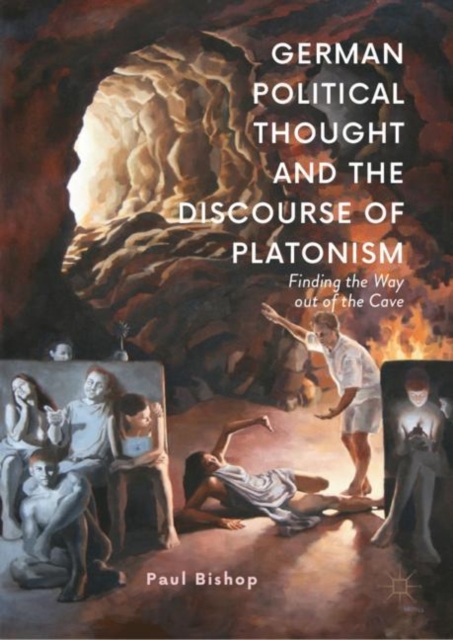
Taking Plato's allegory of the cave as its starting-point, this book demonstrates how later European thinkers can be read as a reaction and a response to key aspects of this allegory and its discourse of enchainment and liberation.
Grounded in nine years of ethnographic research on the al Muhajiroun/Ahlus Sunnah Wal Jamaah movement (ALM/ASWJ), Douglas Weeks mixes ethnography and traditional research methods to tell the complete story of al Muhajiroun.
Interrogating Modernity returns to Hans Blumenberg's epochal The Legitimacy of the Modern Age as a springboard to interrogate questions of modernity, secularisation, technology and political legitimacy in the fields of political theology, history of ideas, political theory, art theory, history of philosophy, theology and sociology.