The book, the third volume to emerge from the enterprise known as 'The Backwaters Collective on Metaphysics and Politics', attempts to further the collective's ambition to put into question the certitudes of conventional social science discourse, decolonize the dominant knowledge frameworks, and understand how the intellectual and cultural resources of Indian civilization may be deployed to think both, about some problems in contemporary politics and culture, and to introduce greater plurality into the world of modern knowledge systems.
Prompted both by past policies and recent developments concerning immigration around the world that center on race, ethnicity, religion, and other identities, Immigration and Discrimination explores what bases states are morally permitted to use for their admission decisions and policies, and why.
Prompted both by past policies and recent developments concerning immigration around the world that center on race, ethnicity, religion, and other identities, Immigration and Discrimination explores what bases states are morally permitted to use for their admission decisions and policies, and why.
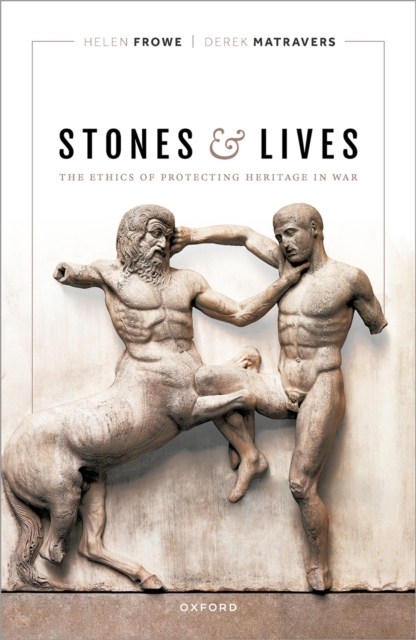
The fate of heritage in war has attracted considerable attention in recent years, due in no small part to ISIS's campaign of destruction across the Middle East and, in 2012, the International Criminal Court's first prosecution of heritage destruction as a war crime.
This book explores why naive ideals about better policymaking persist even in cynical times, revealing the careful reflection at the heart of what appears to be 'magical thinking' in public policy.
A vivid and timely new translation of Plato's Apology, in which Socrates defends his pursuit of truth, no matter the consequencesFree speech is back at the center of political and cultural debate, amid intense arguments over censorship on campus, in government, and in everyday life.
A global perspective on the nature and evolution of nationalism, from the early modern era to the presentThe current rise of nationalism across the globe is a reminder that we are not, after all, living in a borderless world of virtual connectivity.
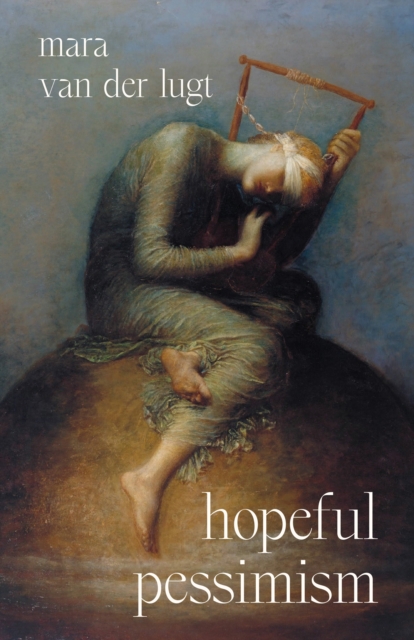
Why ';hopeful pessimism' is not a contradiction in terms but a powerful source of moral and political commitmentThe climate debate is rife with calls for optimism.
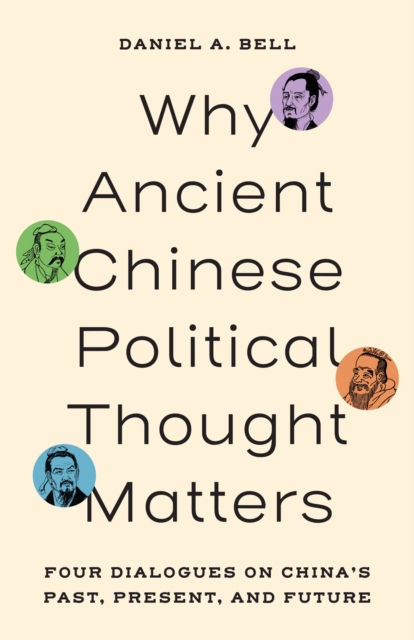
An entertaining introduction to ancient Chinese thinkersand what they can teach us about today's most pressing political questions in China and beyondChina's most original, diverse, and fascinating political debates took place more than two millennia ago, but they have profoundly shaped Chinese political thinking and practice ever since and, remarkably, their influence on the country's leaders is only growing today.
An entertaining introduction to ancient Chinese thinkersand what they can teach us about today's most pressing political questions in China and beyondChina's most original, diverse, and fascinating political debates took place more than two millennia ago, but they have profoundly shaped Chinese political thinking and practice ever since and, remarkably, their influence on the country's leaders is only growing today.
Why ';hopeful pessimism' is not a contradiction in terms but a powerful source of moral and political commitmentThe climate debate is rife with calls for optimism.
This book takes political philosophy as the starting point for a survey of the issues at stake in ecologism as a contemporary political ideology, far from the so-called “postmodern” approaches, but without ignoring them.
French philosophy is an internationally celebrated national philosophical tradition, and this Oxford Handbook offers a comprehensive approach to its history since 1800.
French philosophy is an internationally celebrated national philosophical tradition, and this Oxford Handbook offers a comprehensive approach to its history since 1800.
Nearly two years before his powerful Communist Manifesto, Marx (1818-1883) co-wrote The German Ideology in 1845 with friend and collaborator Friedrich Engels expounding a new political worldview, including positions on materialism, labor, production, alienation, the expansion of capitalism, class conflict, revolution, and eventually communism.
Nearly two years before his powerful Communist Manifesto, Marx (1818-1883) co-wrote The German Ideology in 1845 with friend and collaborator Friedrich Engels expounding a new political worldview, including positions on materialism, labor, production, alienation, the expansion of capitalism, class conflict, revolution, and eventually communism.
The uses of shame (and shamelessness) in spheres that range from social media and consumerism to polarized politics and mass violenceToday, we are caught in a shame spirala vortex of mutual shaming that pervades everything from politics to social media.
Sex Matters addresses a cluster of related questions that arise from the conflict of interests between rights based on sex and rights based on gender identity.
A few years ago, the rhetoric of hope was all the rage, but the faith it expressed has been challenged by recent events and in recent political theory.
A few years ago, the rhetoric of hope was all the rage, but the faith it expressed has been challenged by recent events and in recent political theory.
This work brings to light the visionary thought of Antenor Firmin, a towering figure of 19th-century Haitian political philosophy and humanism, whose global significance has too often been overlooked.