Multiculturalism is often thought to be defined by its commitment to diversity, inclusivity, sensitivity, and tolerance, but these established values sometimes require contrary practices of homogenization, exclusion, insensitivity, and intolerance.
This edited collection analyses the reception of a selection of key thinkers, and the dissemination of paradigms, theories and controversies across the social sciences and humanities since 1945.
This book focuses on oil politics and the development of nuclear technology in Iran, providing a broader historical context to understand Iran's foreign relations and nuclear policy.
This book offers a compelling examination of our moral and epistemic obligations to be reasonable people who seek to understand the social reality of those who are different from us.
This book provides a comprehensive account of the phenomenon of identity in politics, featuring for the first time the question of individual emancipation.
Considering the history of workers' and socialist movements in Europe, Frontier Socialism focuses on unconventional forms of anti-capitalist thought, particularly by examining several militant-intellectuals whose legacy is of particular interest for those aiming for a radical critique of capitalism.
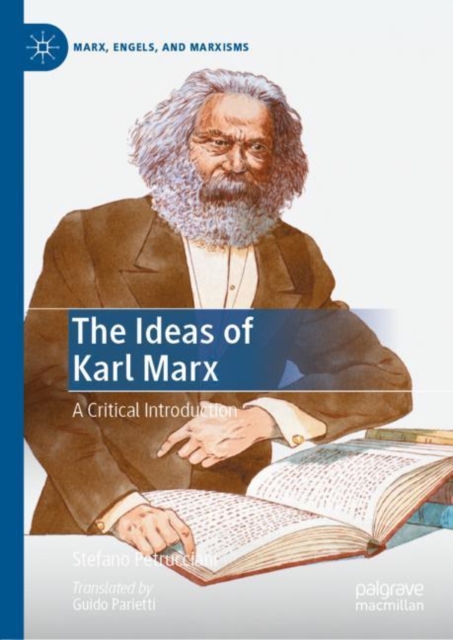
This book offers a complete presentation of the most important themes of Marx's thought, following the development of Marx's theory from the beginning to his death and offering a reconstruction and analysis that covers the whole of Marx's life and works.
This book covers a varied spectrum of ethical topics, ranging from the fundamental considerations regarding ethical values, to the rationale of obligation, and the ethical management of societal and personal affairs.
This book charts the historical development of 'forensic objectivity' through an analysis of the ways in which objective knowledge of crimes, crime scenes, crime materials and criminals is achieved.
Building from the level of individual interaction, this book intends to shed light on what the author terms "e;infrasocial power"e; and the relation between this individual-actor oriented level and public power.
This book argues that the macroeconomic policy adjustment models recommended by the IMF and the World Bank for implementation in many Muslim countries, with substantial donor financial support, have not been effective.
This book uses the concepts of freedom, indeterminism, and fallibilism to solve, in a unified way, problems of free will, knowledge, reasoning, rationality, personhood, ethics and politics.
This book provides a comparative and historical analysis of totalitarianism and considers why Spain became totalitarian during its inquisition but not France; and why Germany became totalitarian during the previous century, but not Sweden.
This book promotes a Lacanian approach to silence, arguing that Lacanian psychoanalysis is distinctive for putting a high value on both silence and language.
This book explains a perspective on the system of justice that emerges in Islam if rules are followed and how the Islamic system is differentiated from the conventional thinking on justice.
This book offers an intellectual history of one of the leading Shi'i thinkers and religious leaders of the 20th-century in Lebanon, Shaykh Muhammad Mahdi Shams al-Din.
Arguing that we ought to look to psychedelic aesthetics of the 1960s in relation to current crises in liberal democracy, this book emphasizes the intersection of European thought and the psychedelic.
This book investigates the forgotten years of Kurdish nationalism in Iran, from the fall of the Kurdish republic to the advent of the Iranian revolution.
This book addresses the tendency to mischaracterise liberalism as a "e;neoliberal"e; reform project, arguing that liberal political philosophy is concerned only to sustain the conditions that make individual freedom possible.
Maria Lugones, one of the premiere figures in feminist philosophy, has at last collected some of her most famous essays, as well as some lesser-known gems, into her first book, Pilgrimages/Peregrinajes.
In this timely book, two philosophers-one American, one Bulgarian-explore the significance of the changes in Eastern Europe that began in 1989, and offer two alternative perspectives about them.
From the most prominent thinkers in Latin American philosophy, literature, politics, and social science comes a challenge to conventional theories of globalization.