This book presents the welfare regime of societies of Chinese heritage as a liminal space where religious and state authorities compete with each other for legitimacy.
This book on the philosophy of critical realism and meta-Reality and its development is based on conversations between Roy Bhaskar, the originator of the philosophy, and Savita Singh, a distinguished Indian poet and social theorist.
This book addresses the human civilizational ethos and explores the concept of the nonkilling paradigm concerning human dignity, human rights, affirmative nonkilling, positive peace and the advancement of human existence.
This book describes the Islamisation process that has unfolded in Malaysia over the last fifty years and provides feedback from in-depth interviews with 100 individuals from Malaysia's "e;educated classes"e;, or the "e;elite"e;, regarding their reactions to the changes that have accompanied Islamisation and how they feel it has impacted them.
This book explores the Chinese Catholic Church as a whole as well as focusing on particular aspects of its activities, including diplomacy, politics, leadership, pilgrimage, youths, and non-Chinese Catholics in China.
This book argues that Political Islam in the Iranian context evolved into three main schools of thought during the 1960s and 1970s: Jurisprudential Islam led by Ayatollah Khomeini, Leftist Islam led by Shariati, and Liberal Islam led by Bazargan.
This book examines the cultural concepts that guided the development of the "e;age of mankind"e;- the changes that took place in historical, philosophical, scientific, religious, literary, and artistic thought in the 20th century.
This Key Concepts pivot discusses the contemporary relevance of the ancient Chinese concept of Tianxia or 'All-Under-Heaven' and argues the case for a new global political philosophy.
This book is the first comprehensive study to respond to the ongoing debates on political sciences' fragmentation, doubtful relevance, and disconnect with the larger public.
This book investigates the changing meanings of power and politics in the Internet age and questions whether the political category of the citizen still has a meaningful role to play in the highly-mediated dynamics of an increasingly networked world.
This book investigates the changing meanings of power and politics in the Internet age and questions whether the political category of the citizen still has a meaningful role to play in the highly-mediated dynamics of an increasingly networked world.
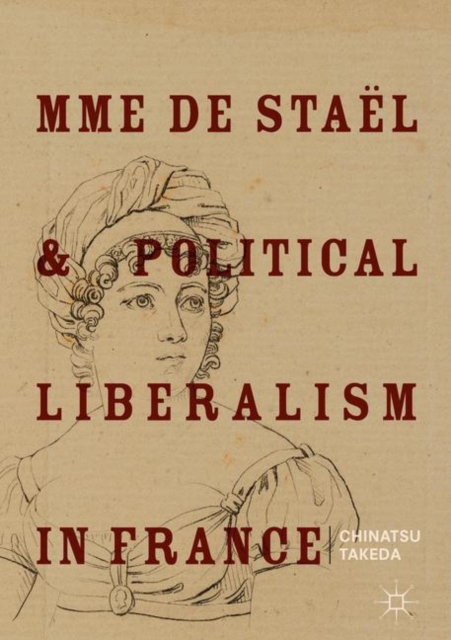
This book sheds light on the unique aspects of 'communal liberalism' in Mme de Stael's writings and considers her contribution to nineteenth-century French liberal political thought.
This book provides a rigorous investigation into the adoption and culture of human rights in Nigeria, with a focus on the human rights attitudes of Nigerian students.
Setting the context for the upheavals and transformations of contemporary China, this text provides a re-assessment of Max Weber's celebrated sociology of China.
Considering the different traditions of cosmopolitan thinking and experimentation, this cutting edge volume examines the contemporary revival of cosmopolitanism as a response to the challenges of living in an interdependent world.
This book draws upon Vygotsky's idea of perezhivanie, emotions and imagination, and introduces the concepts of subjective sense and subjective configuration.
This book differs from most others of its kind, by looking at the Hong Kong issue from China's perspective, which in turn mirrors China's own situation.
This important and topical volume is composed around the debt and migration crisis in Europe in 2015 (known as the Greece crisis), and written almost concurrently as the two crises developed in quick succession.
This volume looks at how accumulation in postcolonial capitalism blurs the boundaries of space, institutions, forms, financial regimes, labour processes, and economic segments on one hand, and creates zones and corridors on the other.
"Si consideramos todo cuidadosamente, encontraremos algo que parecerá virtud, pero que si lo siguiese sería su ruina y algo que parecerá vicio pero que, siguiéndolo, le proporcionará la seguridad y el bienestar propio".
En la actualidad, los estudios de filosofía del derecho y teoría jurídica no se orientan por un único problema que determine su objeto, sino por una multiplicidad de cuestiones y preocupaciones más o menos abstractas.
La divulgación científica ha funcionado en diferentes momentos y contextos como una estrategia de política científica para articular las relaciones que se espera de la ciencia y la tecnología con la sociedad.
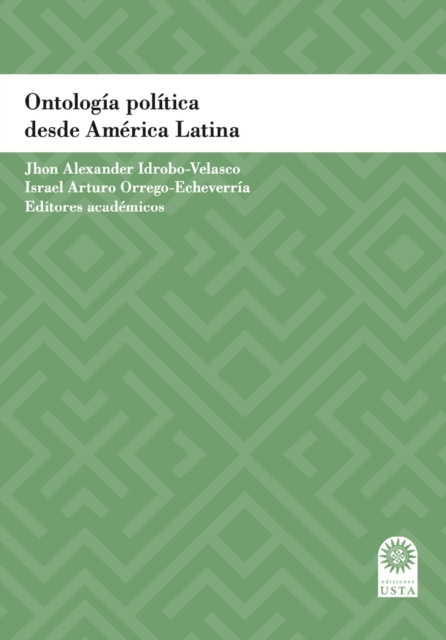
Esta obra, que integra diversos enfoques y estéticas escriturales, es una apuesta por comprender el sentido de una ontología política desde América Latina, en la cual se reconocen y se deconstruyen los legados del pensamiento occidental, situando lo disruptivo, lo que emerge desde la "filosofía contextual andina" y el pensar latinoamericano.
Las funciones de la filosofia, asi como sus nexos epistemologicos con la ideologia, la etica, la politica, han sido y seran objetos permanentes de valoracion por amplios sectores intelectuales, entre los cuales se encuentran algunas personalidades colombianas y latinoamericanas, estudiadas en este libro.
El presente volumen de la "Colección Semillas" tiene como objetivo visibilizar las reflexiones que se gestan en el interior de la actividad académica de los investigadores en formación en torno al actual proceso de transición sociopolítica nacional que es el posconflicto.
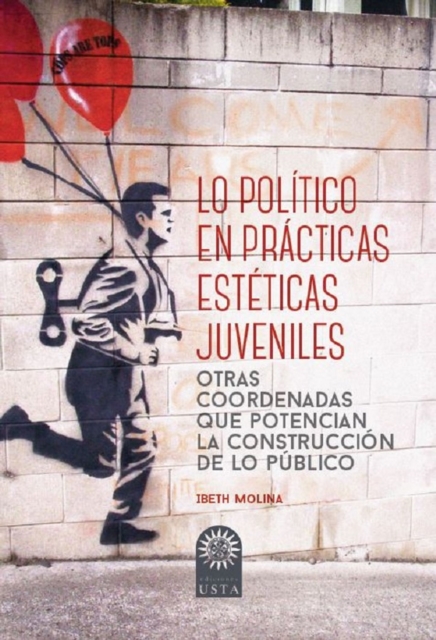
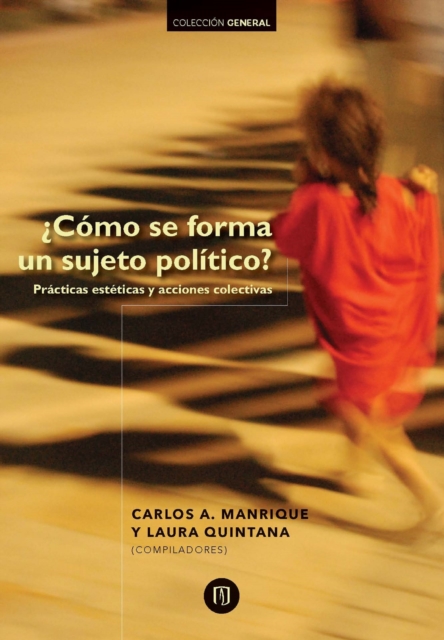
En este libro se hace un reconocimiento explicito a otras formas y abordajes de procesos politicos agenciados por jovenes a partir del analisis de las practicas de tres colectivos juveniles en diferentes zonas de Colombia, con intencionalidades, itinerarios, repertorios de accion y experiencias esteticas diferentes que potencian la construccion de lo publico desde sus territorios y ambitos de incidencia.
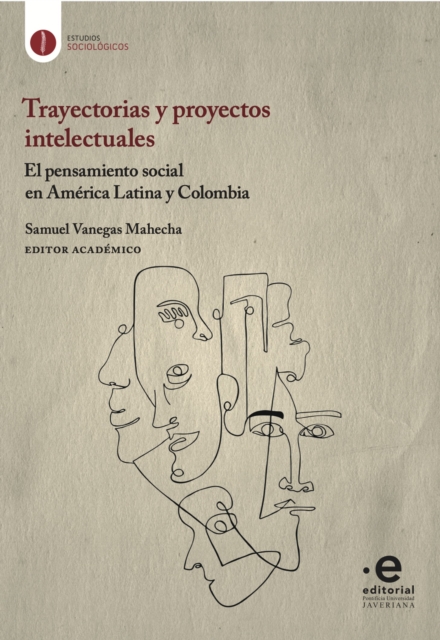
Este libro ha sido pensado como una reconstrucción comparada de las trayectorias que ha tenido el pensamiento social latinoamericano, a través de los ensayistas, el surgimiento de la sociología, la institución de la crítica literaria y la trasformación de ciertos conceptos en relación con coyunturas de la historia social y política colombiana y latinoamericana.
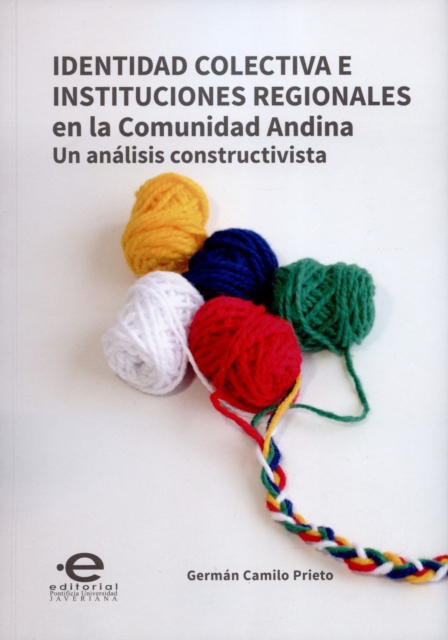
Este libro ofrece un análisis constructivista de la Comunidad Andina, en un esfuerzo por aplicar el constructivismo al estudio del regionalismo en Suramérica y América Latina.
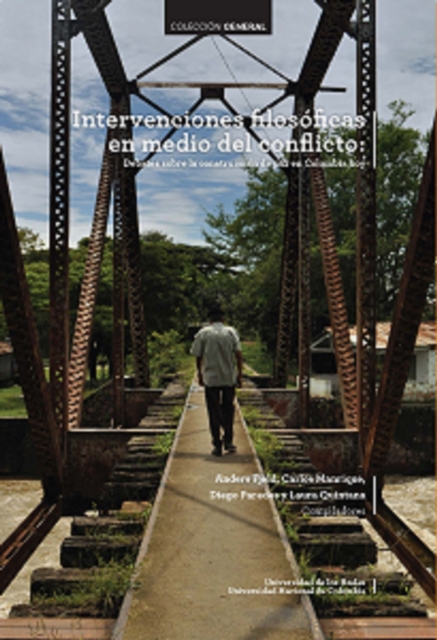
Las negociaciones de paz en La Habana dinamizaron los escenarios de reflexión sobre los problemas de Colombia y pluralizaron las voces que han intervenido en estos.
Sin duda, este libro resultará valioso para un público muy amplio, en principio filósofos y músicos; pero está escrito con tanta claridad, belleza, riqueza en metáforas, y con un cuidado por hacerse comprender y de llegar a los otros, que no dudo que resulte interesante mucho más allá del ámbito cerrado de estas disciplinas.