The debate about our treatment of nonhuman animals has been traditionally dominated by moral philosophers, and the crucially important role of politics has been hitherto neglected.
Representative democracy has long been problematic and subject to erosion through the introduction of components of direct democracy (referenda, voter initiatives and systems of recall).
Affective Critical Regionality offers a new approach to developing a sharper, more nuanced understanding of the relations between place, space, memory and affect.
Democracy is the apparent motor of globalization, binding together ideas and institutions such as citizenship, human rights, race, the free market, multiculturalism, development, politics and the economy.
Does recognition of the basic human right to subsistence imply that the needy are morally permitted to take and use other people's property to get out of their plight?
Tracing the complex yet intimate relationship between a present-day national obsession with childhood and a colonial past with which Australia as a nation has not adequately come to terms, Young and Free draws on philosophy, literature, film and testimony.
Contemporary feminist theory has moved into posthuman terrains as feminist theorists utilise human/nonhuman relations and a motley crew of nonhuman entities to reinvigorate feminist critique of nature/culture dichotomies.
Measurement in Medicine brings together for the first time a range of philosophical essays on topics in the philosophy of epidemiology, epistemology of measurement, philosophy of health economics and health policy that address pressing questions of assessment and evaluation in medicine.
In this important and original book, Johann Michel paves the way for a greater understanding of Paul Ricoeur's philosophy by exploring it in relation to some major figures of contemporary French thought-Bourdieu, Derrida, Deleuze, Foucault and Castoriadis.
There has been a recent revival of interest in reading Kierkegaard as an ontologist, as a thinker who engages with questions about the kinds of entity or process that constitute ultimate reality.
Revolutionary theories from Marx onward have often struggled to unite the psychological commitments of individuals- understood as ideological- with the larger ethical or political goals of a social movement.
This highly original collection of essays contributes to a critique of the common understanding of modernity as an enlightened project that provides rational grounds for orientation in all aspects and dimensions of the world.
The linguistic turn in critical theory has been routinely justified with the claim that Adorno's philosophy is trapped within the limits of consciousness philosophy.
How does the ontological turn in anthropology redefine what modern, Western ontology is in practice, and offer the beginnings of a new ontological pluralism?
A popular cliche in contemporary public discourse holds that we live in a time of increasing uncertainty; that the next catastrophe is perpetually imminent and yet increasingly beyond our capacity to foresee.
Axel Honneth is one of the most influential social and political philosophers in contemporary German political thought and one of the central figures of the third generation of the Frankfurt School.
The Future of Social Epistemology: A Collective Vision sets an agenda for exploring the future of what we - human beings reimagining our selves and our society - want, need and ought to know.
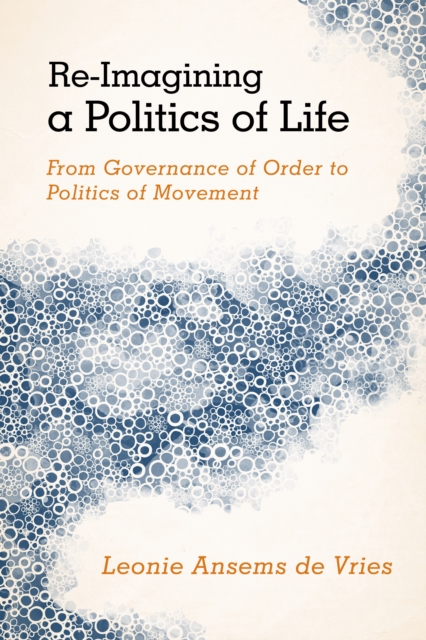
Since the 2008 financial crisis, the neoliberal ideas that arguably caused the damage have been triumphant in presenting themselves as the only possible solution for it.
A critique of theory through literature that celebrates the diversity of black being, The Desiring Modes of Being Black explores how literature unearths theoretical blind spots while reasserting the legitimacy of emotional turbulence in the controlled realm of reason that rationality claims to establish.
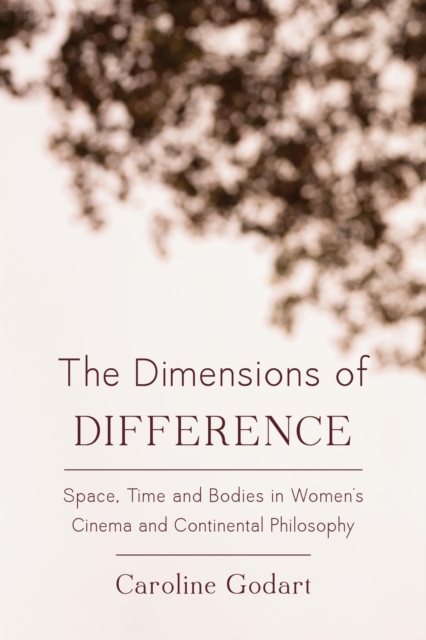
The Dimensions of Difference departs from traditional takes on feminist film criticism, and in particular from the psychoanalytical focus on the gaze, to examine the question of sexual difference through three axes: space, time, and bodies.
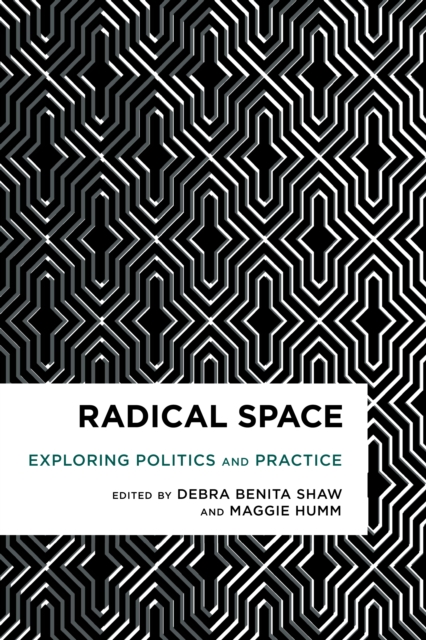
The spatial turn in the Humanities and Social Sciences has produced a considerable body of work which re-assesses space beyond the fixed Cartesian co-ordinates of Modernity and the nation state.
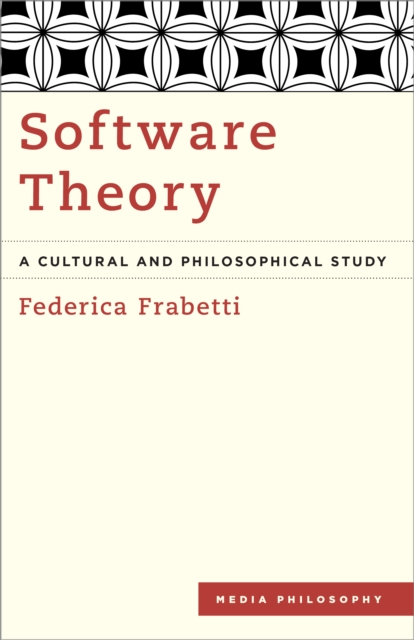
The cultural and philosophical study of software is crucial, both within and outside of the university, at an international level and across disciplines.
Jan Patocka, perhaps more so than any other philosopher in the twentieth century, managed to combine intense philosophical insight with a farsighted analysis of the idea and challenges facing Europe as a historical, cultural and political signifier.
Wolfgang Ernst has demonstrated that the knowledge of time-giving ('chrono-poetical') media and their temporal essence enriches the tradition of philosophical inquiry into the nature of 'time'.
Axel Honneth is one of the most influential social and political philosophers in contemporary German political thought and one of the central figures of the third generation of the Frankfurt School.
The conviction that we all have, possess or inhabit a discrete culture, and have done so for centuries, is one of the more dominant default assumptions of our contemporary politico-intellectual moment.