Law's Ideal Dimension provides a comprehensive account in English of renowned legal theorist Robert Alexy's understanding of jurisprudence, as expanded upon from his publications A Theory of Legal Argumentation (OUP 1989), A Theory of Constitutional Rights (OUP 1985), and The Argument from Injustice (OUP 1992).
This book presents not only many of Daryl Koehn’s historically well-known papers analyzing business ethics using Western and Asian virtue ethics, but also some of her more recent, previously unpublished work on the ethics and politics of the corporate form.
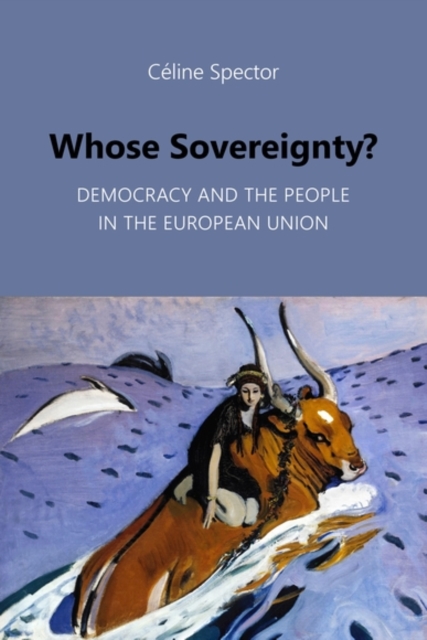
In this carefully argued case for a federal Europe, Celine Spector proposes that national sovereignty has become increasingly untenable as mechanisms perpetuating fiscal, social and environmental inequities transcend borders.
In this carefully argued case for a federal Europe, Celine Spector proposes that national sovereignty has become increasingly untenable as mechanisms perpetuating fiscal, social and environmental inequities transcend borders.
An Introduction to Collective Intentionality: In Action, Thought, and Society makes a cogent case for the field's importance, presents its central questions, and introduces the main topics of study.
Book Description — Volume IIIn Volume I, Muganga Ibra introduced a bold thesis: that civilization's survival depends not on technological acceleration, but on alignment — moral, institutional, cognitive, and artificial.
An Introduction to Collective Intentionality: In Action, Thought, and Society makes a cogent case for the field's importance, presents its central questions, and introduces the main topics of study.
Abolition Archives, Feminist Futures takes up the work of three iconic feminist thinkers-Angela Davis, Shulamith Firestone, and Donna Haraway-to ask how each author's vision of work, the family, and the carceral state can expand contemporary feminism's ability to structurally analyze social problems.
Shelter for the Night is an ethnographic meditation on language and psychic life in 2010s Afghanistan, where militarized violence has collapsed social worlds.
Die Begriffe »Identität« und »Differenz« gewinnen heute über die Philosophie hinaus in sozialen und politischen Kontexten sowie in kulturwissenschaftlichen Debatten zunehmend an Bedeutung.
Addressing challenging questions at the intersection of happiness research and theories of justice, this book explores the extent to which redistribution of material goods can promote the happiness of the recipient and which form of redistribution best serves this purpose: state redistribution in the name of social justice or voluntary redistribution driven by philanthropy.
Addressing challenging questions at the intersection of happiness research and theories of justice, this book explores the extent to which redistribution of material goods can promote the happiness of the recipient and which form of redistribution best serves this purpose: state redistribution in the name of social justice or voluntary redistribution driven by philanthropy.
In seinem klassischen Text stellt Bourdieu die gesellschaftliche Sozialstruktur als Raum von Positionen dar, die sich aus der Verteilungsstruktur von Kapital ergeben.
Mit dem Subjektbegriff wird auf eine logisch nicht hintergehbare Entitat verwiesen, die sich aus den Uberlegungen einer konstruktivistischen Erkenntnistheorie ableiten lasst.
This volume addresses the critical role of religion in the world today, and how it is caught up in the transition from modern liberalism to postmodern neoliberalism.
This volume addresses the critical role of religion in the world today, and how it is caught up in the transition from modern liberalism to postmodern neoliberalism.
Mit dem Subjektbegriff wird auf eine logisch nicht hintergehbare Entitat verwiesen, die sich aus den Uberlegungen einer konstruktivistischen Erkenntnistheorie ableiten lasst.