This volume for the first time examines the intricate and often obscured interplay between death and public relations across historical periods and within contemporary society.
With the dawn of research into leader-behaviors, scholars differentiated between being task-oriented, which is important, and also being people-oriented.
This volume charts the history of transnational and transatlantic fascism in East Central and Southeastern Europe, a lesser-known phenomenon that occurred throughout the twentieth century into the present.
Torturing Environments explores how contemporary practices of coercion have evolved beyond overt physical torture, increasingly relying on psychological pressure, structural violence, and the manipulation of social and economic conditions.
This book brings together an exceptional group of renowned scholars in philosophy and sociology, offering deep and insightful engagements with Jürgen Habermas’s thought.
This brief discusses how to deal with data visualization and prediction in human society, a context in which big data analysis and artificial intelligence have the potential to transform the world.
This book brings together an exceptional group of renowned scholars in philosophy and sociology, offering deep and insightful engagements with Jürgen Habermas’s thought.
This book examines our understanding of the ways in which we produce and consume archaeological knowledge and proposes that this should play a greater role in our attempts to describe and comprehend the nature and purpose of archaeology, and the nature of archaeological knowledge.
This brief discusses how to deal with data visualization and prediction in human society, a context in which big data analysis and artificial intelligence have the potential to transform the world.
This book brings together some of the most distinguished and influential scholars in philosophy and sociology to explore the continued relevance of Herbert Marcuse’s critical theory in the twenty-first century.
Starting from the hypothesis that all human forms of life have a political dimension – be it clearly expressed or hidden, conscious or unconscious – this volume examines the ways in which political life can be fruitfully analyzed with the help of phenomenological methodologies.
This book provides an ambitious, timely, and comprehensive treatment of Israel-Taiwan relations, presenting a valuable historical and political exploration of a niche but increasingly relevant bilateral relationship in contemporary international affairs.
This book brings together some of the most distinguished and influential scholars in philosophy and sociology to explore the continued relevance of Herbert Marcuse’s critical theory in the twenty-first century.
This book provides an ambitious, timely, and comprehensive treatment of Israel-Taiwan relations, presenting a valuable historical and political exploration of a niche but increasingly relevant bilateral relationship in contemporary international affairs.
Starting from the hypothesis that all human forms of life have a political dimension – be it clearly expressed or hidden, conscious or unconscious – this volume examines the ways in which political life can be fruitfully analyzed with the help of phenomenological methodologies.
This book examines our understanding of the ways in which we produce and consume archaeological knowledge and proposes that this should play a greater role in our attempts to describe and comprehend the nature and purpose of archaeology, and the nature of archaeological knowledge.
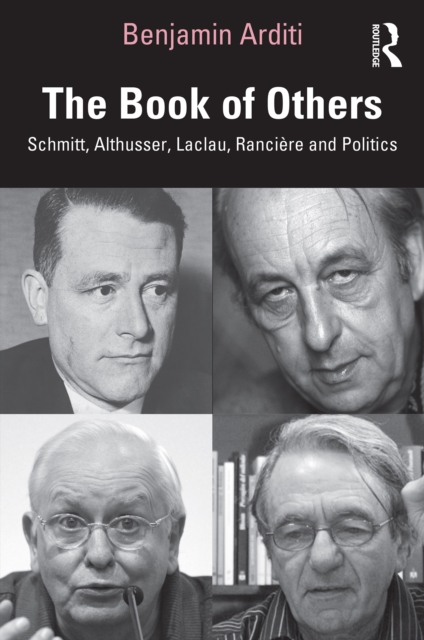
In The Book of Others, Benjamin Arditi examines the enduring theoretical influence of four major political thinkers-Carl Schmitt, Louis Althusser, Ernesto Laclau, and Jacques Ranciere-whom he frames as "e;others"e; central to shaping contemporary understandings of politics.