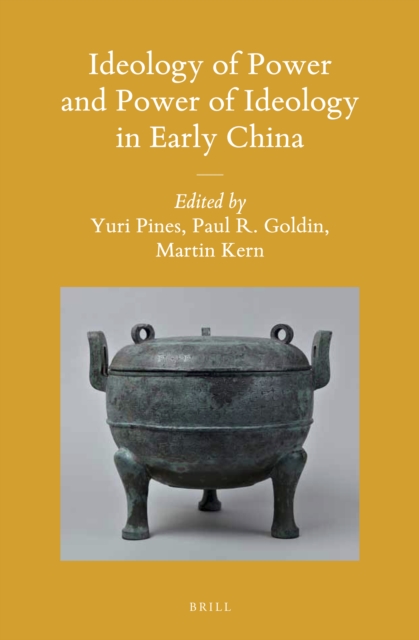
Ideology of Power and Power of Ideology in Early China explores ancient Chinese political thought during the centuries surrounding the formation of the empire in 221 BCE.
This book is the first in a two-volume project that provides the first systematic interpretation of Martin Heidegger’s fundamental ontology as a critical social ontology.
This book is the first in a two-volume project that provides the first systematic interpretation of Martin Heidegger’s fundamental ontology as a critical social ontology.
This book explores the relevance of Sartrean existentialism to the contemporary socio-political landscape, with particular reference to his early novel Nausea and the concepts of bad faith and authenticity outlined in his major philosophical work Being and Nothingness.
This book explores the relevance of Sartrean existentialism to the contemporary socio-political landscape, with particular reference to his early novel Nausea and the concepts of bad faith and authenticity outlined in his major philosophical work Being and Nothingness.
The book aims to challenge and redefine the traditional Enlightenment approach to education by advocating for a Post-Enlightenment model that emphasizes self-education rooted in individual autonomy, dignity, and diverse experiences.
This book analyses EU and Member State decision-making through a constructivist perspective and claims that a kind of latent, intellectual “phantom war” is going on in Western societies.
This book analyses EU and Member State decision-making through a constructivist perspective and claims that a kind of latent, intellectual “phantom war” is going on in Western societies.
The book aims to challenge and redefine the traditional Enlightenment approach to education by advocating for a Post-Enlightenment model that emphasizes self-education rooted in individual autonomy, dignity, and diverse experiences.
This book offers a philosophical reconstruction of Gandhi’s political thought as a form of devotional democracy in which the sovereign people speak the voice of truth as God’s voice.
This book offers a philosophical reconstruction of Gandhi’s political thought as a form of devotional democracy in which the sovereign people speak the voice of truth as God’s voice.
This book interprets axial cultural symbols, specific cultural symbolic organizations, and symbolic constellations in the context of Critical Theory and its negative dialectic.
This book interprets axial cultural symbols, specific cultural symbolic organizations, and symbolic constellations in the context of Critical Theory and its negative dialectic.
This volume explores and critically examines how disability is communicated to and comprehended by individuals and societies, focussing on the shaping of these narratives within diverse disciplinary environments, and their interrelation with institutions like academia.
This volume explores and critically examines how disability is communicated to and comprehended by individuals and societies, focussing on the shaping of these narratives within diverse disciplinary environments, and their interrelation with institutions like academia.
Eine heute mit Horkheimer ‚traditionell‘ zu nennende Kritische Theorie hatte einst betont, dass nur Theorie allein richtige Praxis in einer falschen Welt sein könne.