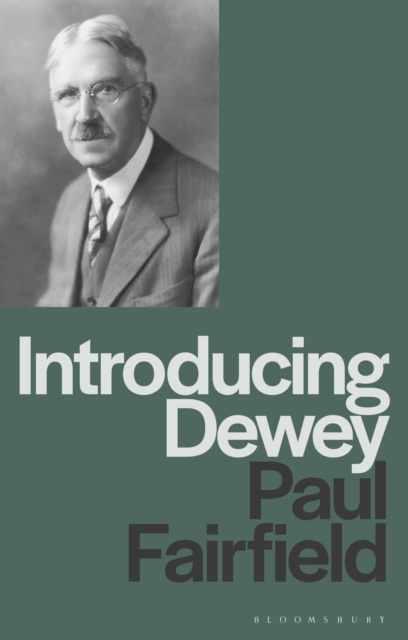
This introduction to one of the most influential philosophers in American history examines every major dimension of John Dewey's philosophy, from his early post-Hegelian idealism to pragmatic experimentalism, as well as his views on ethics and political theory, philosophy of education, aesthetics, and philosophy of religion.
"e;What I love, and those whom I love, you, that is to say us in so far as we are capable of forming a we, all this I love, and I love them, and I love you infinitely"e; (Bernard Steigler April 1952- August 2020).
This volume contains for the first time in English, Jan Patocka's seminal essay "e;The Phenomenology of Afterlife"e;, as well as contributions surrounding and analyzing this text.
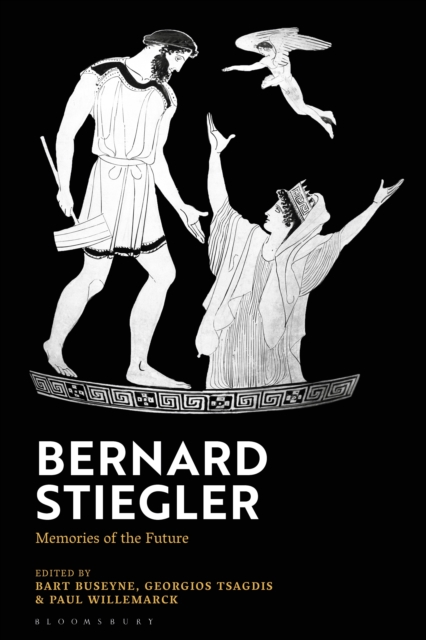
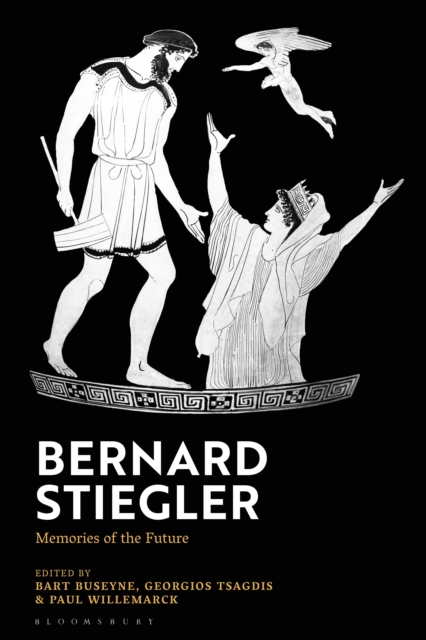
Honouring the memory of the late Bernard Stiegler, this edited collection presents a broad spectrum of contributions that provide a complex and coherently articulated image of Stiegler's thought which reached beyond the boundaries of academic, artistic and experimental techno-scientific enclaves where it had been originally received.
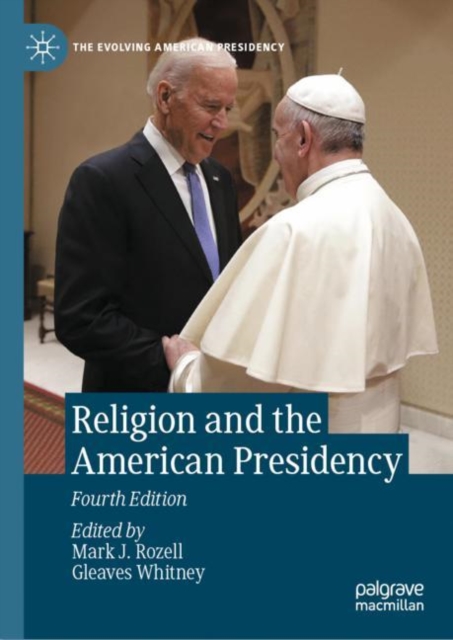
This book chronologically analyzes fourteen key US Presidents, from Washington to Biden, to highlight how religion has informed or influenced their politics and policies.
This book chronologically analyzes fourteen key US Presidents, from Washington to Biden, to highlight how religion has informed or influenced their politics and policies.
Hannah Arendt and Simone Weil were two of the most compelling political thinkers of the 20th century who, despite having similar life-experiences, developed radically distinct political philosophies.
Hannah Arendt and Simone Weil were two of the most compelling political thinkers of the 20th century who, despite having similar life-experiences, developed radically distinct political philosophies.
Honouring the memory of the late Bernard Stiegler, this edited collection presents a broad spectrum of contributions that provide a complex and coherently articulated image of Stiegler's thought which reached beyond the boundaries of academic, artistic and experimental techno-scientific enclaves where it had been originally received.
"e;What I love, and those whom I love, you, that is to say us in so far as we are capable of forming a we, all this I love, and I love them, and I love you infinitely"e; (Bernard Steigler April 1952- August 2020).
This volume contains for the first time in English, Jan Patocka's seminal essay "e;The Phenomenology of Afterlife"e;, as well as contributions surrounding and analyzing this text.
This introduction to one of the most influential philosophers in American history examines every major dimension of John Dewey's philosophy, from his early post-Hegelian idealism to pragmatic experimentalism, as well as his views on ethics and political theory, philosophy of education, aesthetics, and philosophy of religion.
Die Menschenrechte stehen heute vielfach in der Kritik – ob man ihnen vorwirft, eine «Sakralisierung von Minderheiten» zu verfolgen, oder ob man in ihnen das rechtlich-moralische Instrument ausmacht, um eine vermeintliche Hegemonie des Westens zu etablieren.
Our age - saturated with media images and ever-present political crises - traces back to the beginning of Christianity and its messianic vision of the world.
Our age - saturated with media images and ever-present political crises - traces back to the beginning of Christianity and its messianic vision of the world.
Investigating a range of eschatological ideologies, this volume explores the connection between notions of sacred space and time in Jewish, Christian, and Muslim understandings of Jerusalem.
An innovative argument that vindicates our normative commitment to basic equality, synthesising philosophy, history, and psychologyWhat makes human beings one another's equals?
This book addresses the current crisis of democratic politics and its phase of 'interregnum' - in which the past finds it hard to die and the future finds it difficult to be born - by proposing a radical redefinition of the concept of the Political.
This book addresses the current crisis of democratic politics and its phase of 'interregnum' - in which the past finds it hard to die and the future finds it difficult to be born - by proposing a radical redefinition of the concept of the Political.
Azade Seyhan provides a concise, elegantly argued introduction to the critical theory of German Romanticism and demonstrates how its approach to the metaphorical and linguistic nature of knowledge is very much alive in contemporary philosophy and literary theory.
We tend to suppose that the ancient Greeks had primitive ideas of the self, of responsibility, freedom, and shame, and that now humanity has advanced from these to a more refined moral consciousness.
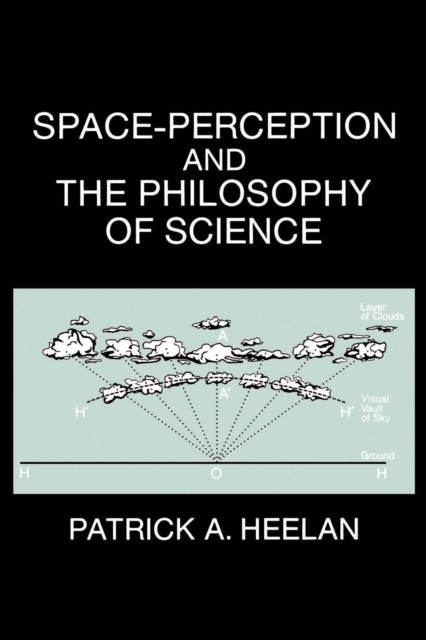
Drawing on the phenomenological tradition in the philosophy of science and philosophy of nature, Patrick Heelan concludes that perception is a cognitive, world-building act, and is therefore never absolute or finished.