Men would never be superstitious, if they could govern all their circumstances by set rules, or if they were always favoured by fortune: but being frequently driven into straits where rules are useless, and being often kept fluctuating pitiably between hope and fear by the uncertainty of fortune''s greedily coveted favours, they are consequently, for the most part, very prone to credulity.
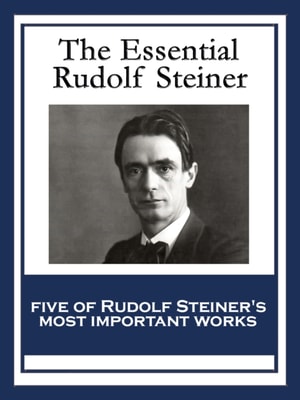
Collected here in this omnibus edition are five of Rudolf Steiner's most important works: 'Theosophy: An Introduction to the Supersensible Knowledge of the World and the Destination of Man,' 'An Esoteric Cosmology,' 'Intuitive Thinking as a Spiritual Path,' 'An Introduction to Waldorf Education,' and 'How to Know Higher Worlds.
The theoretical knowledge of right and law in principle, as distinguished from positive laws and empirical cases, belongs to the pure science of right The science of right thus designates the philosophical and systematic knowledge of the principles of natural right.
Collected here are eight short essays, On Authorship, On Style, On the Study of Latin, On Men of Learning, On Thinking for Ones Self, On Criticism, On Reputation, On Genius, by the world renowned philosopher Arthur Schopenhauer.
After experience had taught me that all the usual surroundings of social life are vain and futile; seeing that none of the objects of my fears contained in themselves anything either good or bad, except in so far as the mind is affected by them, I finally resolved to inquire whether there might be some real good having power to communicate itself, which would affect the mind singly, to the exclusion of all else: whether, in fact, there might be anything of which the discovery and attainment would enable me to enjoy continuous, supreme, and unending happiness.
In What's Wrong With The World Chesterton rightly points out that what people see as "e;wrong with the world"e; are only the symptoms of a deeper problem.
Philosophy may be said to contain the principles of the rational cognition that concepts afford us of things (not merely, as with logic, the principles of the form of thought in general irrespective of the objects), and, thus interpreted, the course, usually adopted, of dividing it into theoretical and practical is perfectly sound.