The seven lectures presented here were delivered in New York for the purpose of presenting the testimony of science as to the relation of matter and of consciousness; to enable the hearers to observe the identical manifestation of these relations and of certain basic laws in successively higher states of being, and thus to bring to them a realization of the universality of the evolutionary process and its actuality; and to deal somewhat with the nature of the expanded states of consciousness and the enlarged life toward which all mankind is traveling.
Philosophy may be said to contain the principles of the rational cognition that concepts afford us of things (not merely, as with logic, the principles of the form of thought in general irrespective of the objects), and, thus interpreted, the course, usually adopted, of dividing it into theoretical and practical is perfectly sound.
The reference to the Antichrist is not intended to refer to the biblical Antichrist but is rather an attack on the "slave morality" and apathy of Western Christianity.
In Beyond Good and Evil, Nietzsche attacks past philosophers for their alleged lack of critical sense and their blind acceptance of the Christian premises in their consideration of morality.
Thomas Paine is most famous for writing Common Sense, a pamphlet distributed during the American Revolution advocating for colonial Americas independence from Great Britain.
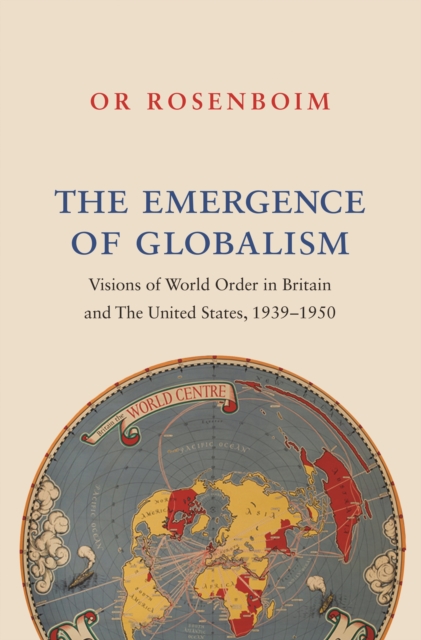
How competing visions of world order in the 1940s gave rise to the modern concept of globalismDuring and after the Second World War, public intellectuals in Britain and the United States grappled with concerns about the future of democracy, the prospects of liberty, and the decline of the imperial system.
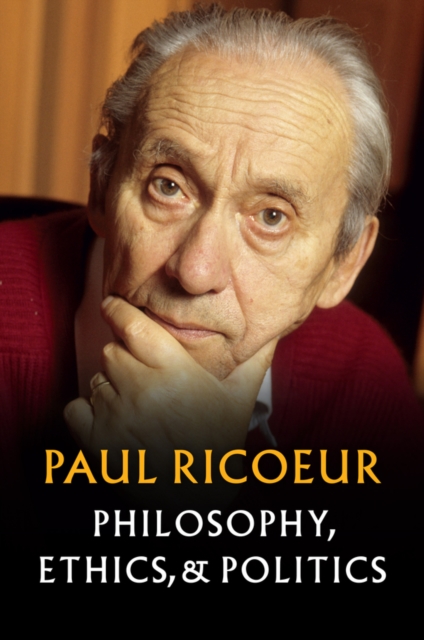
The philosophy of Paul Ricoeur is rarely viewed through the lens of political philosophy, and yet questions of power, and of how to live together in the polis, were a constant preoccupation of his writings.
Some embrace the idea of white privilege as an important concept that helps us to make sense of the connection between race and social and political disadvantages, while others are critical or even hostile.
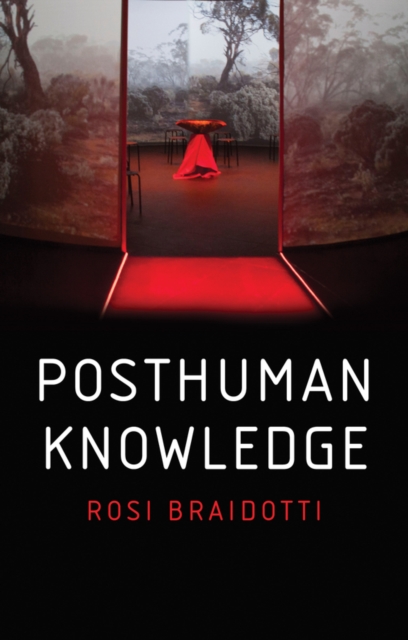
The question of what defines the human, and of what is human about the humanities, have been shaken up by the radical critiques of humanism and the displacement of anthropomorphism that have gained currency in recent years, propelled in part by rapid advances in our knowledge of living systems and of their genetic and algorithmic codes coupled with the global expansion of a knowledge-intensive capitalism.
In this series of interviews and dialogues which took place between 1981 and 2003, Paul Ricoeur addresses some of the central questions of political philosophy and ethics: justice, violence, war, the environmental crisis, the question of evil, ethical and political action in the polis.
Born Liquid is the last work by the great sociologist and social theorist Zygmunt Bauman, whose brilliant analyses of liquid modernity changed the way we think about our world today.
Humans have become so powerful that we have disrupted the functioning of the Earth System as a whole, bringing on a new geological epoch the Anthropocene one in which the serene and clement conditions that allowed civilisation to flourish are disappearing and we quail before 'the wakened giant'.
The essence of libertarianism is the view that coercive political institutions, such as the state, are justified only insofar as they function to protect each person s liberty to pursue their own goals and well-being in their own way.
The core of what we refer to as the project of modernity is the idea that human beings have the power to bring the world under their control, and hence it is based on a kinetic utopia : the movement of the world as a whole reflects the implementation of our plans for it.
In a context marked by the virulent return of patriarchal and white supremacist attitudes, a new generation of feminist activists are continuing the struggle: these are very feminist times.
Jean-Jacques Rousseau is one of the most controversial philosophers of the eighteenth century, and his groundbreaking work still provokes heated debate in contemporary political theory.
In his philosophical reflections on the art of lingering, acclaimed cultural theorist Byung-Chul Han argues that the value we attach today to the vita activa is producing a crisis in our sense of time.
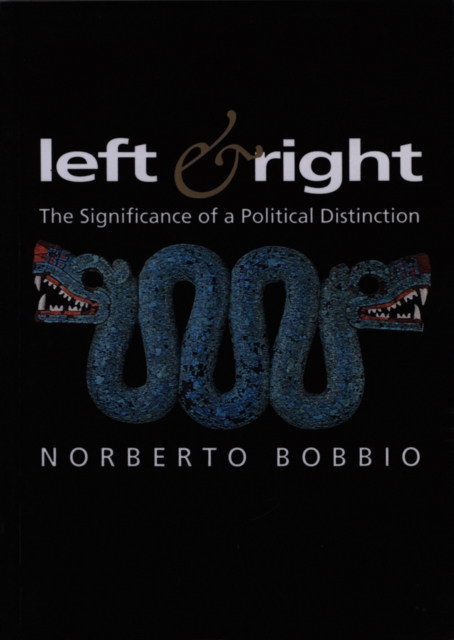
Following the collapse of communism and the decline of Marxism, some commentators have claimed that we have reached the 'end of history' and that the distinction between Left and Right can be forgotten.
This revised edition of Kimberly Hutchings s best-selling textbook provides an accessible introduction to the field of Global Ethics for students of politics, international relations and globalization.
Frantz Fanon was a French psychiatrist turned Algerian revolutionary of Martinican origin, and one of the most important and controversial thinkers of the postwar period.
All discourses aimed at asserting the value of human life as such whether philosophical, ethical, or political assume the notion of personhood as their indispensable point of departure.
This book by Roberto Esposito - a leading Italian political philosopher - is a highly original exploration of the relationship between human bodies and societies.