An original deep history of the internet that tells the story of the centuries-old utopian dreams behind it-and explains why they have died todayMany think of the internet as an unprecedented and overwhelmingly positive achievement of modern human technology.
*; Shows how the revelations emerging from quantum physics can wake us up from the disempowering spell of the scientific materialist worldview and help dispel the collective madness that has befallen our species*; Explains for readers with no physics background why quantum physics is, in the words of Albert Einstein, so ';uncommonly important' that ';it should be everyone's concern'*; Shows how quantum physics can help us awaken to the malleable, dreamlike nature of reality, a realization that unlocks the creative spirit within usExplaining the world-transforming effects of quantum physics, Paul Levy shows how discoveries in this fieldwidely considered the greatest in the history of sciencecan wake us up from the disempowering spell of the reductionist, materialist worldview, thereby helping to dispel the collective madness that has befallen our species.
Moral Leadership brings together in one comprehensive volume essays from leading scholars in law, leadership, psychology, political science, and ethics to provide practical, theoretical policy guidance.
Parmenides - Plato - Plato is a Classical Greek philosopher, mathematician, student of Socrates, writer of philosophical dialogues, and founder of the Academy in Athens, the first institution of higher learning in the Western world.
Dieses eBook: "Menschliches, Allzumenschliches (Band 1&2)" ist mit einem detaillierten und dynamischen Inhaltsverzeichnis versehen und wurde sorgfältig korrekturgelesen.
This book presents an important new account of Johann Gottlieb Fichte's Closed Commercial State, a major early nineteenth-century development of Rousseau and Kant's political thought.
Man hört das Wort "Neuroästhetik" und denkt, jetzt erklären uns die Hirnforscher endlich genau, was die Philosophen in ihren Ästhetikbüchern und die Kunstwissenschaftler an den Universitäten und Hochschulen lehren.
The changing face of the liberal creed from the ancient world to todayThe Lost History of Liberalism challenges our most basic assumptions about a political creed that has become a rallying cry-and a term of derision-in today's increasingly divided public square.
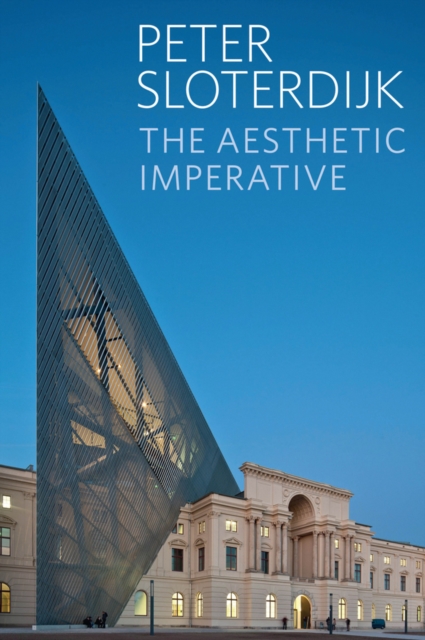
In this wide-ranging book, renowned philosopher and cultural theorist Peter Sloterdijk examines art in all its rich and varied forms: from music to architecture, light to movement, and design to typography.
This original book enters the undeveloped territory of feminist metaphysics and offers a bold and unusual contribution to debates about identity, essence and self.
Until recently, "e;continental"e; philosophy has been tied either to the German tradition of phenomenology or to French post-structuralist concerns with the conditions of language and textuality.
This volume of lectures on aesthetics, given by Adorno in the winter semester of 1958 9, formed the foundation for his later Aesthetic Theory, widely regarded as one of his greatest works.
In this volume Axel Honneth deepens and develops his highly influential theory of recognition, showing how it enables us both to rethink the concept of justice and to offer a compelling account of the relationship between social reproduction and individual identity formation.
Displaying the distinctive combination of narration and philosophy for which he is well known, this new book by Peter Sloterdijk develops a radically new account of globalization at the beginning of the twenty-first century.
In this book Axel Honneth re-examines arguments put forward by Hegel and claims that the 'struggle for recognition' should be at the centre of social conflicts.
Habermas describes Knowledge and Human Interests as an attempt to reconstruct the prehistory of modern positivism with the intention of analysing the connections between knowledge and human interests.
In this wide-ranging work, now available in paperback, Habermas presents his views on the nature of the social sciences and their distinctive methodology and concerns.